
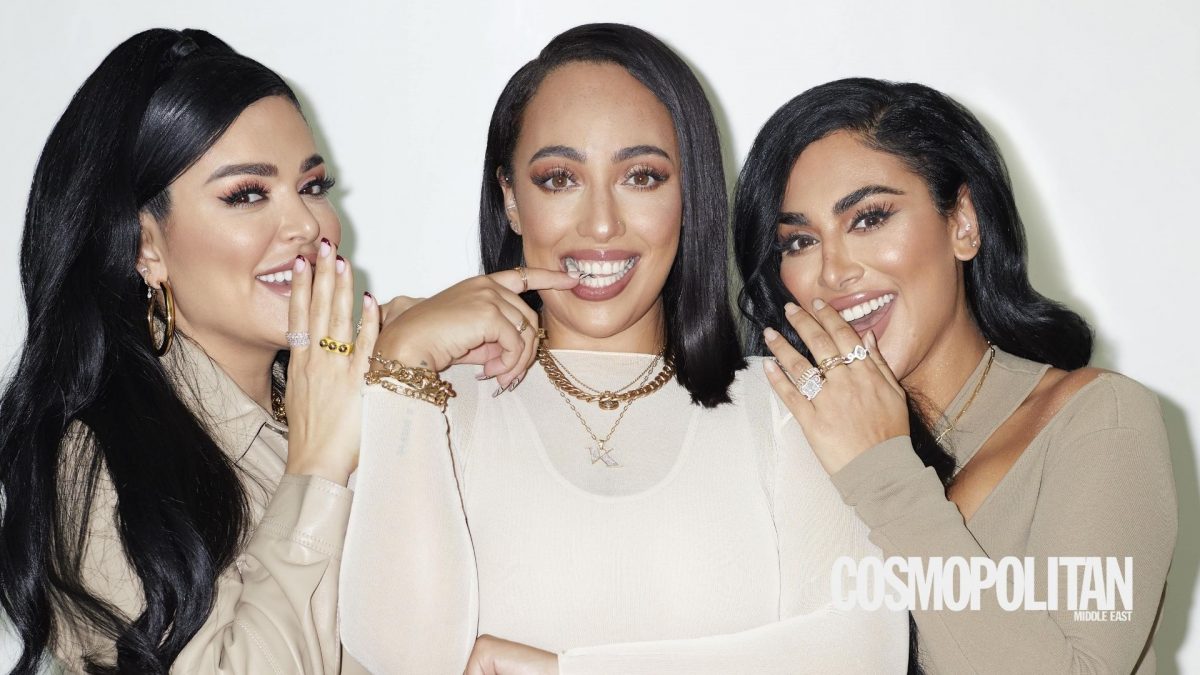

When you think of female empowerment, body confidence, and changing the narrative around societal beauty standards in the Middle East, you probably think of Huda Kattan. From boycotting photoshopped and retouched images, to releasing the most progressive beauty ad campaigns the region has ever seen, Huda has fearlessly taken on the subject of diversity and inclusivity through her work, becoming a powerful voice for women — and men — everywhere. So it may have come as no surprise, then, when you will have undoubtedly seen the global news announcing the entrepreneur’s latest endorsement: a feminine wellness brand called Ketish.
“Ketish is about empowerment!” beams Huda. “That’s the way that I see it. I see it as the opportunity to take back power in a place where women have not been able to do so. It’s a place where we can go and not feel ashamed about a lot of the things that we have perhaps felt ashamed about, like taking care of our own bodies.”
The lifestyle brand was founded by Emaan Abbass, a former Huda Beauty employee whose life was turned upside-down at 21 after her first-ever trip to the gynaecologist, where she was diagnosed with cervical cancer that had been caused by HPV. Emaan, who feared speaking to her parents, dealt with the serious issue herself.
“Throughout my 20s, dealing with all of my feminine health issues made me really curious about the entire feminine and intimate care space,” Emaan said in an exclusive interview with Grazia. “I vividly remember scouring the pharmacies and drug stores, because that’s the only place you could find anything remotely under this umbrella. We usually go to a pharmacy when something is wrong with us, or when we want to fix an issue, but I didn’t want to feel like buying feminine care was like taking care of a problem. I wanted a more elevated experience that felt like I was buying products to pamper myself and build into my daily routine. I wanted products that looked vanity or bedsidetable-worthy; I wanted products that made me feel sexy; I wanted products I could trust; I wanted a brand I could turn to, to educate me. Ultimately I no longer wanted to feel embarrassed or feel like I was walking this journey alone and ashamed.”

Self- Portrait dress, Emaan’s own necklace.
In lieu of many feminine care brands often releasing products in patronising floral and pastel packaging, Ketish products are luxuriously and sleekly housed in chic packaging – chic enough, in fact, to display on a nightstand. Its first product, The Quickie, is a pre-play intimate sheet, which is lightly fragranced and individually wrapped with golden packaging that’s tantalising in its very extreme.
The launch of Ketish has come at a pivotal time. Not only is this the first investment Huda is making through her incubator program HB Angels, (which falls under HB Investments, the family’s venture capital firm), as part of the group’s US$10 million seeding initiative, which aims to back female-founded businesses with a purpose. It is also a launch that is set to change the narrative around feminine well-being. Over the past year, a global health pandemic has redefined what mental and physical wellness means to us. We mask for our skin, we workout for our bodies, we bake banana bread for mindfulness – so why are we, as women, not placing this same level importance on our most personal faculties?
“Through HB Angels Incubator we work with brand founders who have never run a business before and really need a lot of guidance. We are usually more involved from a complete business perspective, where we help them hire people, pay the salaries, and give them access to our recourses. Emaan worked with us at Huda Beauty, I know her very well and she’s just an amazing, truly a remarkable humanbeing. I think the best way to describe her is she’s magical. I know that people are going to just fall in love with her story and gravitate towards it. I am obsessed with everything she’s making at Ketish; the products, she’s just really going to do some magical things.”
Throughout history, most feminine care products have been made by—you guessed it!—men. And while there have been major strides to counter this, the Arab world has still been somewhat behind.
“There’s still some stigma around this,” explains Huda. “We knew introducing this brand to the Middle Eastern market wasn’t going to be smooth sailing. We know the uphill battle we’ve got ahead; we know the challenges. It’s not only the Arab world that we’re worried about, it’s the whole world. We are ready to really get into the conversation and to be honest about it. We’re here with a very purposeful and very strong mission, and I believe we’re ready for all of those challenges. Emaan is going to do some amazing things for the world and for everybody out there who needs this. Ketish stands for so much, but and its core, it is about empowerment.
“Growing up as a young Egyptian woman in the States, I largely felt caught in between two worlds – the strict cultural norms imposed by my parents growing up in a Muslim home versus trying to be a ‘normal’ American girl,” says Emaan. “Ketish has been in the works for a little over two years now, but it feels like it has been a lifetime in the works for me — from navigating my way through a traditionally strict and oppressive culture to my feminine health journey. Ultimately, I wanted to create the brand I wish I had when I was younger.”
Together, Huda, Mona and Emaan, are taking on the Herculean task of debunking practices and products that have been veiled by a cloak of “shame” or “depravity” for centuries. Ketish is a brand for embracing one’s personal wellness, taking ownership of pleasure, and reaping a multitude of health benefits along the way.
“We’re here for a reason, and we didn’t come here for no reason,” says Huda. “The legacy I hope we leave in the beauty industry is to make people understand that they have power. Whether it’s someone who has told them they’re not good enough, or people making them feel ashamed for talking about certain aspects of their life, it’s about being empowered. I thought about leaving the beauty industry before and just disappearing because, you know, it’s hard to be an influencer. It’s hard to have all that pressure. But I’ve also decided to stay for that reason, because I know what my mission is about, I know what my purpose is about.”
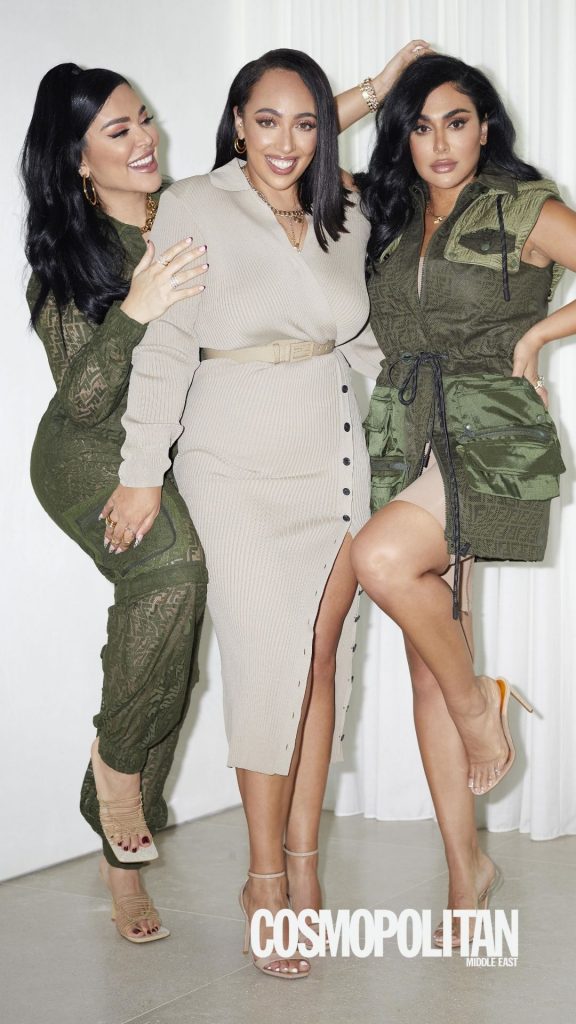
Mona: Fendi jumpsuit, Bottega Veneta shoes, accessories: Mona’s own. Emaan: Self-Portrait dress, Charlotte Chesnais and Eman’s Own rings. Huda: Fendi outerwear, Alexandre Vauthier shoes, accessories: Huda’s Own.
This is not a jaunty narrative about another beauty fad that will die a death as strong as waist trainers and strobing in a few years. This marks a new generation of female-led companies reclaiming the female sexuality space, producing luxurious personal care products and rebranding the definition of self-care – and we’re here for it.
Words by Milli Midwood
Photography by Vaughan Treyvellan
Hair and Makeup by Aiza Qureshi
Assistant styling by Jihae Yun