
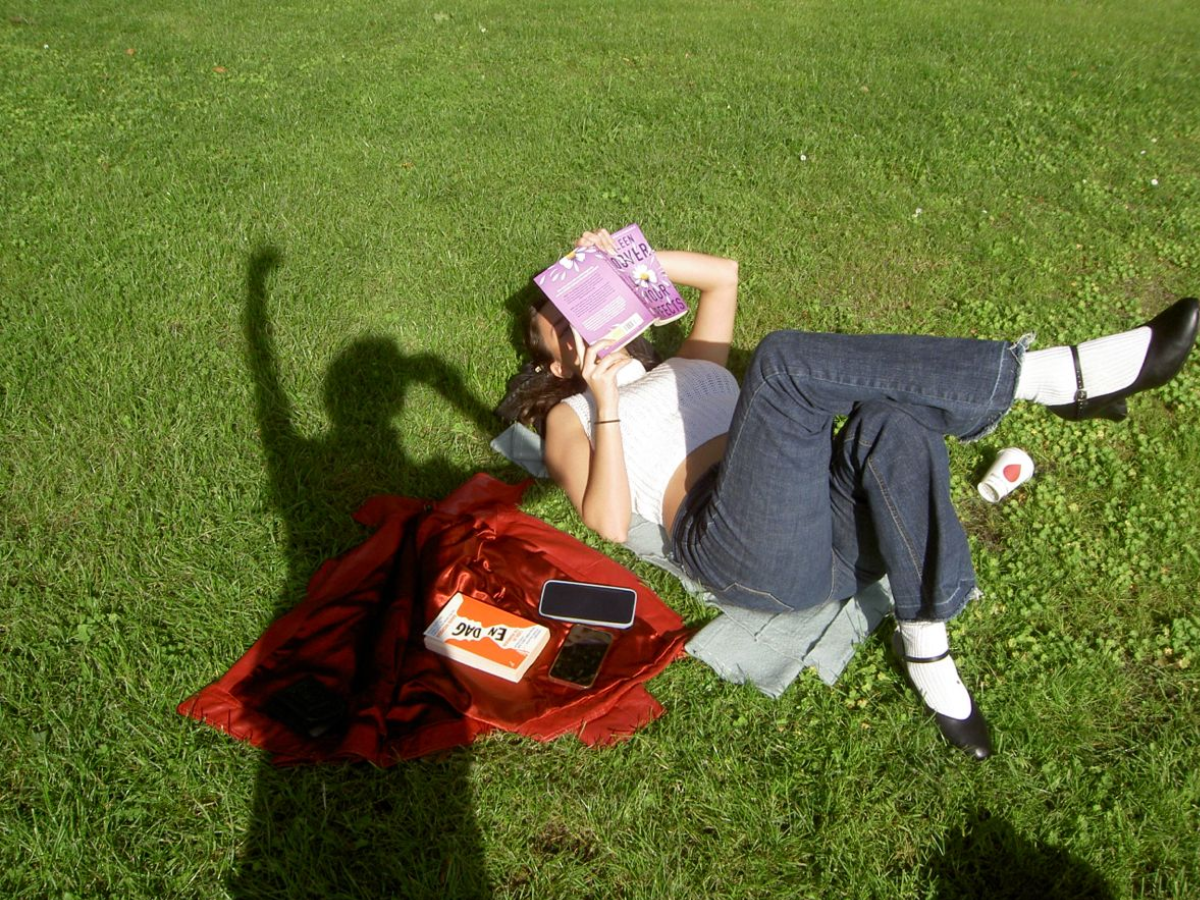
How do we find the will to go on? Though melodramatic in statement (fitting for the emotional ups and downs of a twenty-something-year-old girl like me), I find fascination with what wills us to desire, to strive, and to suffer. I believe there is an almost spiritual necessity to change, break, love, fail, and keep going anyway. My book club, Campy Chronicles, is a result of one of these cycles of changes. With it has come a camaraderie; here are the books that have touched me in my own struggles and pushed me to transform during tough times. I hope they bring you resonance on the soul’s journey of becoming.
Circe by Madeline Miller

A retelling of the Greek mythological witch by the same name, Circe is a story of deep poetry and an exploration of woman’s ugly and beautiful search for empowerment and self. Her journey is not straight-edged. It is marked by loss, violence, loving, and making a mess and picking up the pieces again and again. In motherhood, Circe transforms once more, surrendering herself to vulnerability, trust, and loving after loss. Madeline Miller eloquently writes this myth not as a tragedy it once was, but as the long and evolutionary path a woman takes to love without losing herself. A book whose last chapter left me in shambles, and one I never stop recommending, Circe is a force.
The Serviceberry: An Economy of Abundance by Robin Wall Kimmerer
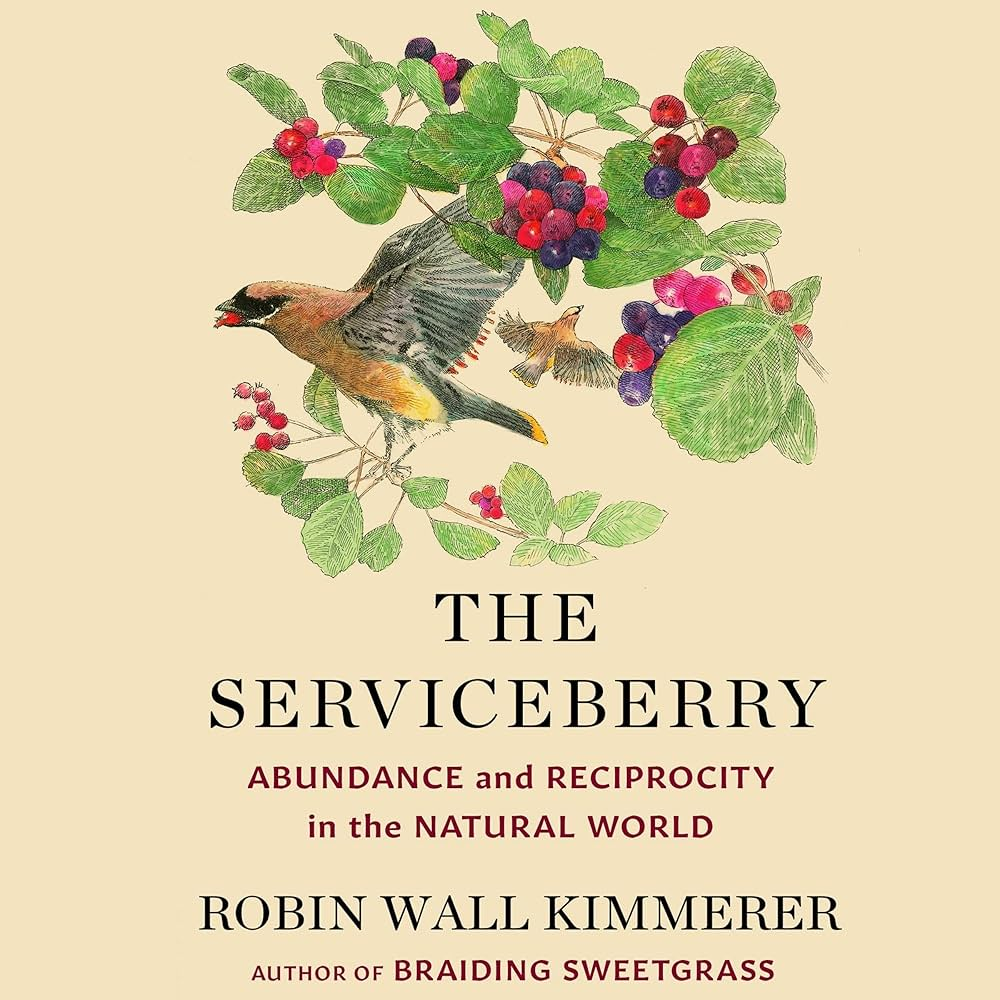
A botanist, professor, and member of the Citizen Potawatomi Nation, Kimmerer invites us to reimagine what it means to live in reciprocity, to see abundance not as excess, but as a relationship. In The Serviceberry, she explains this with a call to listen to the earth, that the health of the world depends on our willingness to participate in a cycle of care, that “all flourishing is mutual.” Lyrical and inviting, this book opened my mind and resonated with the tree-hugging, community-minded girl within me. A quick and peaceful read.
Tender Is the Flesh by Agustina Bazterrica

The book begins with an unthinkable premise: a world where a virus makes animal meat poisonous, and humans are bred and eaten instead. A philosophical provocation wrapped as dystopian horror, Tender Is the Flesh is allegorically about violence and the collapse of empathy, what it means to be human when morality is systematically dismantled. What was once unthinkable becomes mundane, showing us how quickly people can adapt to atrocity if it’s normalized, named differently, or made profitable. A wild read till the last page.
The Year of Magical Thinking by Joan Didion

In this moving memoir, esteemed writer Joan Didion’s The Year of Magical Thinking sits at the heart of transformation, but not the triumphant kind, the one that sort of happens to you, a re-piecing of self through grief. When Didion’s husband suddenly dies at her dinner table, her world fractures in an instant. This book is her journey to understanding this rupture. It is not a book about transcending grief, but living with it. If you feel alone and unseen in your grief, let Didion’s words walk the line with you.
Homegoing by Yaa Gyasi

Homegoing is an evolutionary tale through 300 years of generational cycles. Homegoing splits into two stories: Effia, who marries a British slaver and remains in Ghana, and her half-sister Esi, who is captured and sold into slavery in America. Gyasi creates a family tree that serves as a map to transformation under oppression and how our identities can be reshaped through colonization and survival. What is brilliant about this novel is how it shows trauma as both inherited and transformed. Pain is passed down, but so is strength.
As Long as the Lemon Trees Grow by Zoulfa Katouh

Set amid the Syrian revolution, As Long as the Lemon Trees Grow follows Salama Kassab, a young pharmacy student who once dreamed of becoming a pharmacist, now forced to work in a hospital overwhelmed by the casualties of war. The novel gives shape to her PTSD through a hallucinated companion, Khawf, whose name means “fear” in Arabic. Salama’s connection with Kenan, a young man documenting the war, teaches her that love is a form of faith. How do we stay human in inhumane circumstances? With what feels like constant and involuntary turmoil in the Middle East (a child of war myself), Zoulfa Katouh takes these frustrations and wraps them in a novel that feels like understanding, and that love, as simple and obvious as it is, is the root of what keeps us going.
The Voice of Hind Rajab‘s Saja Kilani has movie recs for you, check it out here.