
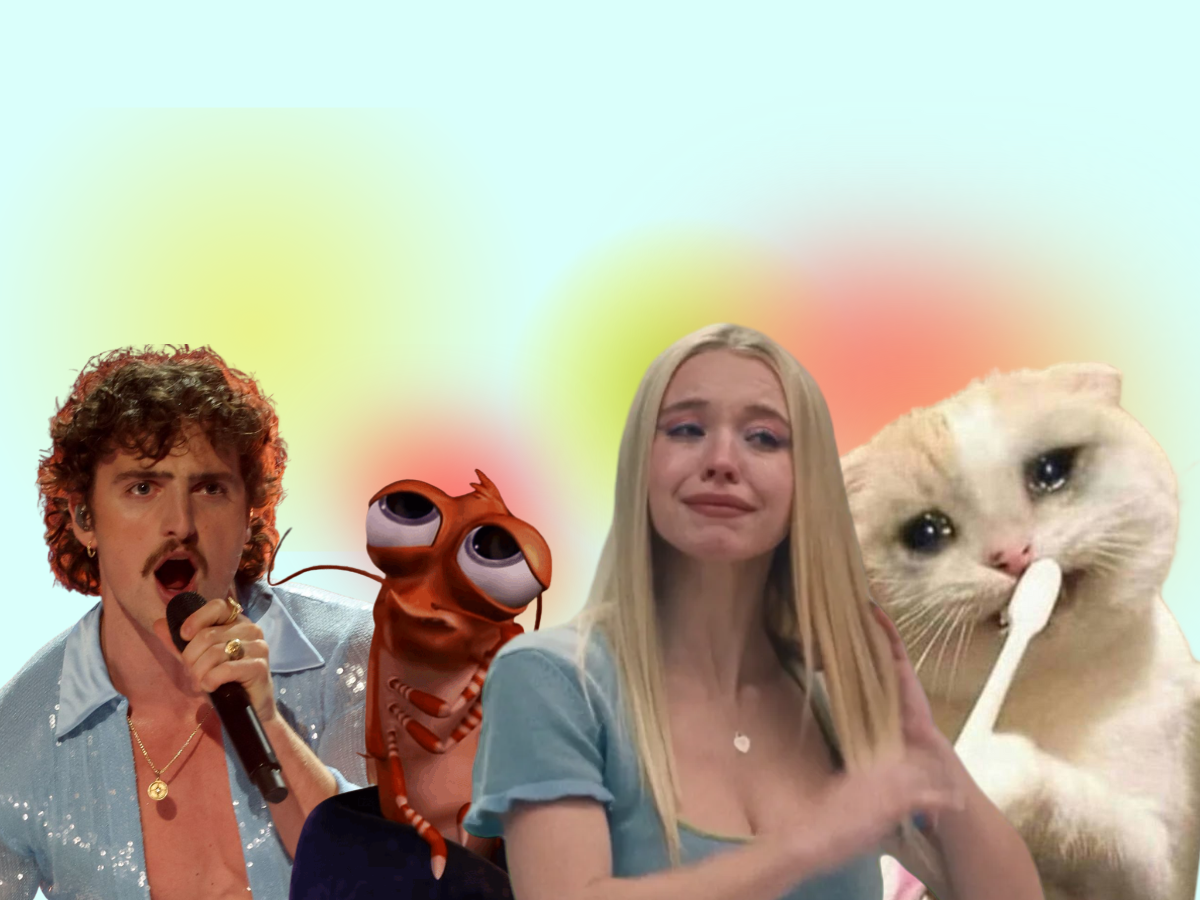
My phone pings. It’s an Instagram notification. My best friend from high school, who I haven’t spoken to on the phone in months, who I haven’t seen in nearly six years, has sent me a meme. I don’t know the name of the neighborhood she lives in anymore, oceans away. But I do know when she’s stressed at work, when she misses me, and when she’s too busy to reply.
How? Through memes.
It’s a simple code, really. Five memes in a row? She’s on a coffee break. Just likes, no replies? She’s swamped. Actual comments, no laughing emojis? She misses me.
On the surface, it’s absurd, maybe even dystopian. But this is how so many of us “stay in touch” today. In lives splintered by school, work, long commutes, breakups, and grocery runs, many of us simply do not have the time for a weekly call, let alone a spontaneous hang out, memes are becoming the shorthand for communication.
Besties who meme together, stay together
What might seem like short quippy blurbs plastered on pixelated photos have become for the modern post millennial generation what the hieroglyphics were for the Egyptians. Just as hieroglyphs told stories of gods and rulers, memes tell the stories of our daily lives, on a different kind of scroll. From an occasional occurrence between life updates from our friends and family, memes have turned into a dialect of their own.
I’ve built entire friendships on meme exchanges. Sometimes, I take a gamble and send one to someone I barely know, and when they get it, we immediately form a little bond between us. A shared laugh, a common experience, an “oh my god, this is so us.” You might recognize the feeling when scrolling a comment section and seeing something you thought was a niche experience, only to read, “not one original experience ever,” and feel oddly comforted.
So… what is a meme?
The word meme itself is a play on the word gene. It came from Richard Dawkins, a British evolutionary biologist, who described it in the ’70s as a self-replicating unit of culture. Think of it like a cultural gene. Like how a mispronounced word turns into an inside joke between friends. Only now, “friends” might include 3 million strangers on TikTok.
Memes aren’t just a reflection of culture, but more an ingredient, a rather important one today. What starts off as a stray repost or a clip from a random show quickly spirals into a cultural touchstone. Memes then generate a shared vocabulary across languages, for people to see bits of themselves in each other. TikTok comment sections are flooded with reaction gifs, conveying in brevity what words cannot. “We consume more visually, so it makes sense we’ve started to communicate more visually, too,” explains Zein Karam, a magazine Social Editor. Memes are not just fluff, they’re changing the grammar of digital life.
For Gen Z and post-millennials, me and probably you, memes have become the building blocks of identity, protest, and self-expression. Your FYP? That’s your diary now.
LOL lexicon
Sociolinguist William Labov observed that women lead up to 90% of linguistic change, often a full generation ahead of men. Online, you see this in the rise of “feminine-coded” slang: slay, jail, I’m literally sobbing, girl dinner, mother is mothering.
In a world that defines the “proper” way of being, through a preference for masculine coded logic and analysis, feminine language can carve out cultural authority in the same space. Humour, often dismissed as light or trivial, has long been humanity’s strongest weapon; memes are simply its latest weapon.
As Zein puts it, “There is power in using humour as a defence mechanism. When you make a self-deprecating joke, you’re calling yourself out, claiming the narrative, before anyone else can.” That’s why you see memes about burnout, anxiety, and trauma getting millions of likes, not because people are trivialising pain, but because they’re finally naming it.
Mental health memes like “my autistic ahh needs the same lunch every day” or “I need to be rocked like a Victorian child” help people find language for experiences they were once taught to hide.
And here’s the thing, most mental health conditions do exist on a spectrum. You don’t need years chasing a clinical diagnosis to resonate with a meme. That resonance is the point.
When memes hit…or miss
Memes allow us to say what’s otherwise too heavy, too awkward, or too complicated. They have the ability to condense a series of complex feelings into malleable formats that anyone can latch onto them. A blurry screenshot of Kim Kardashian crying might say more than a half hearted diary entry. But, like with all good things, there’s also tension.
If you like your bed made the second you get up, it doesn’t mean you have OCD. Not every introvert is “social battery drained fr.” So where do we draw the line between resonating and reducing? Between bonding and bypassing?
There’s no clear answer. On one hand, sending someone a meme is an act of care. It says: I saw this and thought of you. On the other, memes can flatten intimacy. They offer a curated version of closeness, one that sometimes replaces real vulnerability with a well-timed laughing emoji.
Its easier to share a meme that says “I’m lonely” without saying the words, I’m lonely. And it’s easier to reply to a story than to text, “Can we talk?” But that doesn’t make memes shallow or unnecessary, it just makes them complicated.
They are both glue and mask. They bring us closer while letting us stay comfortably distant. But memes are not cheap replacements for conversation, they are the conversation. They carry the weight of culture in a format that’s accessible, funny, and ineradicably human. Humans could code, but AI could never come up with this:
Whether they bring us closer or keep us apart depends on how we use them. But one thing’s for sure: Memes are the language of now. They are our inside jokes, our support groups, our love letters, and our soft armour. They are the archives of this weird, beautiful, chaotic digital life we’re all trying to make sense of, one meme at a time.