
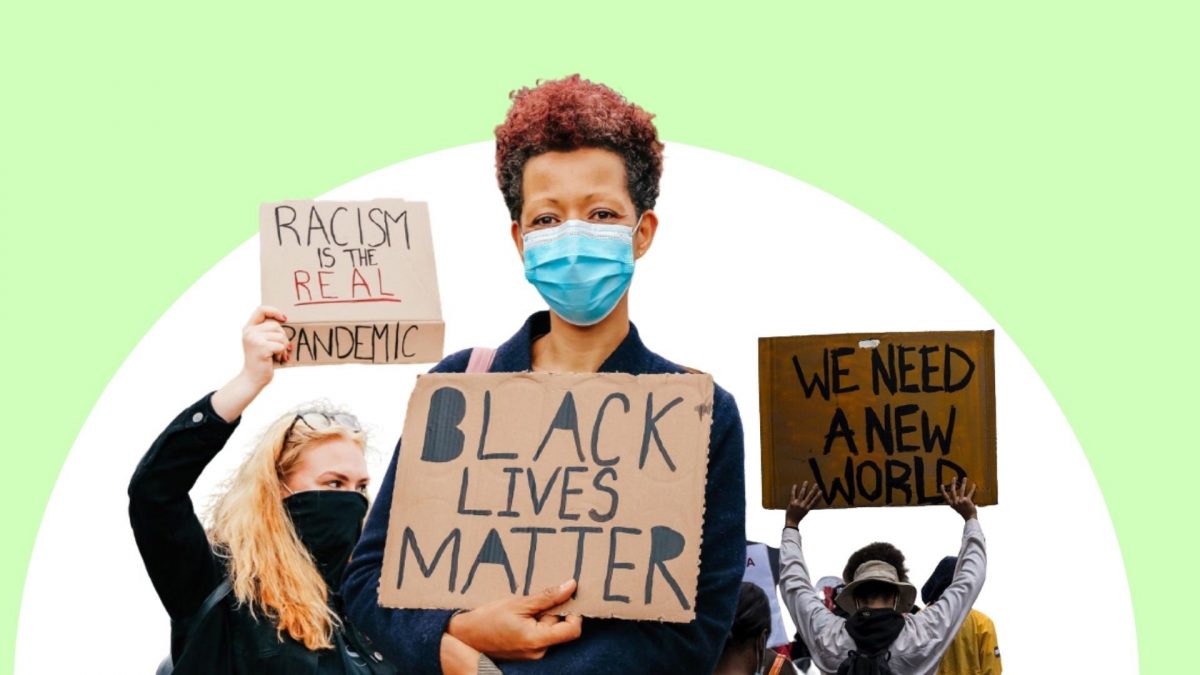
Someone in my social injustice class said,“I never saw anything wrong with calling the police on Black people until George Floyd.”
Disgust, anger, frustration and bewilderment all sprung from my heart, I wanted to tear the person who had just uttered those words into shreds. A flurry of questions readied themselves to descend the moment I got a chance to speak. But in the meantime, I grappled with that statement within: ‘Did you see them commit a crime? Why would you call the police on people without evidence of a crime?’ I battled with these questions and most importantly with this – “Is being Black still a crime?”
After the massive turnout at the Black Lives Matter protests following the death of George Floyd, it seemed like channels of conversation between people of different races, especially in North America, were opened up in order to raise awareness. Gruelling and uncomfortable questions were being asked, reconciliation or a semblance of it was taking place in communities.
However, how much listening was actually done? How much healing really took place?
In the summer after the death of George Floyd, I worked as a babysitter to predominantly Caucasian families. They were predominantly young parents who seemed to be left-leaning. Black Lives Matter signs were posted in front of their homes, and during conversations with them, they were quick to decry racism and everything that it stands for. I never once thought I was judged or discriminated against because of my blackness, but here’s one thing I did notice: their fear of Black men.
It was in the way their little four-year-old daughter would run and hide away from ‘the bad man’, who was a non-threatening Black man. She couldn’t articulate why or how he was bad, she just believed he was. It was also in the way I would see one of the mothers hold her daughter’s hands tighter when a black man was walking by them on a sidewalk or even across the street. Their non-verbal articulations still spoke of a fear that was still alive within the parents and being inherited by their children.
Unfortunately, I do not believe the cries from protesters have done much to change the hearts of people towards the Black community.
People inherently believe whatever it is they want to. Their upbringing and unchecked stereotypes still keep them bound. They are still quick to support what they know (whiteness) as the norm and fear what they do not know (otherness). This is evident in the way reports of George Floyd’s criminal record were highlighted instead of the eight minutes and forty-six seconds he was choked to death.
In an unusual turn of events for the Black community, Derek Chauvin, the police officer who murdered George Floyd, was found guilty on all counts of murder and manslaughter. While this is almost unprecedented for the Black community, it begs the question: will this precedent be continued or is this just an outlier? Was this done to satisfy the voices that fought for justice in the middle of a pandemic? Or has a standard been set?
True awareness leads to a change in heart and attitude. There is no evidence of this in America. Not in the way the protests were handled nor in the way Breonna Taylor still has no justice, and especially not in the way Black people are still treated daily.
It is not realistic to believe that years of generational and systemic racism could crumble in one day, but it is realistic to believe that if the change is to be evident, people have to give up the superficial “anger and hurt” they pretend to have towards racism.
They need to get into a position of humility, learn to earnestly empathize with marginalized communities. They need to correct the mindsets and ideologies that have shaped them and decide if they would continue to be apathetic bystanders or allies. Most importantly, they need to understand that the people they fear and unfairly judge are human, just like them. They are children and parents who don’t deserve their ignorance, hate and anger. They are worthy of the same privileges that have been accorded to them for generations. They are worthy of due diligence in criminal investigations. They are worthy of the air they breathe.