
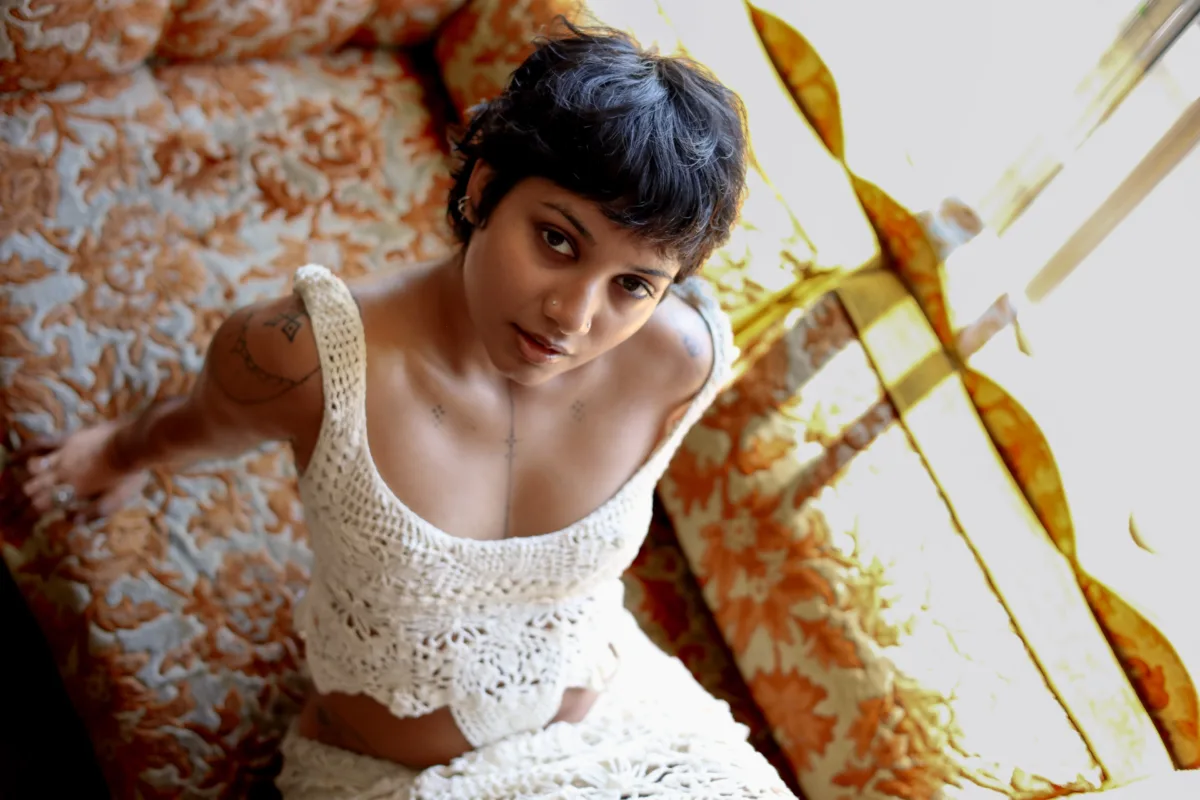
I got my first tattoos a few weeks apart from each other, just before and after turning 23. I was a late bloomer when it came to permanently marking my skin, but for me, the age gap felt necessary, as it paved the way to be extremely intentional about how I was decorating my vessel.
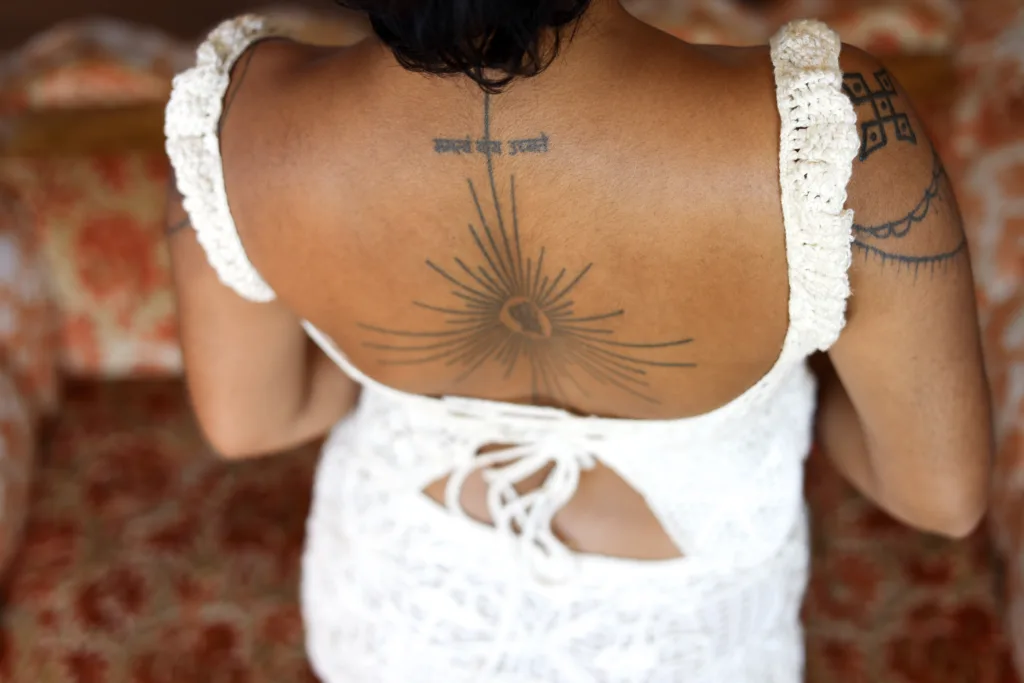
The first tattoo I received was a quote from the Hindu scripture, the Bhagavad Gita, etched at the bottom of the nape of my neck. It reads “Samatvam Yog Uchyaté” in Sanskrit, which roughly translates to maintaining a sense of equanimity and calm regardless of external circumstances. This line was consistently uttered by my mother whenever I had a rough day at school, if my dad had a tiff with his manager, or when my brother was going through his health issues.
I was raised reading and memorising chapters of the scripture, competing in regional and state-wide Bhagavad Gita chanting competitions through the temple. Personally, it made sense that my first tattoo would be something my mum couldn’t be upset about. I was right. When she first saw it, there was a bit of shock that quickly turned to pride, as she showed it off to her sisters over WhatsApp.
My early twenties were a rollercoaster of emotions, trauma and tough circumstances after I left my family home to pursue a career in the photo industry in LA. I survived an incredibly toxic relationship with a groomer, had my car, cameras and laptop stolen and was belittled by egotistical bosses all while battling with displacement. My art was what kept me going and even though I was just posting to Instagram at the time, the images I created were always a meditation to the divine. I prayed that I would be protected through the fires of “Hell-A” (LA).
It made sense that my first tattoo would be a testament to how I maintained my sense of self and kept my wits about me when so much else was spiralling out of control. The other tattoo I got was on my right thigh, which was a secret only I kept and saw. My friend at the time was just starting out on their tattoo journey and presented me with their flash. I immediately knew I wanted the one of a hand holding a lotus, Buddhist style. Lotuses, after all, are symbols of strength, divine beauty and power, as they emerge from dark ponds untouched by muddy waters. They rise above adversity.
You can see there’s a trend here: most of the imagery etched onto my skin are symbols of protection, inspired by the mythologies and iconography I grew up with. Some of it is more abstract, others more literal. I have two epaulettes on my shoulders that were gifted to me by a dear Mexican artist, Eli, who said my online dialogues played a helpful role in them becoming rooted in their identity (the biggest compliment I’ve ever received). We worked on them together conceptually, and he freestyled the tattoos on me.
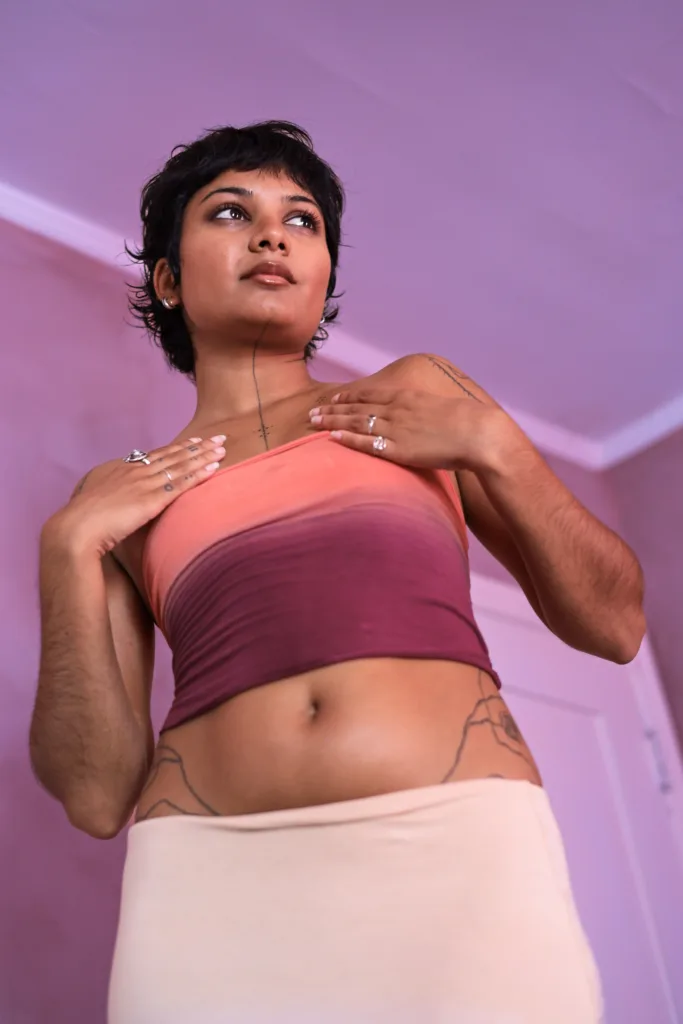
Later in the year, I got two kolams inside the epaulettes at the Kula Tattoo Convention in Mumbai by @gunga_ma. The kolams were an ode to my Tamil heritage and to my relatives drawing these geometric figures outside the house in rice flour, inviting positive energy and keeping the evil eye away. Being at the convention was incredible – there were celebrations honouring three- and four-generation indigenous artists such as Mangala Bai, a Gond woman preserving the tribal tattoo culture of the Baiga tribe.
The line going down my neck, which stops at my chest, felt like a phoenix being birthed through my throat chakra. It felt necessary to cleanse this part of my body due to the relationship I mentioned earlier, and the trauma my body has stored in that specific region. So often I felt the things I said were manipulated. I felt gaslit, and my truths were constantly shut down. Then there was physical abuse that followed, which was the last straw.
People often remark, “Oh, the line down your neck must’ve hurt!” but the experience is mostly a daze for me. It stung a little, but mostly it felt good. A release. My Vishuddha Chakra was activated and even through the pandemic, I was blessed to shoot my own photo campaigns and given opportunities that kept my bills paid and more, due to the authenticity and self-expression casting agents and brands saw. I always say brands and these little wins don’t define me, I do, but the financial benefit helped keep ecosystems of mutual aid running for others through those rough times. I saw my potential grow in my ability to fundraise.
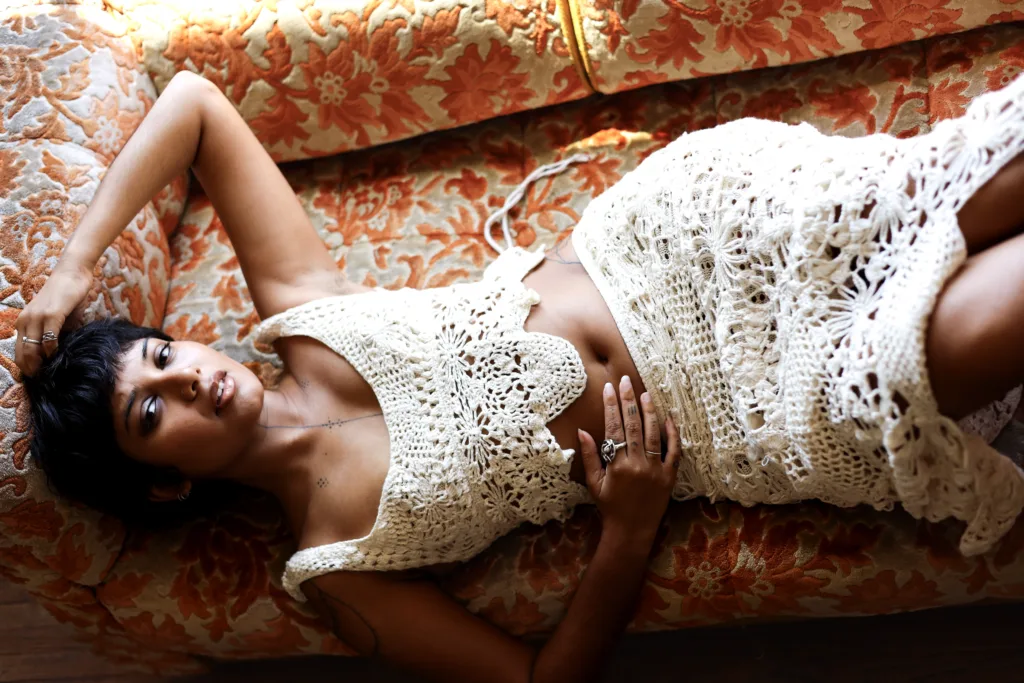
I believe my voice is power, and to this day I’m grateful to be able to use my platform to speak on human rights and fundraise for indigenous communities back home in India, as well as families in Gaza. Somehow, the tattoos still come up in conversations with my friends in India. They are markers by which they remember me or have traded tattoo stories of their own.
Each image and symbol on my skin holds a memory and anecdote of how I’ve survived, healed, and reclaimed my body as my own. They are reminders of resilience, prayers etched in ink and shields of protection that I carry with me wherever I go. When I look at them, I see the person who left home at 19, who walked through fire, and the artist who continues to rise.
Next, check out how this writer learned to tap into her inner child.