
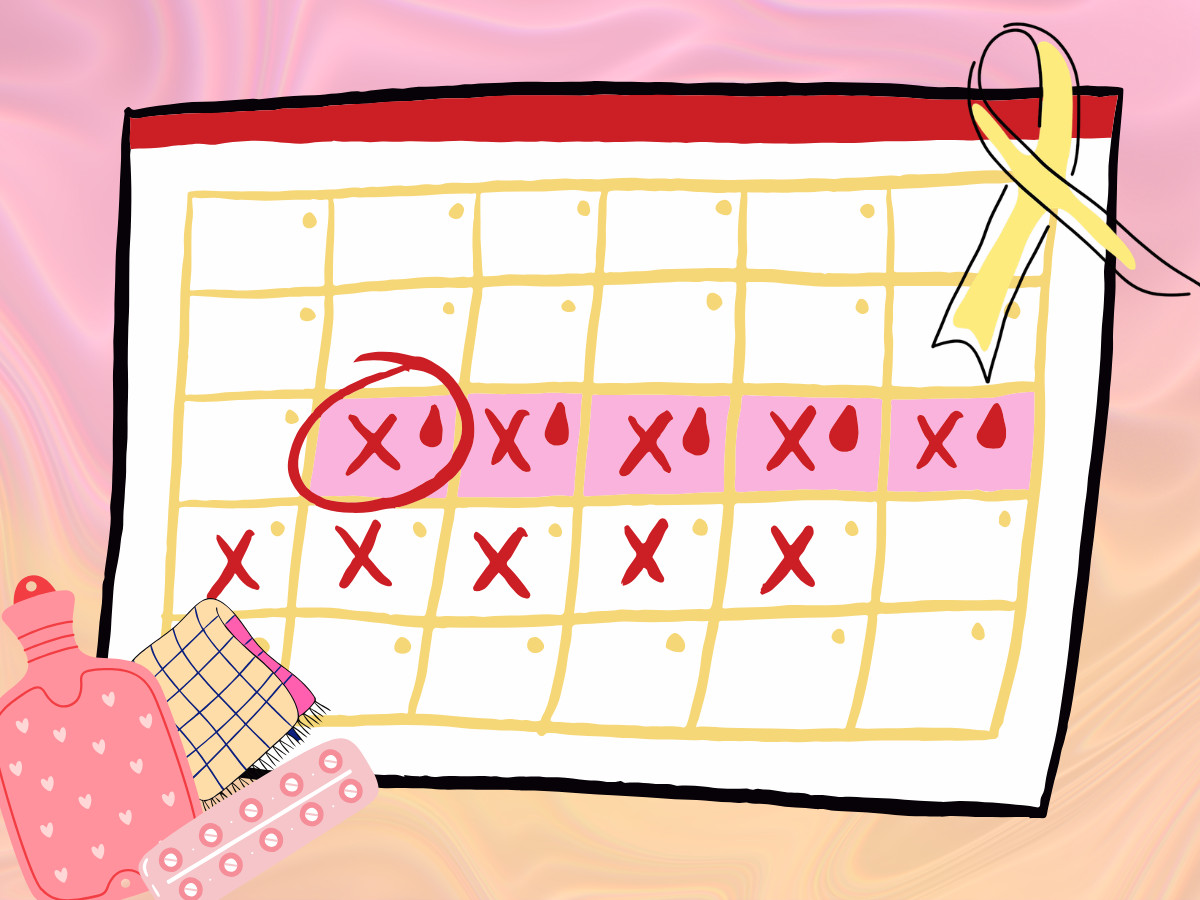

“It’s all in your head. Just pop an Advil. It’s going to be fine. It can’t be that bad.”
But “fine” isn’t the same as healthy. It isn’t the same as sitting through a meeting without wincing, or making it through a day without counting down the minutes before being reunited with your heating pad.
Endometriosis affects around one in ten women globally – roughly 190 million people – yet it often remains invisible to those who don’t live with it. Pain isn’t occasional. For many, it’s routine. Normalised. Dismissed.
What is endometriosis?
It’s a condition where tissue similar to the uterine lining grows outside the uterus, attaching to organs such as the ovaries, fallopian tubes, or bladder. It can cause inflammation, scarring, and severe pain that some describe as comparable to childbirth. Common symptoms include pelvic pain, severe cramps, back pain, fatigue, and sometimes infertility.
There are no visible signs, no casts, no wounds, nothing to signal how severe it can be. That absence makes it easier to disregard and harder to diagnose. On average, it takes up to five years to be diagnosed with endometriosis, sometimes even longer…
For some of us, that reality hits early. I was diagnosed with endometriosis as a teen. Since then, I haven’t known what it feels like to go through a month without pain – the exhaustion, the flare-ups, the days that derail everything, the silent prayers that maybe this time will be different.
My experience is nothing new. Ironically, I was actually lucky to be diagnosed as early as I was, even without clear answers at the time. For others, it can take years – sometimes, even realising their symptoms through TikTok – before they feel able to bring their symptoms to a doctor.
For Genwa Minato, that was exactly the case. “I never thought I would have endometriosis, especially since I didn’t have a heavy flow,” she said. In high school, she experienced ongoing cramps and UTI-like symptoms, but scans and tests repeatedly came back normal.
As she got older, she learned to push through the pain without answers. “I took so many antibiotics that I didn’t really need,” Genwa explained. “The anxiety of not knowing when it would come was the scariest part, especially on work trips.”
She was officially diagnosed in October 2025 at 33 after seeing a social media post describing her symptoms. “I was surprised there wasn’t a doctor who recognised the pattern sooner,” she said. There’s a strange emotional shift that comes with a diagnosis; not exactly relief, but clarity. A sense that it wasn’t imagined. That something real was there all along.
Ok, I have endometriosis. Now what?
After months of waiting for insurance approval, Genwa underwent surgery to remove her endometriosis tissue. “There’s anxiety about what if we do all of this and we go in and there ends up being nothing,” she said.
This uncertainty is part of what makes endometriosis so complex. While scans and symptoms can strongly suggest the condition, the only way to definitively diagnose it is through laparoscopic surgery; where doctors insert a small camera into the pelvis to identify and sometimes remove the extra tissue.
Even after diagnosis, treatment is rarely straightforward. It’s common for doctors to suggest the contraceptive pill to manage symptoms, or to be told to “hope it gets better once you have kids.” It’s advice both Genwa and I have received; it can be difficult to hear when what you’re really looking for is an answer, not just ways to manage the problem. “I don’t necessarily want to take that risk,” said Genwa.
Even those management options don’t guarantee lasting relief. Women’s health advocate and founder of Her Uterus, Cassandra Earle, was motivated to speak about her experience after struggling to get a diagnosis. At 17, she underwent laparoscopic excision surgery, but unlike the relief Genwa felt, her pain eventually returned. “I felt lost, confused and angry,” she said.
As Cassandra emphasises: “Endometriosis has no cure – no medication, procedure or surgery.” At best, treatments manage symptoms, but they do not eliminate the condition.
The reality is, despite affecting millions of women globally, endometriosis remains painfully understudied.
Advocacy matters because, for many women, it has had to. Not as a buzzword, but as survival. Listening when someone says they’re in pain, believing them before they have proof, and pushing for answers when the system does not offer them easily.
“Awareness on social media is improving diagnosis rates. So often people have never even heard the word ‘endometriosis,’ much less understand what it is or how it may impact someone,” said Cassandra.
The issue has never been that women aren’t speaking about their pain loudly enough. It’s that women’s pain has never been prioritised enough to truly be heard. As awareness continues to grow, the hope is that next generations won’t have to fight quite so hard to be understood and believed.
Read more on mental health the rise of the TikTok therapist here