
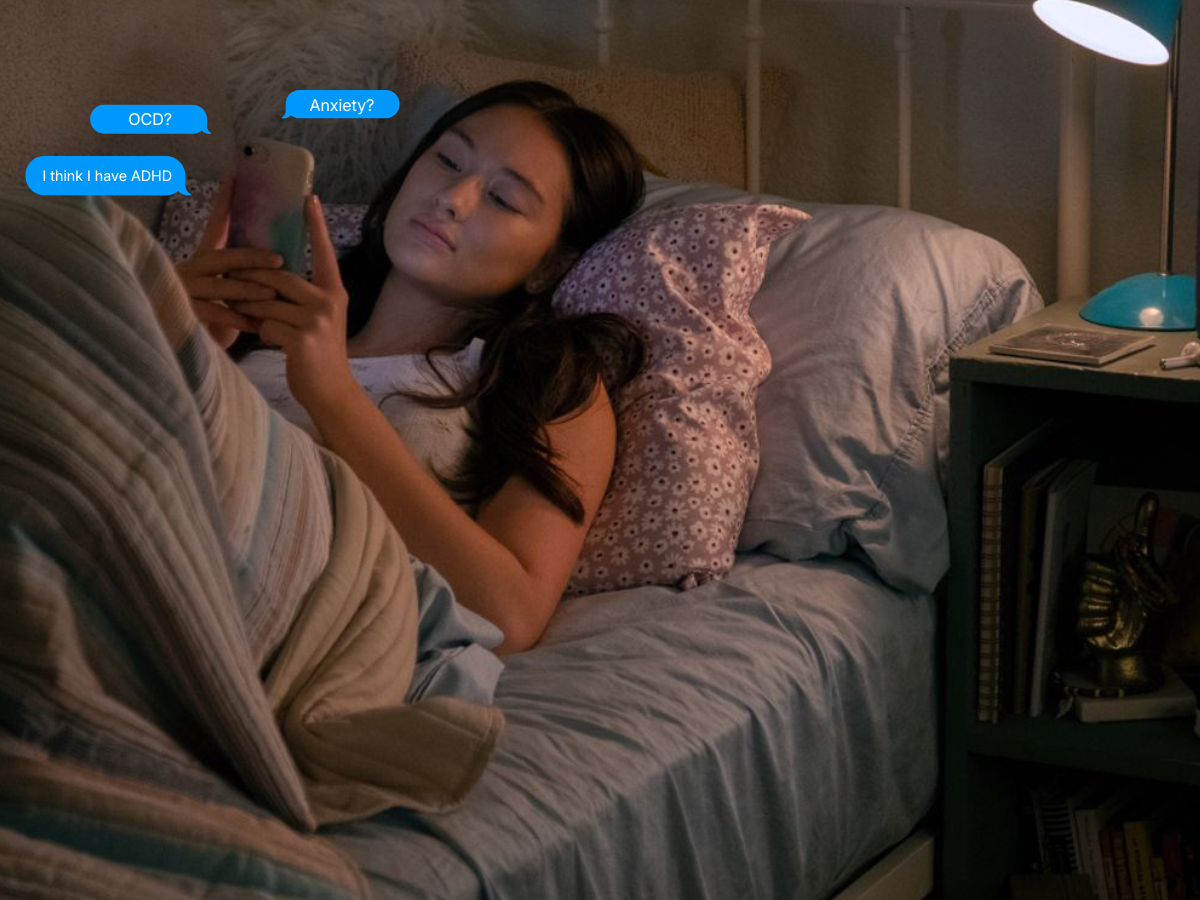

“I’m so OCD.” “I’ve defo got ADHD.” “I may have high cortisol, I feel like I have a cortisol face.” Chances are, you’ve used one of those phrases before. Maybe you meant it… Or maybe you’ve just seen it so often online that it’s become part of everyday language.
In this day and age, mental health topics has become part of our everyday life. During the pandemic, hashtags like #ADHD and #MentalHealth collected billions of views. While online spaces can be helpful for everything from banana bread recipes (circa 2020) to viral video tips (a dream for us all), they’ve also fuelled the rise of self-diagnosis.
A 2024 survey found that more than half of Gen-Z users have turned to TikTok or Instagram for mental health information before speaking to a professional. It’s comforting to feel like your intrusive thoughts might have an explanation, right? Is it OCD? Or anxiety? Or maybe ADHD? Well, it’s something.
Mental health content is often designed around relatability; it’s a core engagement pillar. For many people, it has offered something valuable: language for feelings and experiences they’ve never quite known how to explain.
This feels particularly relevant to women’s health, especially in topics like ADHD, which is often harder to diagnose in women. Some studies suggest women receive diagnoses up to five years later than men, with nearly 46% reportedly misdiagnosed before finally receiving the correct diagnosis. Instead, their symptoms are often brushed off as anxiety or misbehaviour.
At 22, Ella Randell is part of this stat. Diagnosed with anxiety and depression in high school, she initially attributed many symptoms to those conditions.
After consuming numerous ADHD videos online, she began to wonder if it “might be something I had, but I didn’t want to be perceived as ‘one of those people’ who diagnose themselves from the internet and possibly use this identity to be ‘different,’” she said.
But after her first post-grad sales job severely impacted her mental health, she knew something wasn’t right. “My anxiety was so high that I began throwing up before work and being unable to eat. It was at this point that my parents agreed there was something more serious going on… I decided to get tested for ADHD.”
Looking back, Ella can now identify many signs that she had ADHD long before her diagnosis. As a child, she struggled to make choices, like which bike helmet to buy, making her mother return to the store after every decision. At university, she often couldn’t begin assignments until the day they were due.
Ella’s experience confirmed something she has always felt inside. “My diagnosis validated my experiences of living with (undiagnosed and undetected) ADHD. I felt more comfortable looking into other resources and creators and strategies shared on social media because I felt like their intended audience.”
However, that’s not to say getting a proper diagnosis isn’t important. Researchers have found that many viral ADHD videos contain misleading or overly broad information, despite millions of views. Leanne Gayem Guerrero experienced this overgeneralisation first-hand.
Like many people, she found herself doomscrolling late into the night. Alongside K-pop and cooking videos, her algorithm fed her ADHD content. “I would relate with things like, losing focus, difficulty staying organised, forgetting tasks, and being impulsive,” she said.
What started as curiosity soon snowballed. “I consumed ADHD content religiously, but it began affecting my overall mental wellbeing, and that pushed me to seek professional help,” says Leanne. “I didn’t want to sit around self-diagnosing when it could’ve been something more serious.”
While Leanne ultimately wasn’t diagnosed with ADHD, she received support for other mental health concerns. She stresses the importance of seeking a professional’s advice: “You could easily do an online search on ADHD symptoms and almost get all the answers you need, even treatment, which shouldn’t be generic as different people respond to different types of therapy.”
Clinical psychologist Marie Condemine stresses that while online content can be validating and help with recognising symptoms, it “can’t replace professional assessment and diagnosis.” It can, however, encourage people to seek assessments.
Marie explained, “Once you click on a certain type of mental health content a few times, the algorithm starts reinforcing the same narrative instead of showing the range of possible explanations behind the same symptoms.”
She believes online content should be treated as a hypothesis or reflection rather than a fixed conclusion. “The goal is not just to put a label on an experience, it’s to understand it properly and know how to move forward with the right support and interventions.”
As Ella herself said, “social media absolutely gave me language to describe my symptoms that I didn’t know before. I remained cognizant of the fact that social media content creators are not usually medical professionals, but what was being described fit me perfectly.”
Like any open platform, social media comes with risks. Previous generations turned to gossip, magazine, or late-night WebMD spirals to make sense of what they were feeling. Now, we have TikTok and Instagram reels.
Women’s health remains understudied, and ADHD isn’t the only example. Conditions like endometriosis, PCOS, and autoimmune disorders are still routinely misunderstood, overlooked, or dismissed. While social media should never replace professional medical advice, it has given many people a different perspective – and in some cases, the courage to finally seek help.