

I was never the writer in the family. That title always belonged to my sister, Eirinah.
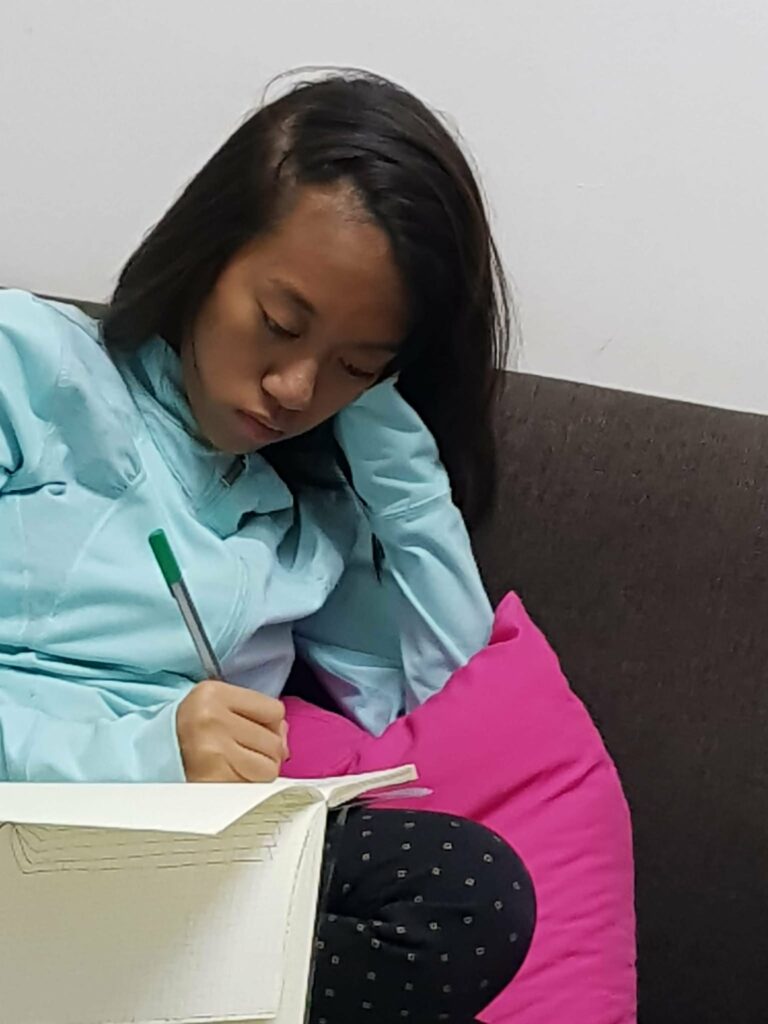
Long before I even considered my career in journalism, my older sister – affectionately called Ate Aika – was already filling her notebooks with stories, poems, and journal entries. She was the student teachers adored and class vice president more times than I could count. “Student of the Year” was a title frequently associated with her name. But most of all, she was the best writer among her peers. Eirinah was brilliant, and she knew it.
“English was my favourite subject,” she says with a smile. “I love to read and write. It’s the one thing that gives me peace inside.”
We’re third-culture Filipino kids born and raised in the UAE, children of parents who left home in search of better opportunities. Like many immigrant families, education wasn’t just encouraged; it was a rite of passage. Fortunately for Eirinah, excelling came naturally.
But while a pen and paper became her refuge, she never anticipated that the very thing she loved most – words – would become one of the hardest things to hold onto.
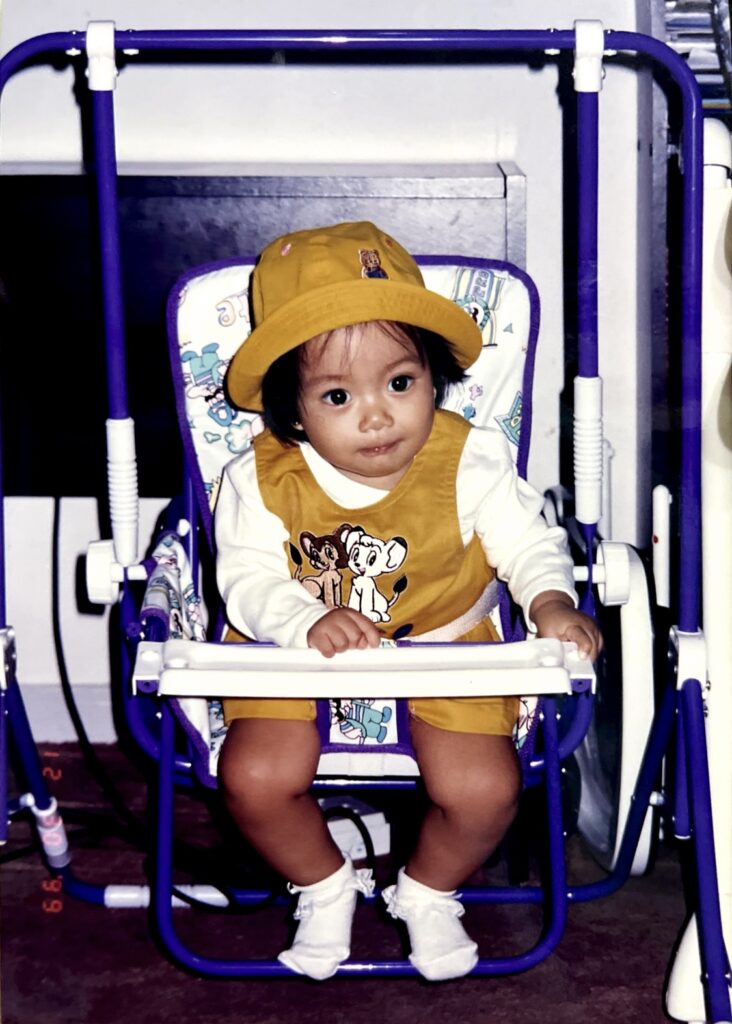
It began with moments of blank staring, conversations that became difficult to follow, and familiar words disappearing mid-sentence. More often than not, she found herself detached from her surroundings, waking up from episodes and struggling to remember where she was or why she was there in the first place.
One of the clearest indications that her epilepsy was affecting her was when she began to forget the people closest to her. “I started asking mum and dad things like, ‘What are your names?’ and ‘What is my sibling’s name?’” she tells me.
Her epilepsy is caused by an inborn brain malformation known as a cavernoma – a cluster of abnormal blood vessels that was roughly the size of a dirham – located on her left temporal lobe. As her seizures became more frequent, so too did the moments of confusion and memory loss. For most people, forgetting a word is just a passing frustration. For Eirinah, whose identity had always been built on writing, it felt as though she had lost a part of herself.
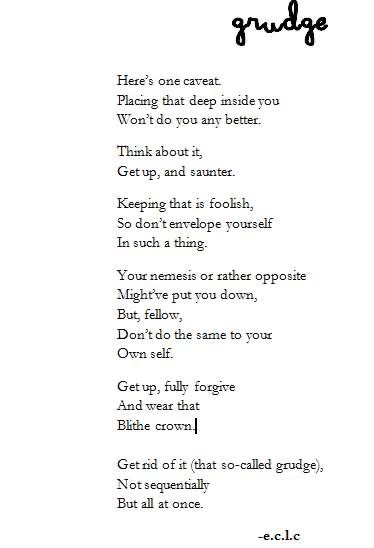
When her condition manifested at 12 years old, and the seizures became more frequent, the feeling of uncertainty began to cloud the future she imagined for herself. “I worried about not being able to go to school or finish my studies. I had thoughts like, ‘Is college even possible?’” She pauses. “I started having anxiety attacks when I realised I couldn’t even trust my own mind.”
The seizures didn’t just affect her memory; they made writing and speaking increasingly difficult. “I would wake up not remembering a thing. What’s worse is that the words I had used a thousand times suddenly vanished from my vocabulary,” she shares. “I wouldn’t be able to speak. Even if I tried, my words would come out incoherently. I would even write in scribbles.”
As if navigating each day wasn’t difficult enough, her medication also came with a physical toll. “I experienced unwanted side effects. The most noticeable was severe acne,” she says. “Later, my medication led to hair loss and involuntary hand tremors. I also began to experience mood swings, from irritability to bouts of depression where I would just lie down, avoiding light and crowds.”
The constant fear of being watched and even cared for made her feel small. “I had to be constantly supervised and sheltered, so thoughts of being useless started to creep in,” she recalls. Eirinah adds that the anxiety of being judged, coupled with the feeling she couldn’t do things independently, left her mentally drained.
Finding a job soon became another source of anxiety. According to a 2023 study by the British Safety Council, two in five employers reported that they would hesitate to hire someone with epilepsy to avoid potential challenges.
“It’s definitely ten times harder. I have to prove myself more because I’m Asian, a woman and epileptic,” she confesses. “Aside from finding a job that suits my interests, I have to be capable of meeting what it demands, which, more often than not, can be a challenge.”
Yet amid the self-doubt, there were constants she could rely on. When I asked her how she navigated university life, she reflected on how lucky she was to have such a strong support system. “Thankfully, we have a very supportive circle,” she laughs. Remembering the last couple of years, she adds, “It’s funny though. We went to uni together, and you were with me the whole time. Everyone was kind enough to remind me of my meds and even cared for me when I had an episode – shout out to Mahek, Vidya, Oceane and Faiza.”
Even as she struggled to keep pace with the demands of young adulthood, Eirinah found ways to battle depression and hold onto her sense of self: “I survived depression by listening to my upbeat playlist, reading books, taking deep breaths, soaking up the warmth of the sun, and caring for our pet hamster. I was also active in the community. I played the keyboard with a band, volunteered at fundraisers and charity drives, and I’d even dance when I could. It didn’t stop me.”
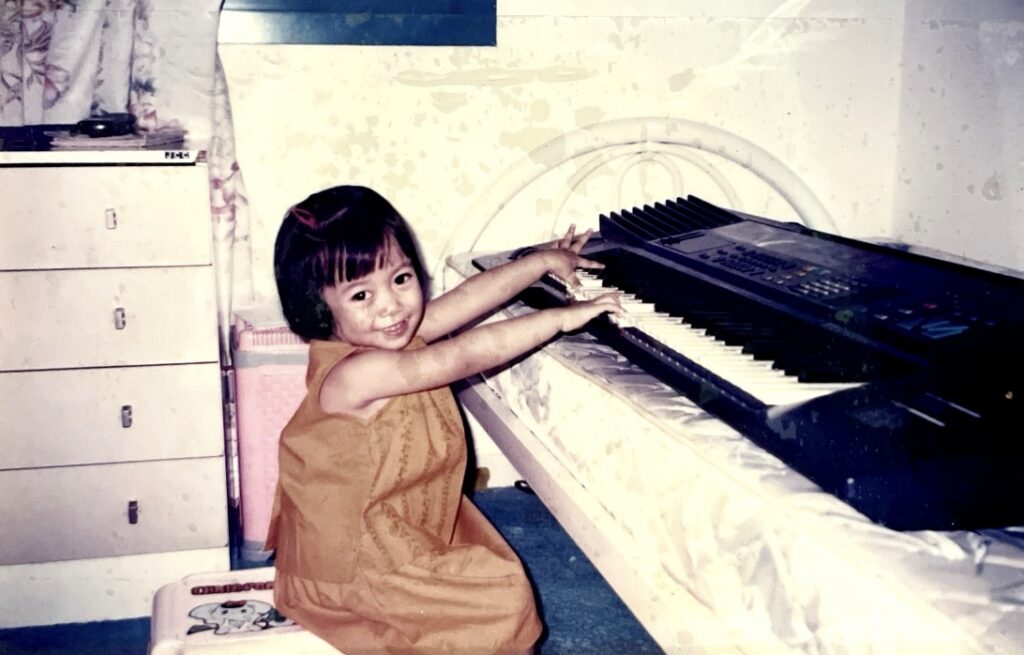
Today, her hopes stem from a concept she discovered while studying the brain. “I came across this term called neuroplasticity – the brain’s ability to change and adapt throughout our lives,” she explains. “Knowing that the brain can heal and create new pathways gives me hope for improving my memory and writing ability.”
Now 27 and volunteering in the Philippines (and around the globe), Eirinah is embracing life with a renewed sense of purpose. When I ask her what makes her feel powerful today, she answers proudly: “I see myself more empowered these days, with the seizures becoming less frequent and of shorter duration. The bouts of depression are practically non-existent. I am beginning to love myself more each day – this condition made that love more apparent.”
What keeps Eirinah moving forward is her motivation to take each day a step at a time. Having spent years feeling helpless, she hopes that younger girls facing similar struggles know that there is a life to be lived.
“To the younger munchkins facing this, know you are not alone in this,” she says. “I just want to tell you that there is hope at the end of it. While it’s cliché to say ‘be positive,’ it’s the one thing that has helped me keep moving forward.”
This feature can also be found in Cosmo ME’s Summer 2026 issue. Buy your copy here.
Helena Shahin is so done with beauty standards. Read here.