
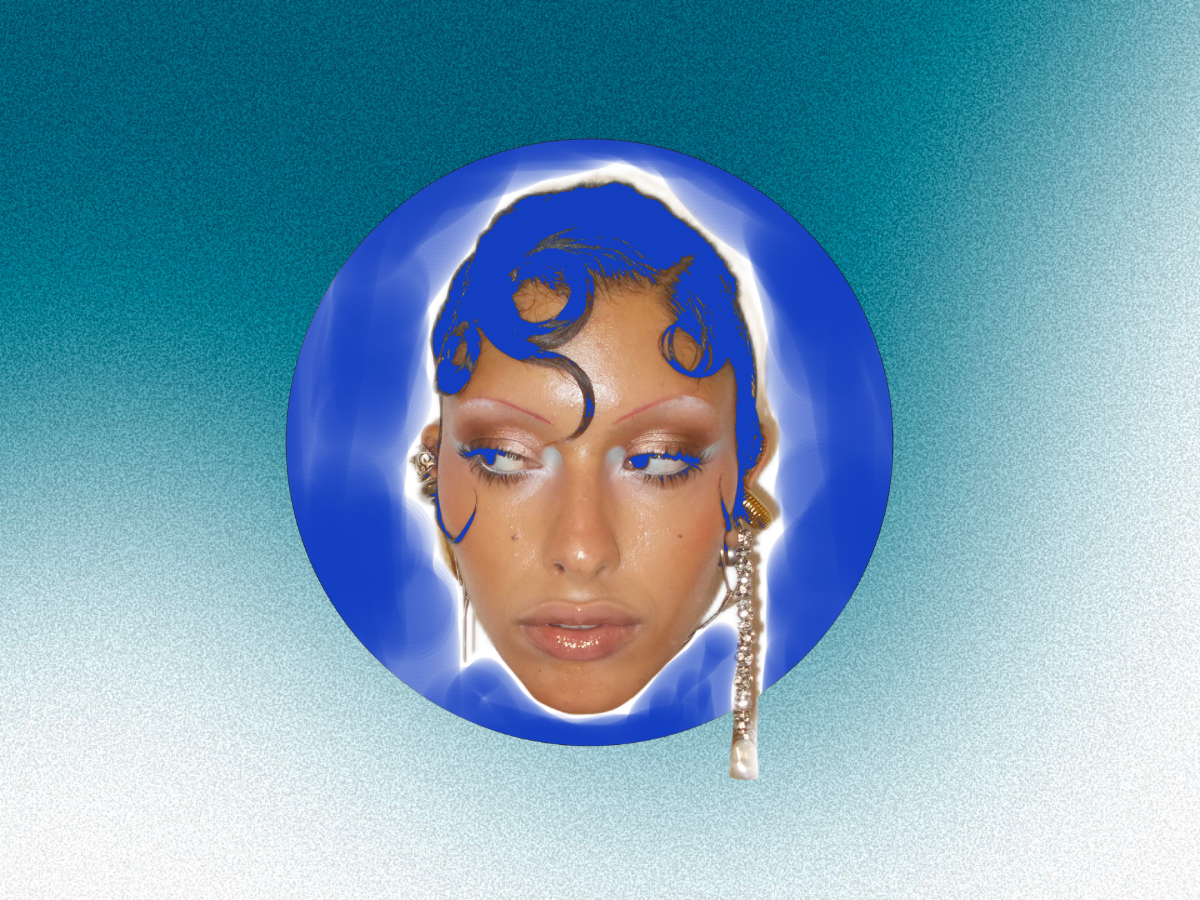

If you spend five minutes on TikTok, you’ll probably see the same faces repeated over and over again. The same sculpted and bronzed cheekbones. The same blush placements. The same It Girl aesthetic that social media continues to eat up. Multidisciplinary artist and beauty connoisseur Helena Shahin is tired of it. And so are the rest of the alts.
Helena and I have been friends since 2024. When we first met at an event, we instantly connected and spent a good two hours in conversation about reclaiming our identities and heritage, all while trauma-bonding over a glass or two of red pinot. Two years later, I’m speaking to Helena, and we’re having that talk again, but this time through the lens of beauty.
If there’s one thing that makes Helena truly stand out, it’s their particular approach to makeup. Not because it’s conventional, but because to them, it’s an act of refusal. “Generally speaking, any form of art is a rebellious act against current beauty standards,” they say.
While we’re often fed algorithm-approved femininity, Helena intentionally pushes against the idea that beauty has to be polished and palatable. What irks them most is the way social media has narrowed our perception of beauty to a binary. “I’m always quite fed up with the repetition of certain faces and identities that are being portrayed as ideal.”
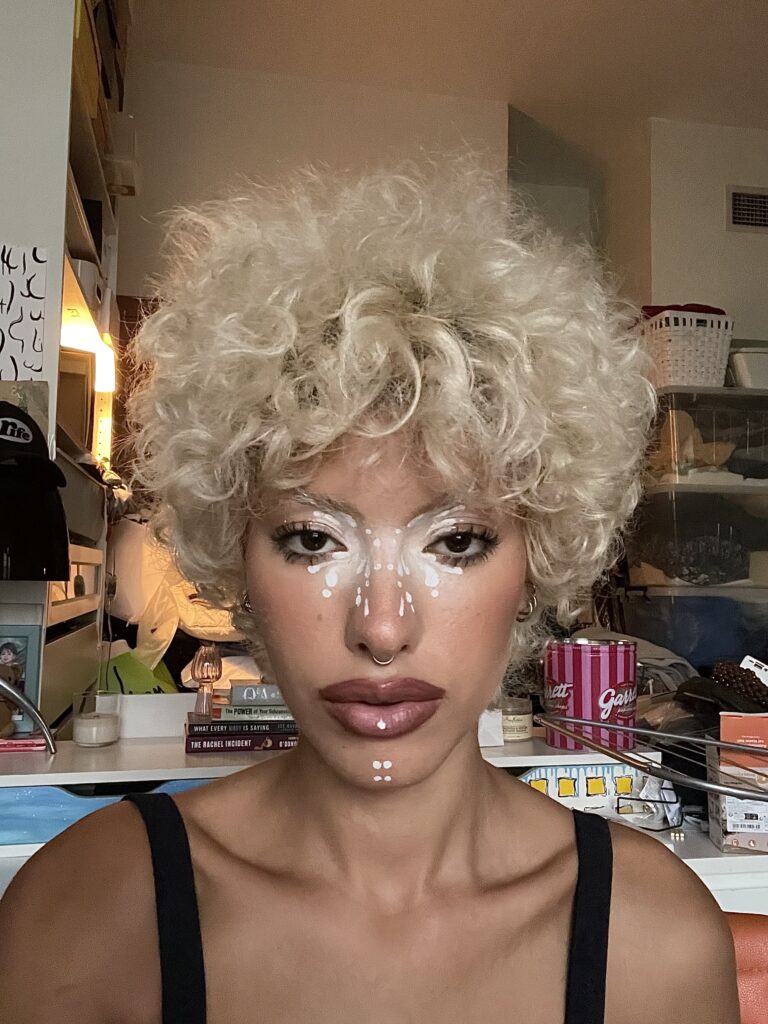
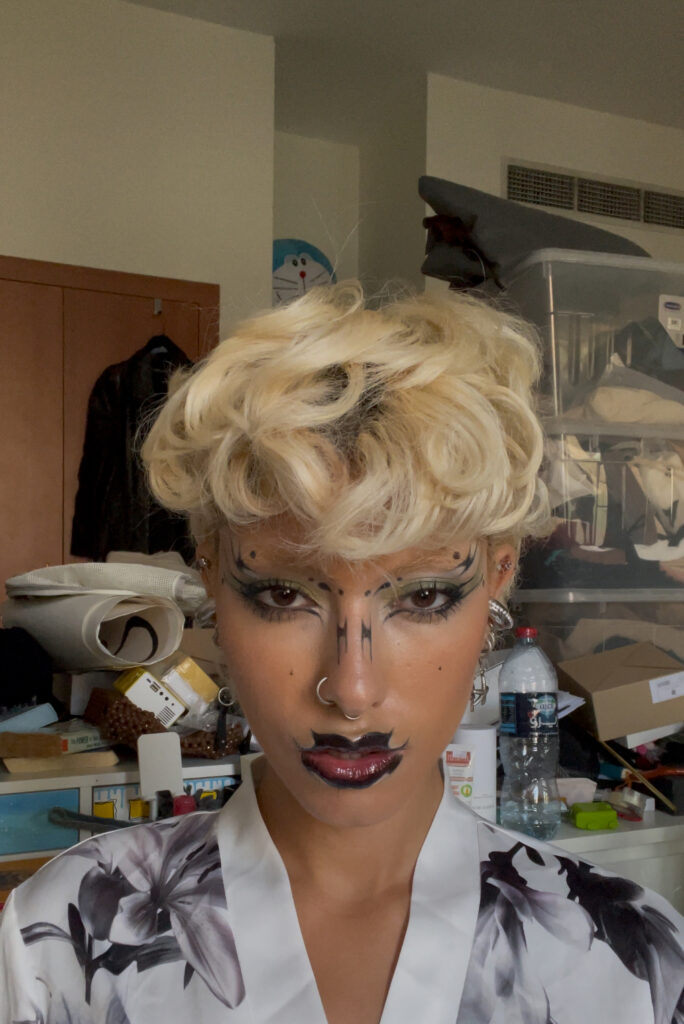
In response, their face becomes a canvas for resisting that sameness. Eyebrows disappear entirely. Lips are overlined into something alien. Eyes are sharpened and reshaped with the power of eyeshadow. “The point is to make the face look odd, to feel odd, to make you question what we consider beautiful,” Helena explains.
Helena’s understanding of beauty began long before social media entered the picture. Growing up in a small town, they recognised from a young age that beauty and art were deeply intertwined in their identity. It wasn’t found in trends but instead through proximity, at home. “Beauty is what I grew up seeing, in my mum and my family. My mum just had an amazing sense of style.”
While reminiscing, Helena reflects on how their mother nurtured their creativity from an early age. “It’s the way that my mum would style us, and the way that she allowed me to play around with her makeup. She even allowed me to paint on the walls. Anything that I would tap into, she was just there to support me with it.”
Although Helena drifted away from makeup after moving to Cairo during their teen years, their artistic instinct never fully disappeared. It wasn’t until they turned 20 that beauty became a creative outlet once again. “I started tapping into experimental makeup again in 2022. It was a time when I looked at myself in the mirror, and I didn’t like how it represented me,” they say.
Returning to makeup, however, made Helena realise how much of their relationship with appearance had been shaped by other people’s perceptions. They reflected on moments when being called “perfect” made them want to challenge the expectations placed upon them. “If someone looks at my makeup and says, ‘Oh my God, that’s perfect,’ for me, that was never the goal,” they explain.
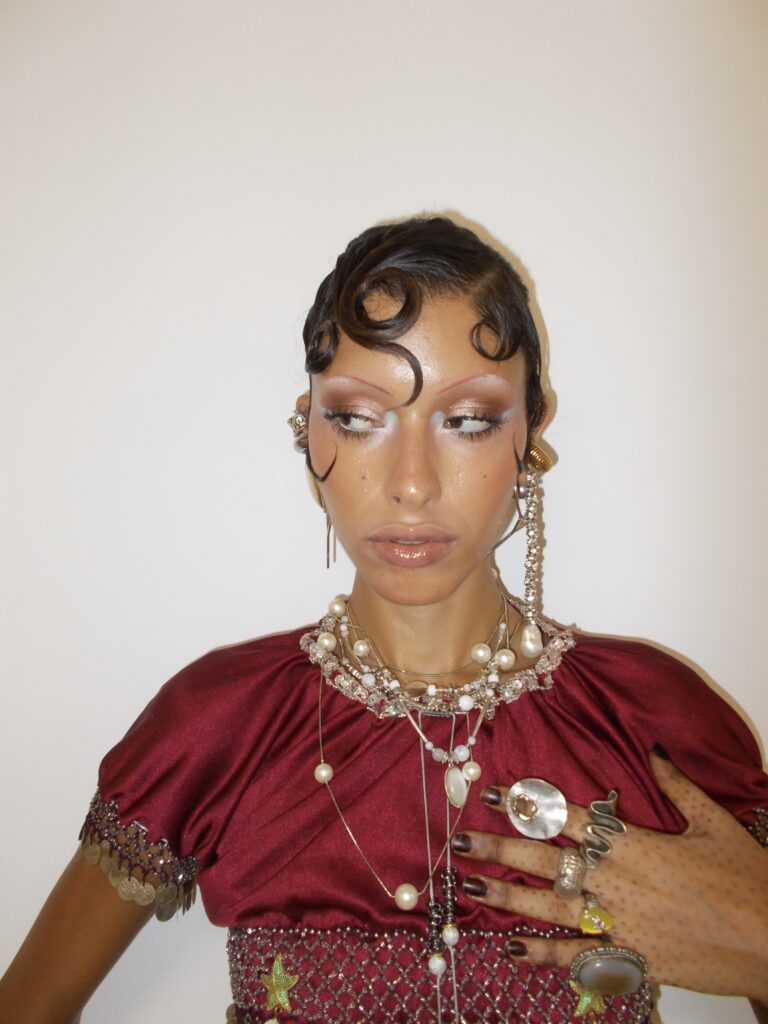
Rather than embracing the features others praised, Helena pushed back. “I grew up with people telling me that I was beautiful. They said I had a baby face, and I didn’t like that. I had very long hair that encouraged people to project a certain version of femininity onto me, so I shaved it off.” But Helena didn’t stop there. “People would say I have thick eyebrows, so I shaved them. Others said I had perfect skin, so I covered it up with makeup.”
Instead of allowing themselves to be confined by stereotypes, Helena treats makeup as a tool for transformation. “I feel like I’m a shapeshifter,” they share. “I like to change my features depending on how I feel. I think I genuinely get bored with my face. I’m not trying to permanently change myself. It’s just that makeup lets me play.”
Despite the playfulness in their art, Helena admits that a large part of their artistry also stems from vulnerability. “Everything I put out there that is authentically myself is vulnerability,” Helena admits. “People think my looks express confidence and boldness, but actually, it’s me constantly exposing myself, standing against standards that don’t fit my identity on social media.”
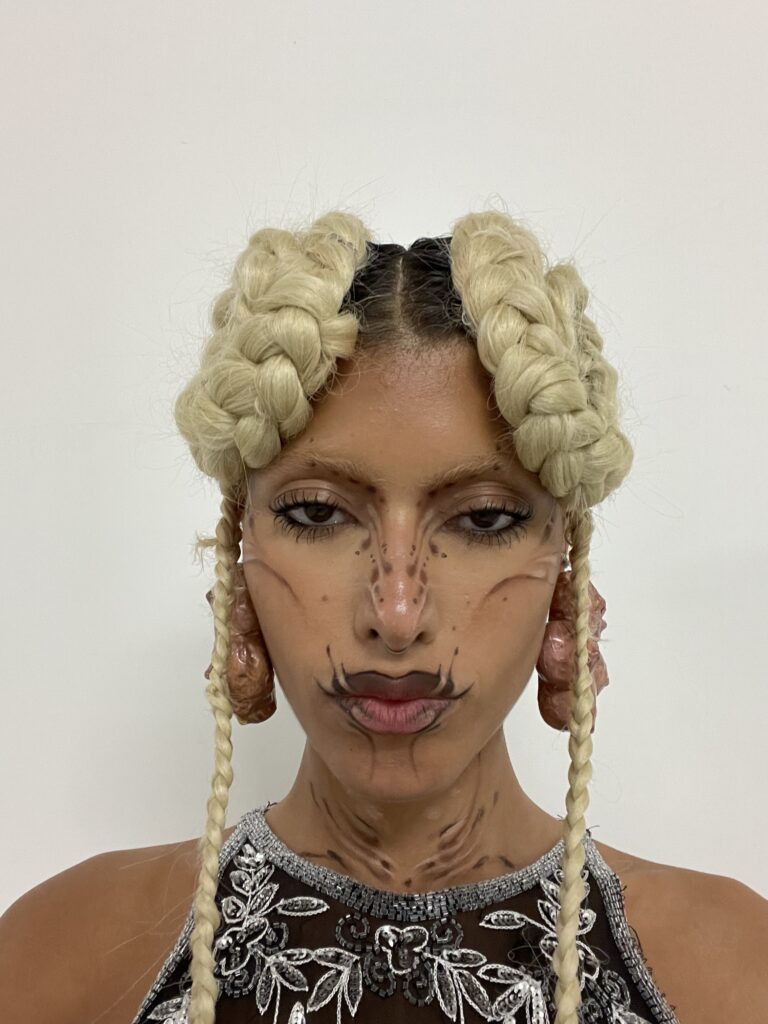
Of course, existing loudly and proudly online often comes with its own set of struggles. Helena briefly mentions that people often mistake their art as a way of seeking attention. Even with the misconceptions, it’s through the content they create that their followers ultimately feel seen. “I’m actually trying to create space for people like me. One of my favourite things is getting messages from strangers saying they feel comfortable knowing someone like me exists,” Helena says with a glimmer in their eyes. “I want people who feel weird to know it’s okay to be different.”
In many ways, Helena’s artistry serves as a form of resistance to the beauty industry, which often excludes those who don’t fit in. And they know this firsthand. “There are so many challenges in owning yourself that don’t fit stereotypical beauty standards,” they say. “I’ve been rejected by brands because of who I am and how I look.” Yet even with those experiences, Helena remains unwavering and firmly self-assured in who they are. “At the end of the day, I’m Egyptian. I’m North African. Arab. I still exist,” they emphasise. “I exist. People just don’t want to admit it.”
I myself have fallen into society’s woes. But Helena emphasises that experimenting with beauty shouldn’t stem from a place of self-hatred and insecurity. In fact, Helena urges people (including me) to first feel comfortable in their own skin before diving into anything else. “Make sure you’re comfortable with yourself before experimenting with change,” they advise. “Once you’re truly okay with that, change becomes healthy.”
The biggest takeaway from our conversation is that Helena encourages everyone to find inspiration that won’t undermine their self-esteem, but instead to follow someone who genuinely uplifts them. “Find someone who resonates with you. There’s nothing wrong with copying until you eventually discover your own idea of beauty.”
So, yes, for Helena, beauty isn’t about becoming more desirable and TikTok-approved. No, that conversation in 2026 has long been over. It’s about reclaiming ownership over yourself and how you choose to exist. Perhaps that’s why their artistry feels so oddly compelling. Helena reminds us that beauty can also exist in discomfort, in being different, and in rebellion. That in itself is power
This feature can be found in Cosmo ME’s summer 2026 issue. Grab your copy here.
Ameni Esseibi says you need to love yourself a little more. Read more here.