

You’ve seen the quintessential Muslim girl all over your feed. Yup, the modal hijab, wrinkle-free and swooped perfectly over one shoulder (bonus points if it’s the leopard-print Vela). Her face? Beat, but tastefully so (the kind of makeup that says “effortlessly flawless,” probably featuring the newest Huda launch). She’s in a “simple” linen two-piece set from whichever modest fashion brand is trending this month, or maybe a floral abaya thrown over jeans. There’s an oat-milk matcha in hand, the faint scent of vanilla and oud Kayali in the air, and a stack of BookTok’s latest bestsellers waiting at home. Her feed? Full of sun-kissed photos captioned, “girlhood 🎀”.
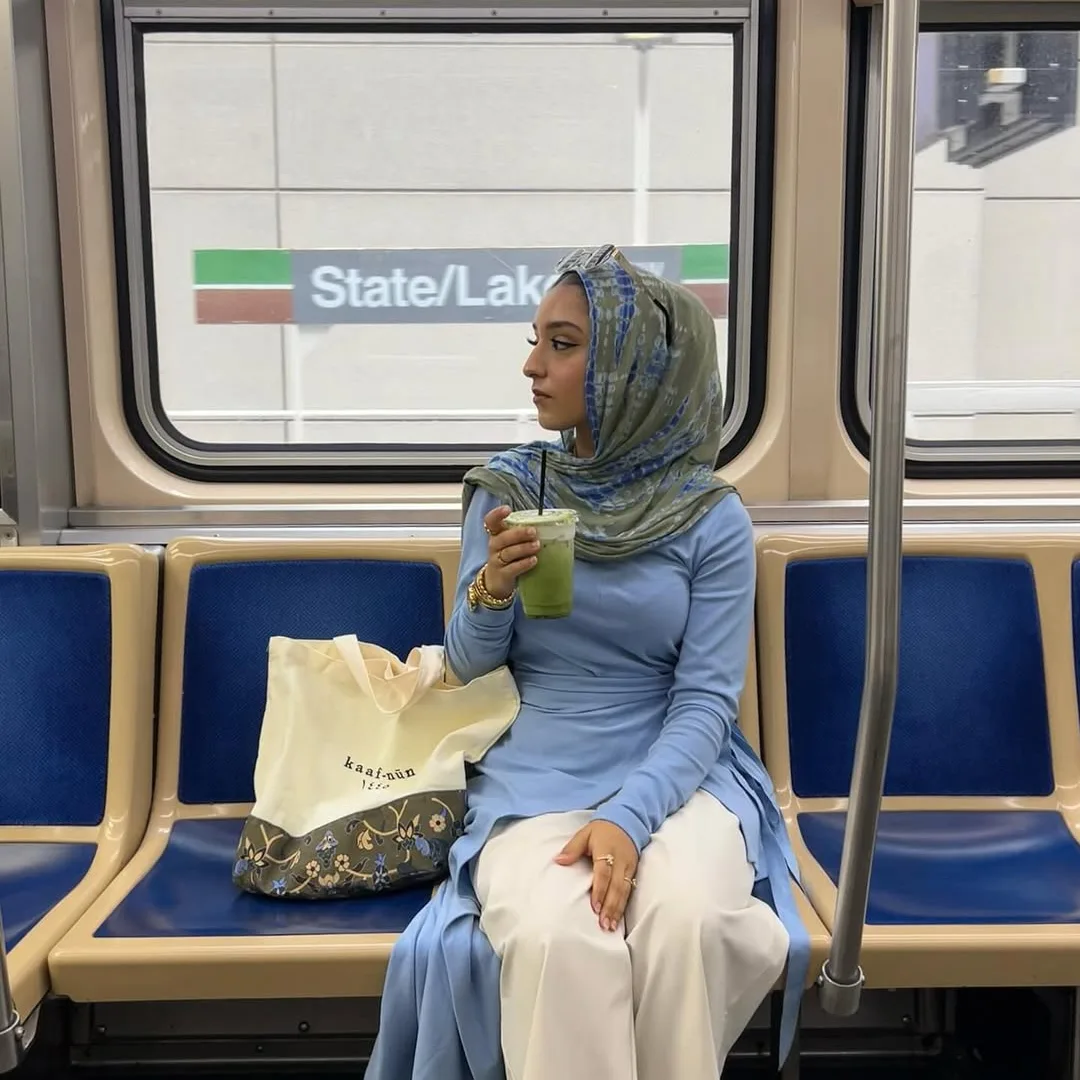
And honestly? I want to be her.
Growing up Muslim and Hijabi, representation was practically nonexistent in mainstream media (if you don’t count random Law and Order cameos). Influencers filled that void for an entire generation of Gen Z Muslim girls. Whether you were there during the 2015 era of saimasmileslike and Amena Khan, or you joined later with the Assad sisters, you know the feeling: seeing someone who looks like you being considered “cool.” It’s validating in ways words can’t fully describe.
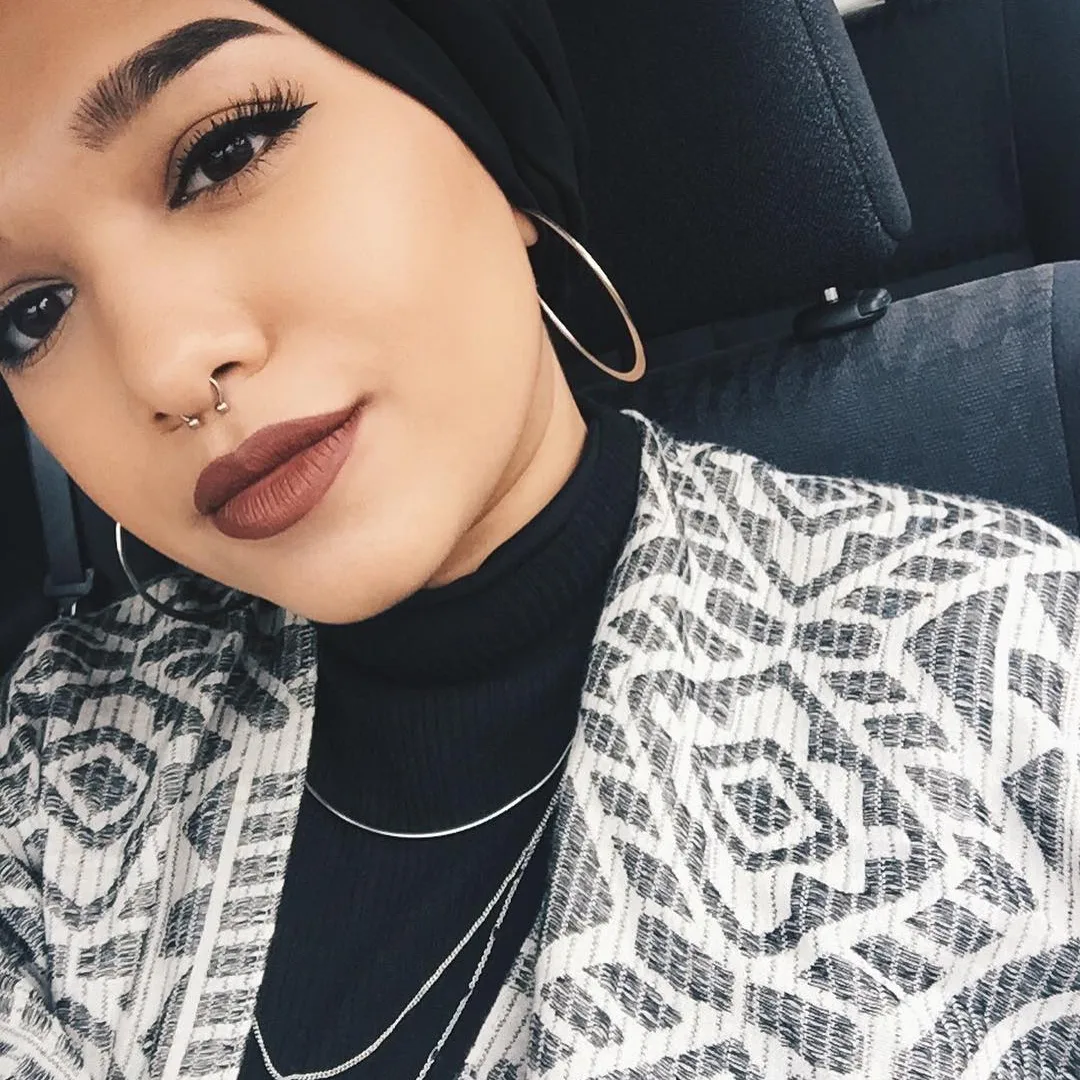
But somewhere along the way, in trying to build our own mainstream, we created a new kind of box. Now, there’s nothing wrong with liking matcha or modal, obviously. It’s the pattern that comes with it, a kind of self-infantilisation disguised as “soft living.” We scroll through reels of influencers in massive homes calling their lifestyles “slow,” “girlhood,” “just being a girl,” or justifying every haul with “girl math.”
“This version of femininity – delicate, soft, luxurious – sells a fantasy. When you market yourself [as a trad wife], you’re often projecting an image of not working – yet you are monetising through brand deals and sponsorships,” implores Pakistani-Canadian actress, Aysha Raza. Muslim girlhood turns into a performance of “curating yourself to appear palatable, disciplined, and non-threatening,” explains Najma Sharif Alawi, a writer and researcher who splits time between New York and Mexico City.
What even is brain rot?
“Brain rot,” Oxford’s 2024 Word of the Year, describes the mental decline caused by consuming too much trivial or unchallenging online content. Think endless short videos and images that leave you overstimulated but somehow still empty. It is, as Najma puts it “a habit of hyper-consumption, of media and material things, dressed up as self-expression.”
I need Muslim girl brain rot to end in the West and I need the girls to start reading some theory. Every day can’t be matcha, Vela scarf and Dubai vlogs.
— شريفة نجمة (@NajmaAlawi) November 4, 2024
Muslim girls aren’t immune to it. “With Muslim women, [brainrot] often looks like performing identity through consumption. Because we are so heavily scrutinised, many of us have learned to self-censor and conform, and what we consume becomes a proxy for identity,” says Najma.
Cue the “why do I need this degree when I’m going to marry a provider” reels, the endless romanticising of marriage, the book hauls stacked with every new “clean romance,” and the affiliate links for lipstick and hijab magnets, all perfectly packaged for the Muslim girl demographic.
@naa.diyah._ Let’s be honest my degree is for decoration🤭
This “Muslim-washing” of online culture shows up in limited-edition hijabs, “must-have” abaya-sets, and endless restocks from ultra-fast-fashion brands. They turn symbols of faith into capitalist bait. “I know first-hand how easy it is for Muslim women to fall into hyper consumption. Especially when we’re constantly policed for what we wear. Consumption becomes a form of coping and control,” relates Najma.
Religion and reflection
Islam, in its essence, is deeply anti-brain-rot. A central part of faith is niyyah, intention. It’s what you make before you eat, pray, or act. Doom-scrolling doesn’t exactly fit that vibe.
“We live on autopilot because of capitalism, but reflection is essential for spiritual growth. In modern terms, it’s called mindfulness or pausing to realign our intentions and actions with faith,” spells out Najma.
@zrskive lol muslim girl brainrot #relatable ♬ japanese denim – nini1xdae3
Islam also calls for responsibility to ourselves, our communities, and the planet. There’s a bigger conversation to be had about accessibility in the modest fashion world, sure. But does inaccessibility justify endless polyester co-ords that end up in landfills by next season?
“As someone who loves fashion, I’ve noticed how drastically the quality of clothing has declined. I’d rather be selective and intentional with what I wear,” says Najma. For Najma, knowing where your clothes comes from is a way of increasing intentionality.
Another Islamic principle worth remembering is israf, a mix of greed and wastefulness. Islam teaches moderation in all things, a principle that feels especially relevant in the age of TikTok Shop and influencer marketing.
“A lot of people think I am asking them to be broke by shunning hyper consumption, but that’s not what I am saying at all. Being wealthy isn’t un-Islamic; in fact, Khadija (RA) and the Prophet (SAW) built their love story through the shared pursuit of financial excellence. Islam encourages us to strive for excellence in every area of life, but it’s how we use our blessings to uplift others that defines us,” explains the writer.
Now that we know it’s a thing (yes, both you and I, girl), how do we actually combat it? Ayesha and Najma share their tips; practical, mindful, and rooted in both faith and self-awareness.
Remember that people are meant to be connected.
Next time you feel that itch for stimulation, try calling a friend or chatting with the person next to you on the train instead of reaching for your phone. Connection feeds the soul in a way scrolling never can.
Practice gratitude.
“Your brain is this intricate, stunning creation by Allah that keeps you alive,” explains Ayesha. “Your brain is there for you when you need it; you should be there for it and nurture it in return.”
Journal your intentions.
Reflection is a form of self-respect. “Write down what you want from your day, week, month, or year, and check in with yourself. Why am I doing this? Who benefits from my actions?” recommends Najma.
Take intentional pauses.

Islam already gives you five built-in moments of mindfulness every day. The next time you catch yourself about to scroll aimlessly, stop and ask, “What am I avoiding? What am I feeling?” That gap you’re trying to fill might need something deeper,” advises Ayesha.
Commit to self-study.
You don’t need a degree to learn. Najma recommends you pick a topic or language that excites you, find books, podcasts, and documentaries, and train your mind to recognise patterns and think critically. The pursuit of knowledge gets you brownie points in the deen and the dunya.
Read daily.
Reading was the first Quranic commandement, and should form the skeleton of our day to day. Start small; even one essay or article a day can expand your perspective. Read fiction, nonfiction, poetry, research, etc. The point is to diversify your understanding of the world.
@anikatasnim208 Inspired by @najmamsharif’s Muslim girl brain rot tweet. Seek knowledge for the sake of Allah swt. Read at least one page a day. #politics #islam #muslim #read #booktok #muslimgirl
Move your body.
The Prophet (SAW) practised archery, swimming, and horseback riding. Exercise builds confidence, clarity, and focus. Our bodies are an amanah (trust) from Allah (SWT), and caring for them is an act of worship.
“As privileged Muslims, we must stay grounded in the realities other Muslims face. If you have access — through your passport, bank account, or platform, ask yourself: how are you using those blessings to benefit those who don’t? Because blessings are also tests from Allah (SWT),” concludes Najma.
At its core, Muslim girl brain rot isn’t really about matcha, hijab magnets, or linen sets. It’s about what happens when meaning gets replaced by aesthetics, when faith becomes a filter on a IG post over a filter for consumption.
And maybe the cure is as simple (and as hard) as slowing down, setting an intention, and remembering that being a Muslim girl is an identity that goes beyond a performance.