
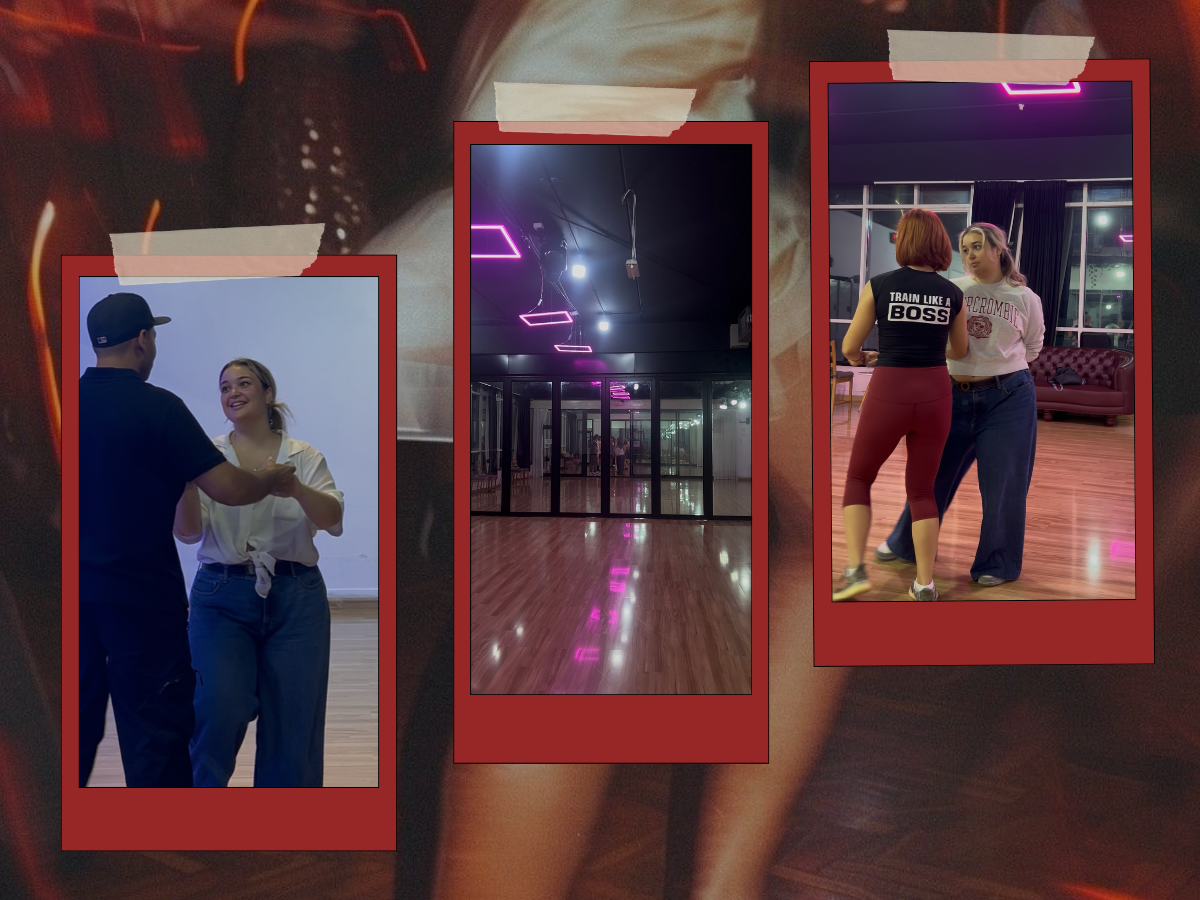

“I’m going to a salsa trial class. Do you want to come with me?” Those are words I never thought I would hear from my mother.
To be fair, she has always had a talent for surprising me. Some of her ideas lean a little… eccentric. But asking me – a girl who has spent the last few years living with high-functioning anxiety and an Olympic-level ability to overthink every social interaction – to willingly sign up for an activity involving talking, dancing, and getting uncomfortably close to strangers? That threw me for a loop.
“Never mind,” she said. “I knew you wouldn’t come.” Well. Challenge accepted. Now I had no choice but to drag myself to this free trial class, fully convinced I would survive exactly one lesson and never return. At least I could tick it off the bucket list. It would become one of those stories you tell yourself later: Yeah, I was terrified, but I did it anyway. I expected to endure it. I definitely didn’t expect to love it.
Twenty minutes into the class, the instructor clapped his hands and announced, “Find a partner.” Absolutely not. I am a proud member of Gen Z, which means many of our relationships are comfortably parasocial. We communicate through memes, voice notes, and if we’re feeling brave, FaceTime.
Now you want me to hold hands with a stranger? Respectfully… no. I was going to walk out, but then I would have had to cross a room full of strangers – and that was almost worse for someone with social anxiety. So I did it. I held hands with a male while furiously glaring at my mother for putting me in this situation. I spent the first few songs concentrating on hearing my heartbeat and trying not to step on anyone’s toes. Then, somewhere between laughing at yet another mistake and letting a man lead, I realised something. Nobody cared. Everyone was too busy getting the steps wrong themselves.
I have to, in part, give out some flowers to the coaches at Ric Banks Dance Academy, whose sarcasm, jokes and wit pulled me out of my shell and haze of discomfort. I may not have known salsa, but I definitely knew dry humour. That was enough to keep me coming back until the dancing started to make sense too – turns out I don’t have two left feet. A supportive environment doesn’t make the nerves disappear, but it does make it much easier to push through them.
It didn’t happen overnight. I didn’t leave that first lesson suddenly fearless or transformed into the sort of person who strikes up conversations with strangers. But each week, showing up became a little easier. The knots in my stomach loosened, the room felt a little less intimidating, and eventually I found myself looking forward to Wednesday nights instead of inventing reasons to skip them. After that, it turned into twice a week, and then, I picked up bachata.
It wasn’t until much later that I wondered whether there was actually a reason those two hours each week made such a noticeable difference. A recent study by Cambridge University found that participants taking salsa classes reported improvements in depressive symptoms and overall well-being. Unlike exercising alone, partner dancing combines movement, music, learning and human connection. When you’re focused on the next step and trying not to stand on your partner’s toes, there isn’t much room left for anxious thoughts.
If you’d told me a year ago that I’d willingly spend my evenings dancing with strangers, I’d have laughed. If you’d told me the suggestion would come from my mum, I’d have laughed even harder. Yet one reluctant “fine, I’ll come” turned into one of the best decisions I’ve accidentally made. Salsa definitely didn’t make my anxiety disappear by any means, but for a few hours every week, it had less space to exist. Somewhere along the way, I stopped thinking about whether I belonged in the room and realised I simply enjoyed being there (though I hate admitting my mother was right).
There definitely isn’t a one-size-fits-all for everyone’s mental health; what works for one person may do very little for another. But if dance has taught me anything, it’s that sometimes the thing you need most is the thing you’d least expect to say yes to.
Read about self-diagnosis and the TikTok therapist here.