
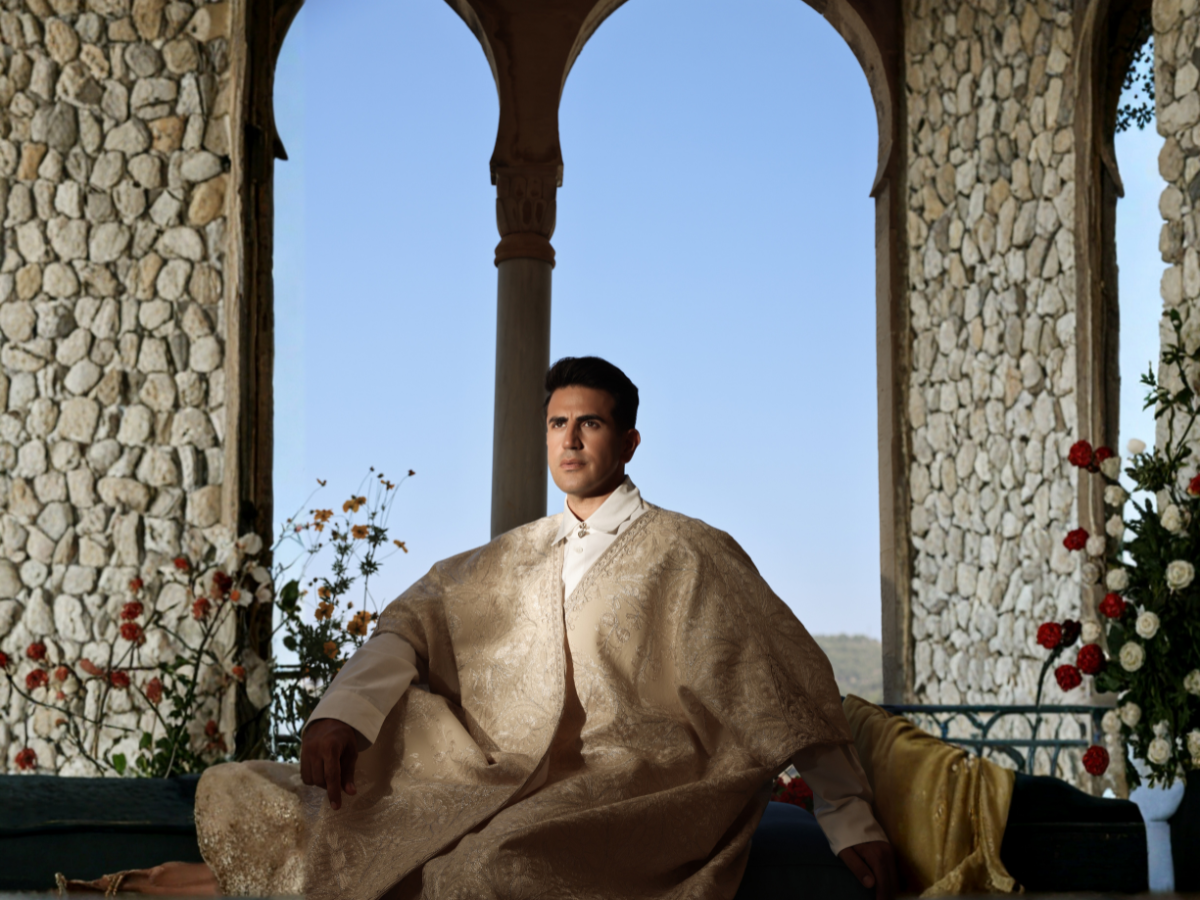
As eclectic fabrics and mismatched sheets slosh around in a lush bath of Tyrian purple dye, scraps litter the patterned tile lining the floor. They’re spaced out on the backs of couches. They’re hung by the window sills. They even dangle off dining table chairs, as is often the case in Lebanese homes. Bell sleeves work tirelessly at breathing life back into the mundane. That’s the world Lebanese couture designer Joe Challita was brought up in.
“I grew up with a very fashionable mother, and I was always in awe of everything she did. Just using things out of the norm and creating something else, that thinking out of the box, was such an inspiration for me at an early age,” the couturier recalls.
“Sometimes, I’d go shopping with her, and I still remember, she bought this crochet table cover once, and made these see-through flares that she wore with a little bustier and a crochet cardigan over it. To see that design process was an eye-opener for me, and I still use that concept today in my work,” Challita says.
He goes on to describe makeshift bedazzled boots glitzed out with beads and crystals, an effort of a mind so ambitious, it can’t not be original yet contagious all the same. “It shows up in the colour combinations and the fabrics I’d use – a lot of curtains, I sometimes find beautiful, vintage pillow cases. I love using bedsheets in my fashion. I’ve also made headpieces from old candelabras by breaking off ornate roses on them and repainting them,” the costumier exemplifies.

He attributes this zest for fashion, in part, to a brief window of his upbringing spent in Lebanon. “I was born in Australia, but my parents moved back from 1985 to 1994. Those short years really shaped who I am,” the fashion designer tells Cosmo. “That period was booming, because it was post-Civil War, and there were names like Robert Abinader, he was huge. Elie Saab was relatively new and still establishing himself. There was just this fashion chaos happening, and everyone was obsessed, even more so than today.”
Given tensions were still simmering beneath the surface, the family didn’t visit Beirut often, leaving the capital’s allure a stranger in the archivist’s eyes after returning to Sydney. “That’s what happens when you live in another country, then you have this nostalgia, this haneen – you become more rooted in and curious about your heritage.”
As fate would have it, a “Big-Brother-meets-project-runway” fashion competition brought him back with a viral punch to the Lebanese capital in 2007. “It was called Mission Fashion. I applied through LBC, and they brought me in to be on the show. It was under the patronage of Elie Saab, actually.” This would lead the former solicitor down a path of love with what he now calls “the fashion capital of antiquity,” Tyre.
“It was eye-opening for me to realise I didn’t see Lebanon in the same way locals prided themselves on. I started seeing Lebanon coming from an Australian mentality. How amazing to be Mediterranean! I’ve never actually heard the word Mediterranean from anyone Lebanese when I was growing up; we’re Arabs,” he thinks aloud.
“I discovered Beirut, you can say, from 2007 to 2011. Being in Australia this whole time, I’ve been living away from it, so I had this curiosity to dig deeper for its truths. People would always ask: “Who’d leave Australia for Lebanon?” They just didn’t get it,” he relays.
He describes a nation that withstood an explosion, devastating the capital’s port, one that experienced a subsequent public uproar in the Thwara, and then came the final blow – the economic crisis, paired with Covid as the cherry on top. It came to be too much. “I couldn’t stay anymore, but I didn’t wanna go back home to Australia either. I wanted to move somewhere closer so I can always still have easy access to Lebanon. And that’s why I decided on a move to Abu Dhabi,” the fashion journalist details.
“When I moved here, it just hit me. I was like, you know what? My dream was to be a designer. And I did everything that I, in my humble opinion, wanted personally. I never wanted to be this huge company or this huge designer. I had dreams to do fashion shows, to dress celebrities, red carpets. And I feel like, as a true artist, I achieved my dreams.”
“At this stage, I’d like to do something that carries more weight; something that leaves meaning, something that will inspire the new generation,” Challita says. “As a designer, yes, you carry your country’s name and platform it, but it’s more of a personal pursuit. I wanted to create something truly communal,” and, sure enough, the cultural ambassador knew just where his strength lies.
“I realised that, as designers, we don’t know our folklore. What I can do through my expertise in fashion is restore national identity, preserve traditions, archive, document, revive, and globally platform with all my skills, for my country and for the future generation,” he describes his lightbulb moment.
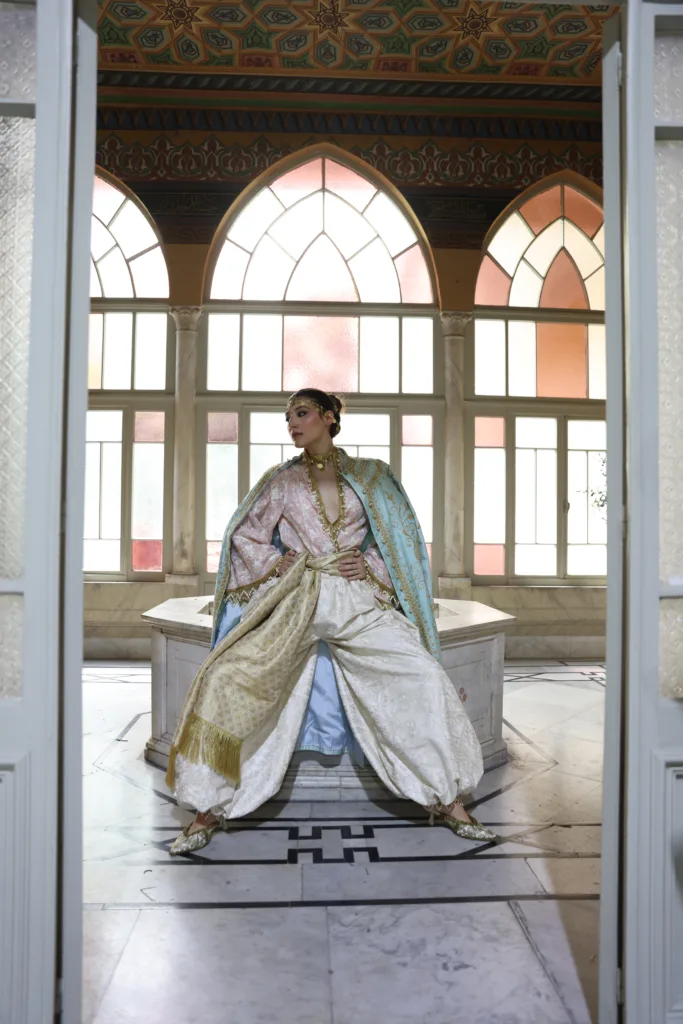
Now, heritage has become more of a scene for cultural negotiation. “I’m not expecting people to go and wear it out, even though Zara is full of shrawiel and vests with the brim and the embroidery. It’s a trend, actually – the hats and the baggy pants, it could easily pass as modern interpretations of Lebanese fashion,” he poses in retrospect.
When touching on why this disconnect from Lebanese traditionalism exists, the founder of Folklor Mag did not hold back. “The Civil War erased a lot of our memory. 25 years were lost on Lebanon. In the 60s, there used to be a lot of advertising for Lebanese folklore under the Ministry of Tourism,” he paints a picture of models donning traditional gowns on street billboards, travel posters, even costume parties centring the culture, a sight now filed away under lost archives of crisis.
“Post-war, there was more receptiveness to Western influence in music, in fashion, etc. The obsession became modernisation, so we did not look backwards, to the roots. We were trying to catch up. Parents in the 90’s weren’t attuned to the culture themselves – think of it: the 70’s and early 80’s were lost to war, so there was nobody to inherit the passion of the 60’s gen,” the fashion historian pieces together.
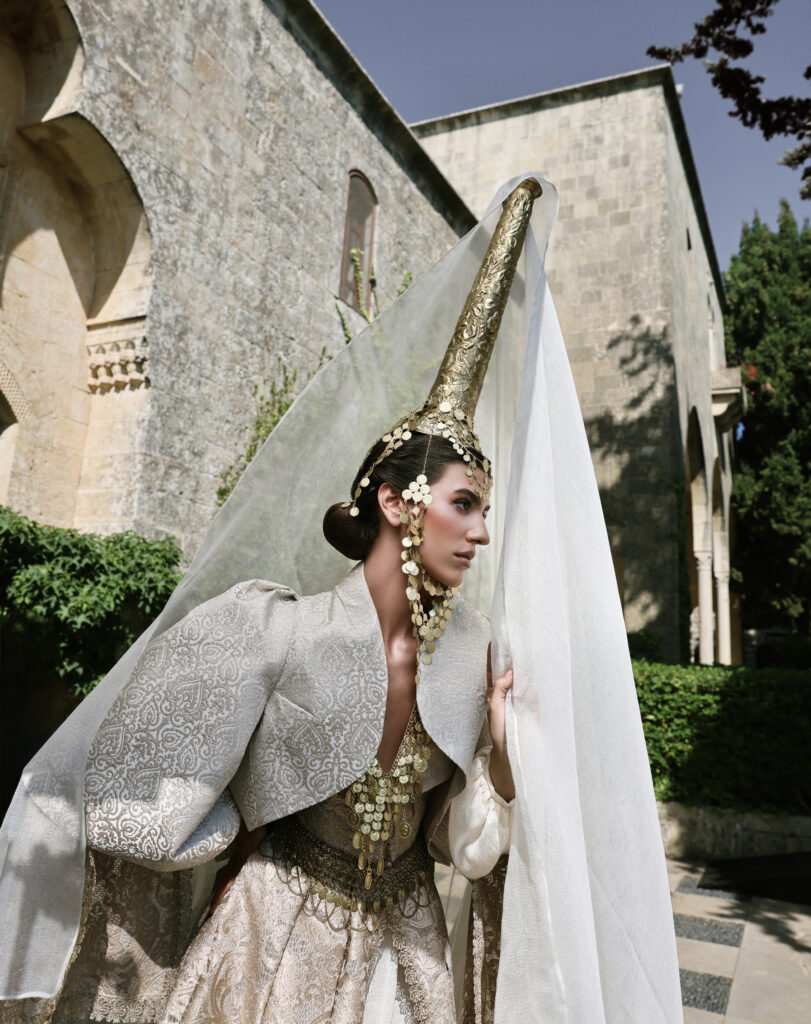
Challita sees his work as a beacon for bridging that gap. “Especially when I dressed Nada Koussa for Miss Universe back in 2024, the Lebanese princess with the Tantour. No one had seen it as a cylindrical copper headpiece; they were all still made of cardboard and fabric, like a party hat. It was an ode to the Phoenician colour purple, which was spread out to the world from our shores. This was a huge message, which is totally underrated in Lebanese society,” he says, describing the heirloom royal purple.
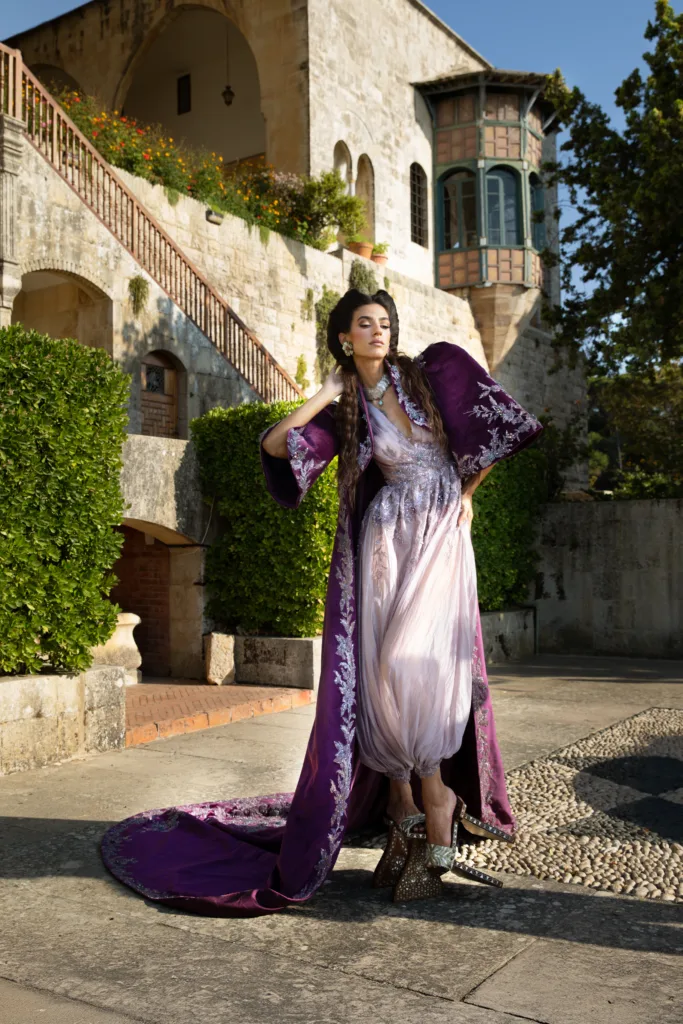
From featuring on Dressed by Cassidy Zachary, a major fashion history podcast, to sparking conversations on his own page @lebanesefashionhistory and lecture halls alike, Joe realises one thing is clear. “The young audience is hungry for this. They’re hungry for authenticity. Especially when it comes to folklore that’s been lost; to see it in a fresh way that they can relate to and take pride in today.”
He tells us about El’aasha Al’Qaraweh, or the village dinner, an ongoing tradition in certain parts of Lebanon, where the townspeople used to dress up in traditional attire and feast communally; only now, meals are pre-made, and the outfits have lost just as much flavour. “Why not revive that creativity and artistry? Maybe this gets our seamstresses and tailors up and running; in these circumstances, celebrate heritage through you,” he prompts.
Speaking of girl dinner, check out these dining deals.