
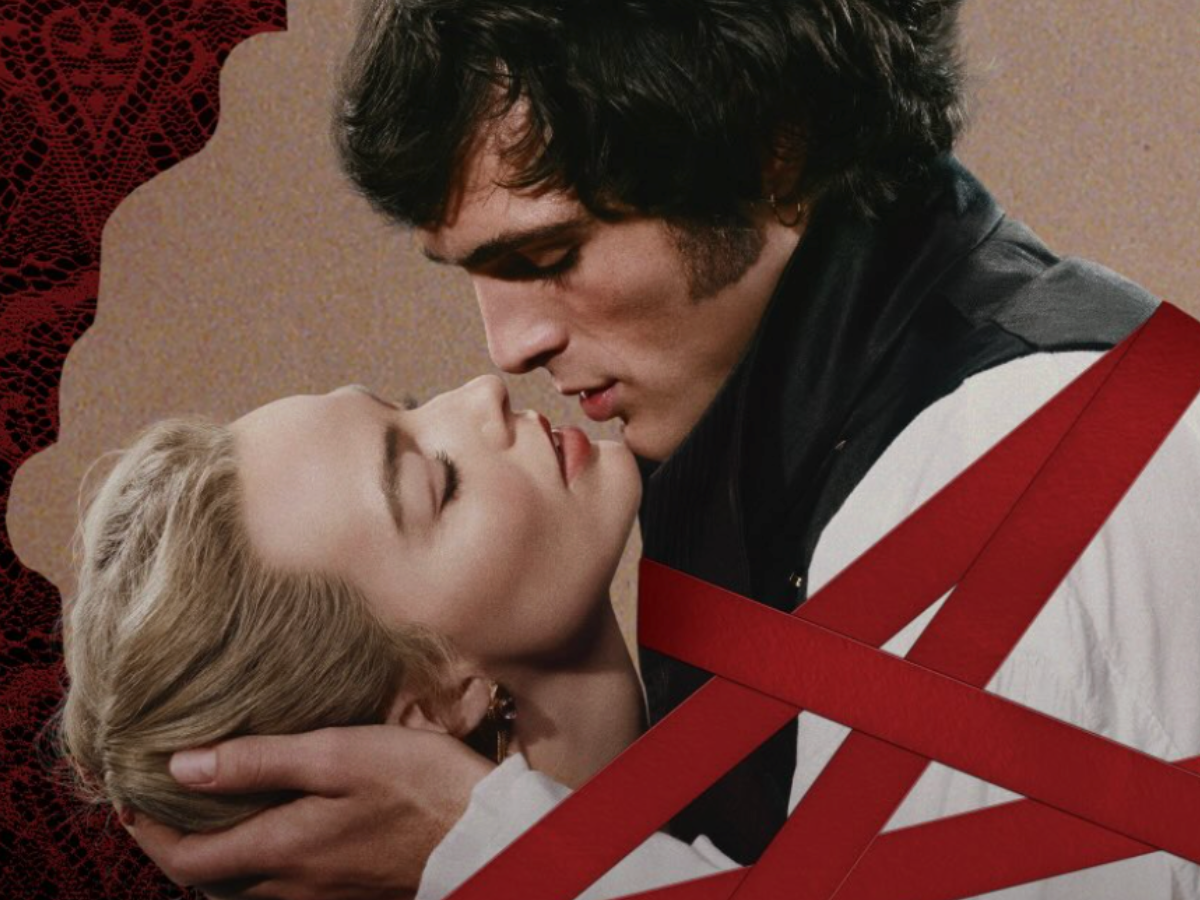
I fell for Heathcliff the way he fell for Cathy: with reckless devotion and absolutely no sense of self-preservation. Wuthering Heights seemed like the blueprint for epic love: windswept moors, deep obsession, and a brooding bad boy.
Back then, his intensity read as depth, his jealousy like devotion, and his anger like passion. Loving Heathcliff seemed like proof you were capable of a grand, devastating kind of romance, one that consumes you whole. Who needed safety when there was volatility? Heathcliff and Cathy were the epitome of great love, I thought. Back then!
Re-reading the novel recently, though, after years of dating discourse, red-flag literacy, and too many TikToks dissecting toxic men, was a shock. What once seemed romantic now felt like emotional manipulation and abuse. Heathcliff’s obsession, guilt-tripping, and rage seem to be the foundation for modern “problematic faves”.
Written by Emily Brontë and published in 1847, Wuthering Heights arrived a year before Brontë’s early death. It unsettled readers from the start, with early critics recoiling at its “vivid sexual passion”. But over time Heathcliff became one of literature’s great romantic heroes. He enters the Yorkshire moors with “eyes full of black fire”, described pointedly as a “dark-skinned gypsy” and “that gypsy brat”, a racialised outsider taken in by a rural landowner and raised alongside his legitimate children: the sullen Hindley, who despises him, and Catherine Earnshaw, with whom he forms a ferocious, contradictory bond.
That bond has fuelled nearly two centuries of swooning. Catherine’s declaration, “He’s more myself than I am. Whatever our souls are made of, his and mine are the same”, still circulates as proof of the perfect love. So does Heathcliff’s anguish: “I could as soon forget you as my existence!” These lines are catnip to adolescent longing. They promise intensity, not safety; destiny, not stability.
But in today’s world, the novel makes clear quite a few things. Heathcliff isn’t a misunderstood dream lover. He is cruel, bitter, and abusive. His love for Catherine may be “deep and unshakable”, but it is also possessive and punitive. When Catherine marries the neighbouring landowner Edgar Linton, Heathcliff doesn’t simply grieve; he disappears, returns wealthy, and spends decades effecting a vengeful campaign that devastates two families and spills into the next generation (a reckoning most screen adaptations conveniently minimise).
His most famous outbursts sound romantic until you really listen. “Haunt me then!… drive me mad!” is less a plea for love than a demand for emotional ownership. “You teach me now how cruel you’ve been” reads like an early template for manipulative guilt. Heathcliff’s fury at Catherine’s autonomy is the crux of the novel, and his sense of entitlement to her love is repeatedly framed as justification for cruelty.
And yet, for generations, Heathcliff has been sold as passion incarnate. The question is why. Why have we been taught to read violence as depth, volatility as intensity, and obsession as destiny? Heathcliff exposes how patriarchy dresses cruelty up as romance, teaching women that love should hurt — and that pain is proof of meaning.
That legacy is everywhere. From Gothic literature to dark-romance paperbacks, from brooding immortals in Twilight to today’s morally grey BookTok obsessions, Heathcliff’s DNA persists. He is the original red-flag romantic hero, the man whose damage is framed as allure, whose trauma excuses his harm.
@bookishandlit Wuthering Heights, the most toxic relationship book ever😂😂 basically a @Future song #wutheringheights #emilybronte #romancereader #romanticbooks #romancereads ♬ original sound – bookishandlit
In an age newly fluent in “red flag” language, Heathcliff hits differently. His lament, “I have not broken your heart — you have broken it; and in breaking it, you have broken mine”, now seems to echo the rhetoric of the thousands of men who weaponise pain to excuse harm.
Maybe Heathcliff isn’t just a character we misread. Maybe he’s a mirror, reflecting the dangerous fantasies women have long been encouraged to call love. And maybe, nearly two centuries later, we’re finally ready to stop swooning and start seeing him clearly.
Gothic romance may have tricked us into loving the bad boy, but it’s never too late to unlearn the fantasy.