
Growing up in Metro Detroit in the United States, known affectionately as “Motor City” by locals, I never consciously identified with car culture as a teen. I procrastinated getting my drivers license, opting instead to be a passenger princess in my best friend’s royal blue Volkswagen beetle she’d sneak out of her mom’s driveway. We’d stuff the cupholders with sour peach ring gummies, caramel cream candies, and 7/11 slushies, all leaving trails of sticky residue, while blasting The Strokes on our trips to the local mall.
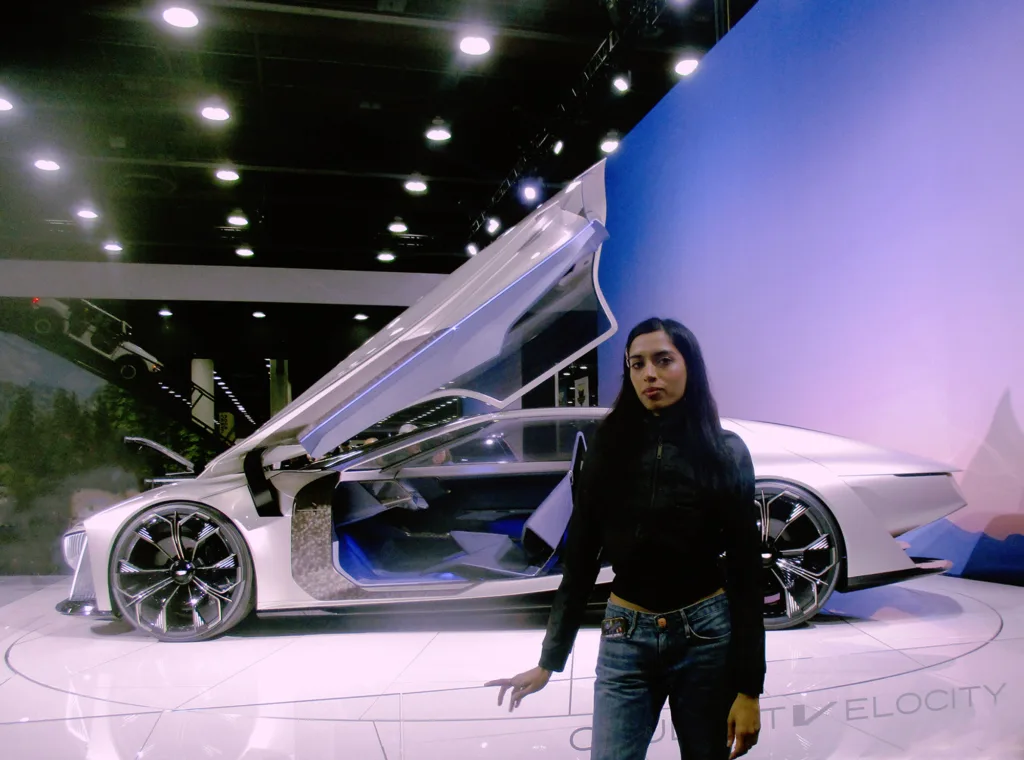
It wasn’t until I turned 21 that I stumbled deeper into car lore. I attended an exhibit featuring 70 years of concept cars, international cars with experimental design. I learned that concept cars have always mirrored broader culture and politics: built with rounded glass domes and tail fins to mimic jets during heightened periods of war, built with elongated hoods to evoke highway escapism during recessions, and dipped in iridescent, beetle-like paints emphasising organic design during tech booms.
Cars are third spaces
After this, I began to recognise cars as a space for dreaming and storytelling in my own life. This is where my escapist desires felt most tangible. This is where I’d debrief conflict within the home, and where I’d hear stories about my grandparents after their passing. This is where my best friends and I would divulge all our crushes. For those with limited public gathering spaces, particularly femmes, the car becomes a third space – a space for connection outside of home, work, and school.
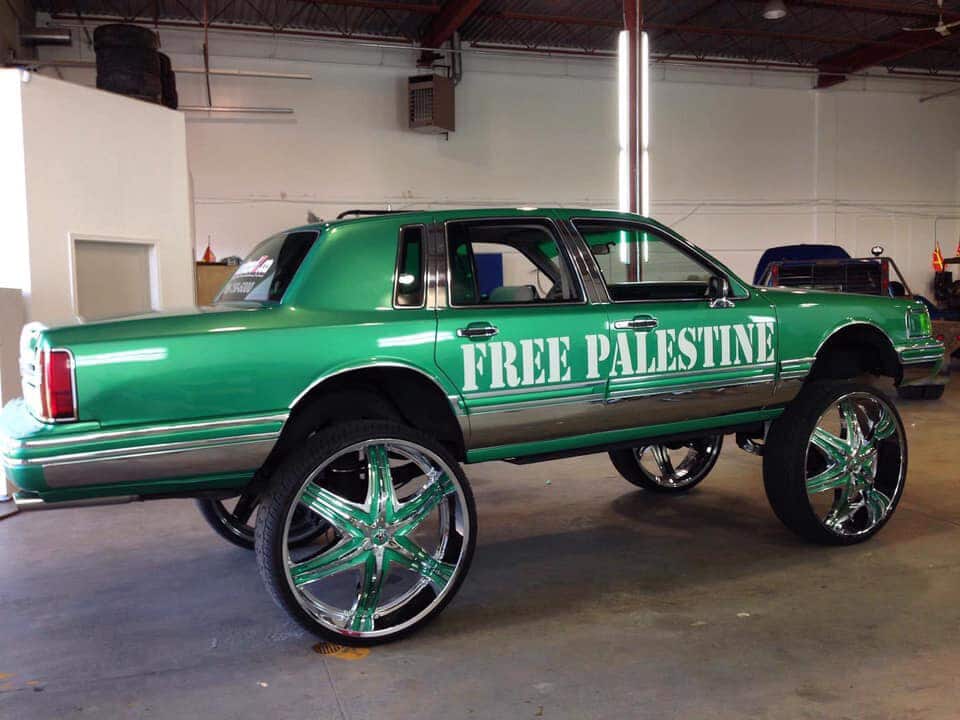
From M.I.A.’s iconic Bad Girls music video filmed in Morocco, to femme TikTokers venting and vlogging in their cars, to passenger princess culture, to Chicana women driving lowriders in Los Angeles, to giant thrumming speaker systems strapped onto truck beds in Jamaica, Bangladesh, Brasil, and beyond, to pro-Palestine car brigades taking over highways in Detroit, to Arab Drift core music and visuals, referenced in Libyan artist Tasneem Sarkez’s lush, diffused paintings – cars remain sites of global fantasy.
Still, what makes a tranquil solo night drive or open highway adventure so deeply therapeutic? Why does sitting pretty on the passenger side feel like princess treatment?
Healing by driving
To me, these are forms of self-guided EMDR. Eye Movement Desensitization and Reprocessing (EMDR), is a form of therapy offering visuals or sounds to simulate moving forward in space while a participant recounts trauma, guiding the brain to believe it is moving forward and healing.
On a four hour solo drive to Canada, I decided to do a self-guided EMDR session (ill-advised, but free). While in the backseat of a car speeding through a highway, I recounted various traumas in silence, listening to the windows shudder against the wind. I was surrounded by ancient trees reaching far up into the sky that melted into a panorama of bright green ribbons as we drove. I began to feel a lightness in my heart, as if the trees were whispering, “Look at how far you have come”.
Cars are sites of freedom
Cars and their sound systems are so ubiquitous that they can destroy meaning as much as they create it, being sites of violence or identity-formation. Still, for many femmes cars remain spaces for yearning, euphoria, secret-sharing, romance, and emotional freedom.
Drifting, called “doing donuts” in the midwest, has blossomed in popularity from Detroit, to Brasil, to Dubai, and the world. Perhaps it is no coincidence that these places have the largest Lebanese diasporas in the world, as Detroit’s Lebanese community is deeply entwined with the history of car production and subcultures.
Drifting, highway driving, and daydreaming passenger side unravel imposed and industrial fantasies. As my hair whips in the wind, tires squeal, burn, and hiss against the pavement – making space for new meaning.