


With the repercussions of climate change increasing by the day, the UAE-based team FireOut is on a mission to help control wildfires across regions from recurring outbreaks. The 2022 national James Dyson Awards winner’s invention aims to protect life and land through eco-friendly techniques by creating a system which essentially stores rainwater during the wet season, which can later be used to curb bushfires during the dry season.
“We were all horrified by the devastating bushfires we have saw in the media over the last few years, particularly in places like Australia. We were shocked by the devastation caused and the number of habitats that are destroyed as a result, which is why we knew urgent action is needed,” said one of the inventors Eman Rashid.
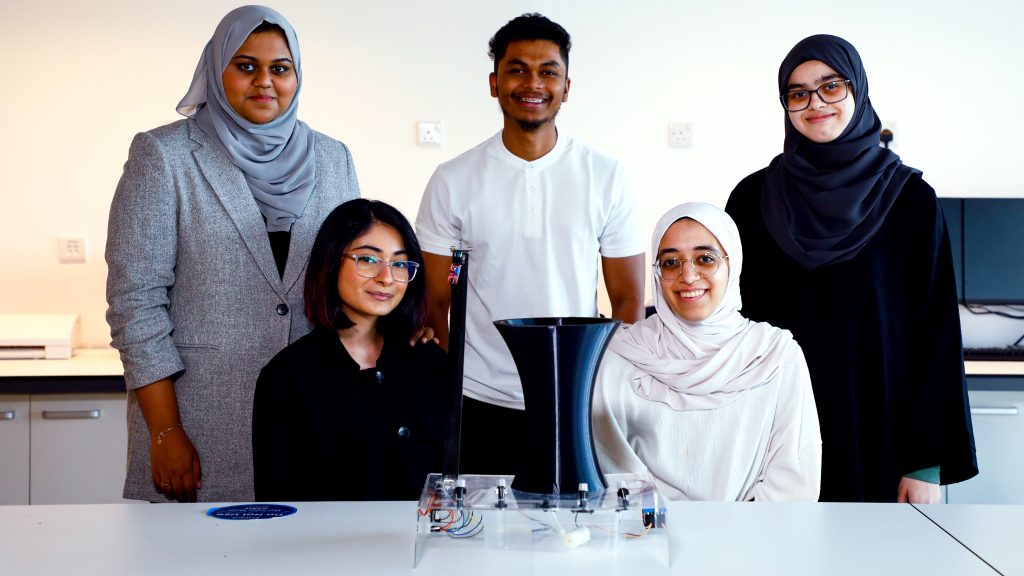
FireOut members – Tasneem Nawar, Deenah Sabaahat, Eman Rashid, Zahid Rehman, and Zahrah Tungekar
The FireOut’s invention won the members Dhs24,000 to further assist in the next phase of the system’s development. The team along with runners-up YESCOMPST and IoT integrated power shaft health condition monitoring will further move to the James Dyson Award’s international stage, with international winners to be announced on 16th November.
“We were fascinated by FireOut invention, and all the judges credited how the students identified a pressing current-day problem and designed a potential solution to prevent the problem,” said Dr. Eng. Suaad Al Shamsi, one of the local judges for the competition. “We were really impressed that the team focused on sustainability and environmental factors to create a technology that can help extinguish fires in areas that tend to suffer.”
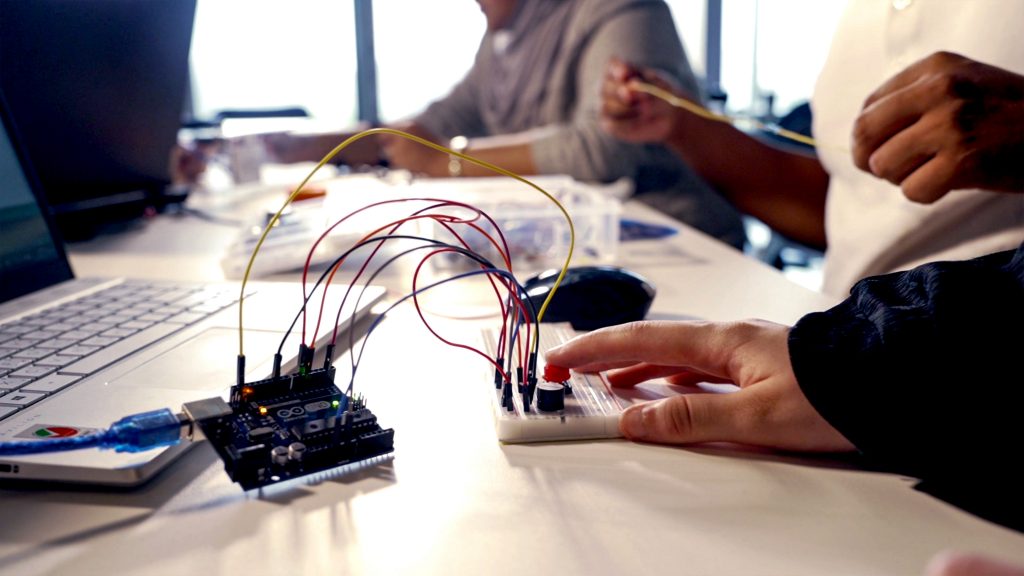
How does the James Dyson Award-winning invention *exactly* work?
Upon detecting fire through the system’s sensor camera, it alerts the control room to transmit the location of the wildfire over radio modules aided by antennas. The signals help controllers automatically operate the pump and distribute the collected rainwater to bring the fires under control until the first responders arrive.
“Coming up with an idea of this scale and testing it was not easy. Our first hurdle was trying to make all materials used as fire-resistant and sustainable as possible. Another challenge we faced was the collection of water and trying to calculate how much store water would be enough for each land mass,” said FireOut team member Zahid Rehman.
“Additionally, we wanted everything to be locally sourced and sustainable, so that created an additional challenge with sourcing and cost of materials. We wanted our design to be specific to the location and to respect the local land and people.”
To know more about the winning and runner-up entires, click here.