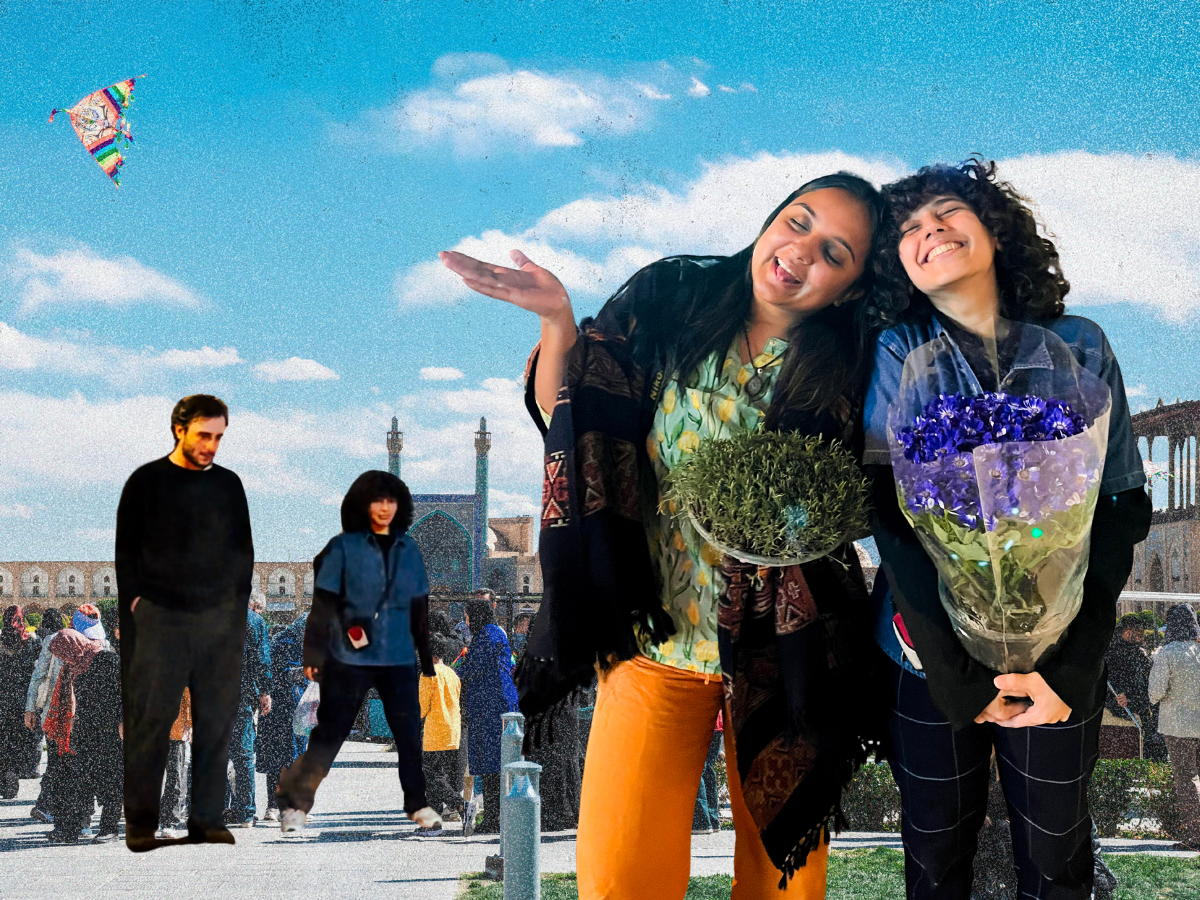
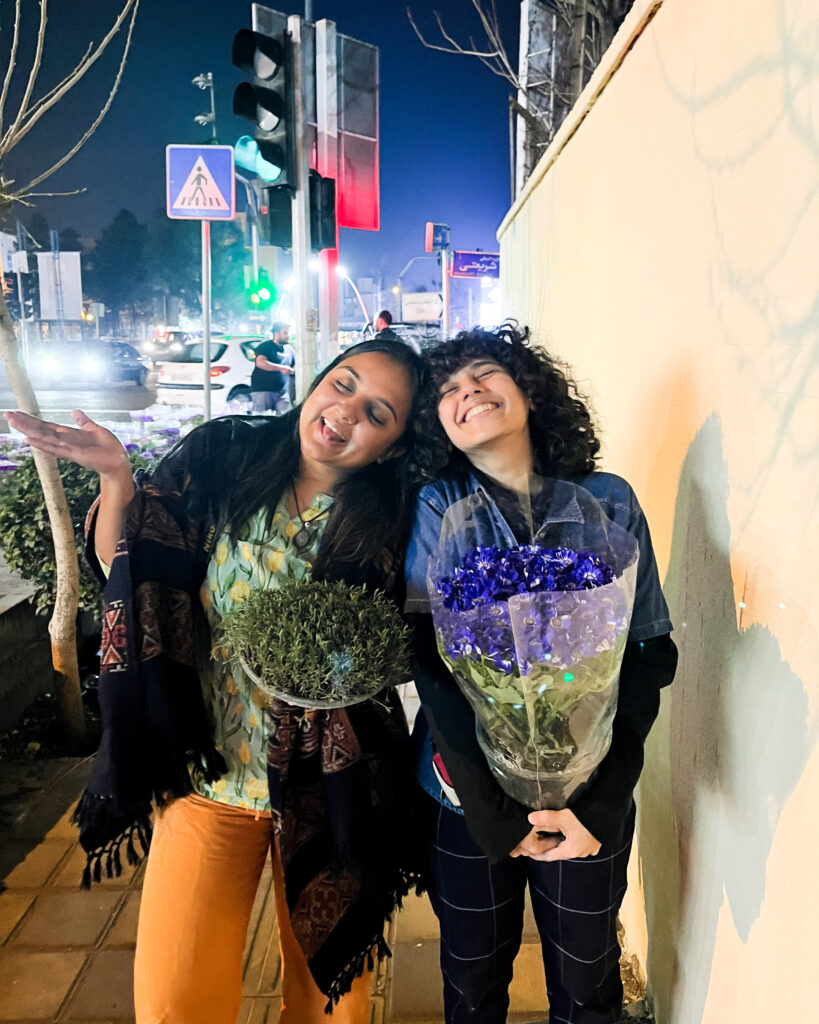
The first time I saw a haft-seen table was at Tajrish metro station in northern Tehran—apples polished to a shine, garlic bulbs resting beside gold coins, sprouted wheat and a small mound of sumac, among other symbolic items. A central tradition of Nowruz, the Persian New Year, the haft-seen features seven elements beginning with the Persian letter ‘S’ (س), each representing renewal, health, prosperity, and joy. Rooted in ancient Persian culture, it marks the spring equinox, promising that life will begin again.
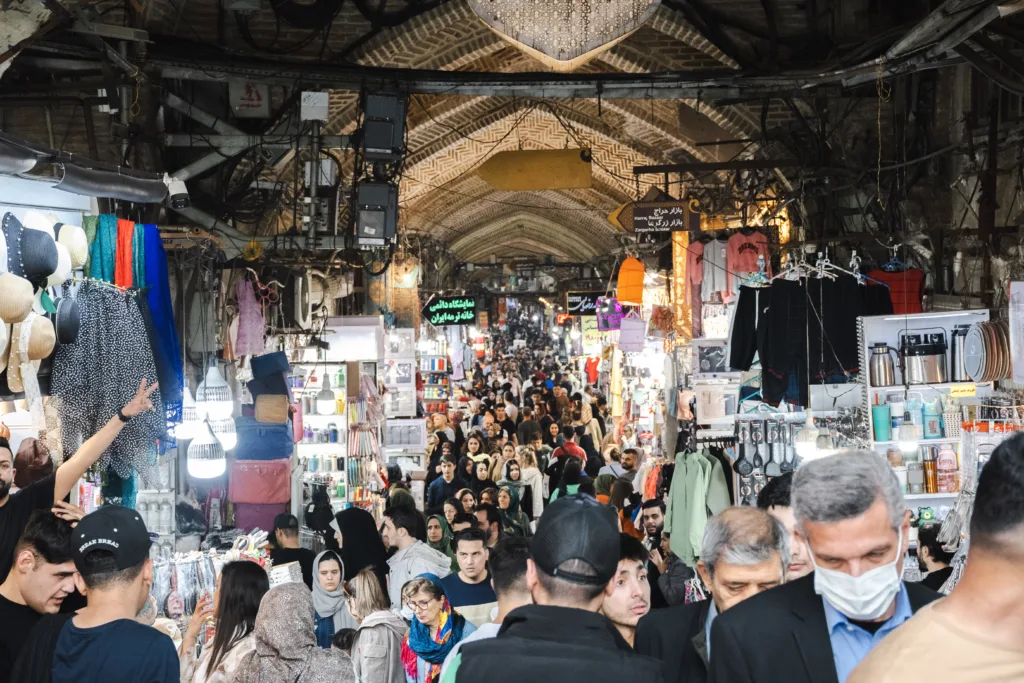
In the days leading up to Nowruz, Tehran seemed to hum at an urgent frequency. The Grand Bazaar overflowed with people preparing for the festivities—arms full of greens, sweets, and goldfish bowls. Moving through the crowds was Hajji Firuz, dressed in bright red with his face darkened in soot, dancing to the beat of a dayereh (a traditional Persian drum) and singing folkloric songs to herald the arrival of the new year.
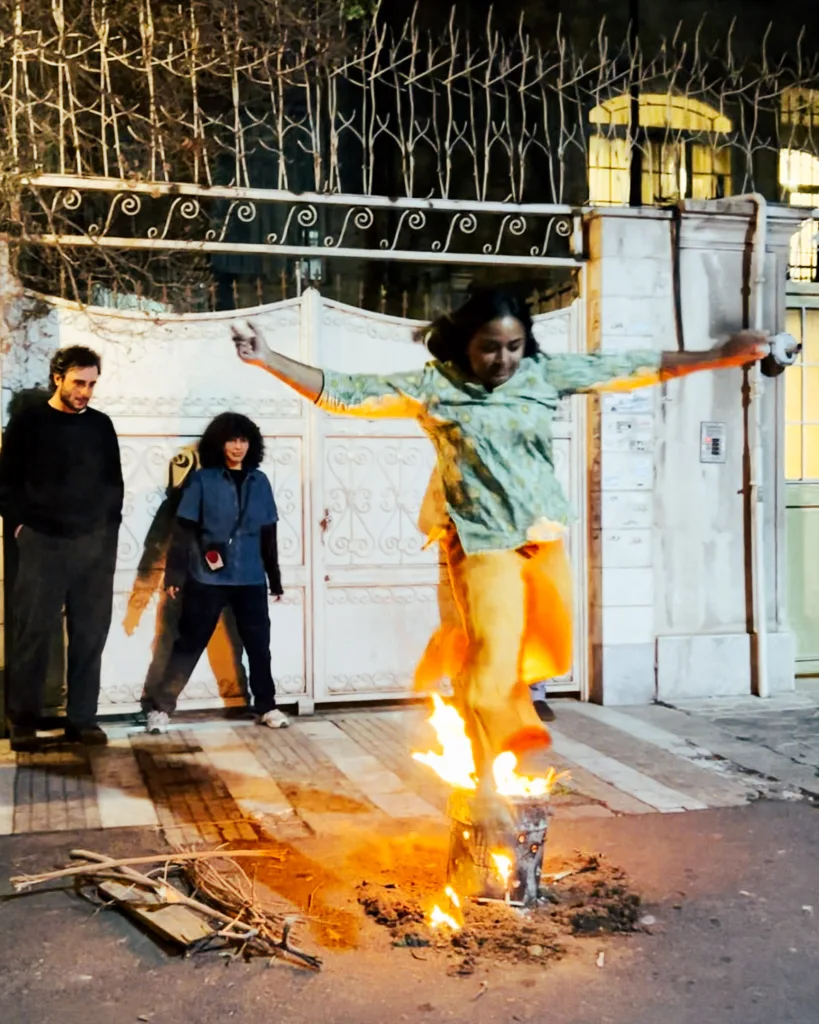
Later that evening, I found myself in a narrow alley beside Sajideh, my Couchsurfing host—now more of a sister than a stranger—taking turns leaping over a small fire. It was Chaharshanbe Suri, the ancient fire festival held on the last Tuesday night before Nowruz. Bonfires are lit, and people jump over them to shed the past year’s misfortunes and welcome vitality.
“Sorkhi-ye to az man, zardi-ye man az to,” we chanted as we leapt—my pallor for your redness to leave behind negativity and invoke a fresh start. Around us, sparks lifted into the night. Someone passed around ajeel-e Chaharshanbe Suri—a sweet-sour mix of nuts and dried fruit—meant to carry our wishes into the new year.
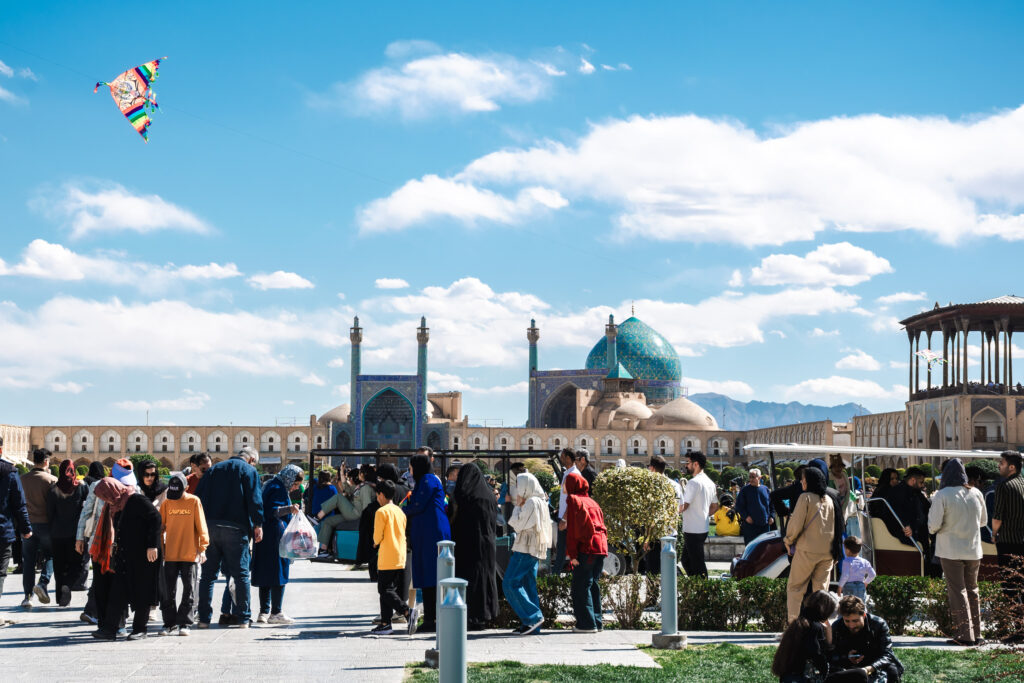
Across the country, the air was charged with celebration. For many, this is the longest holiday of the year and an opportunity to travel. Families picnicked and flew kites in Naqsh-e Jahan Square in Isfahan, friends wandered through the Zoroastrian Towers of Silence in Yazd, and couples strolled through the UNESCO-listed Fin Garden in Kashan, lingering in the first blush of spring.
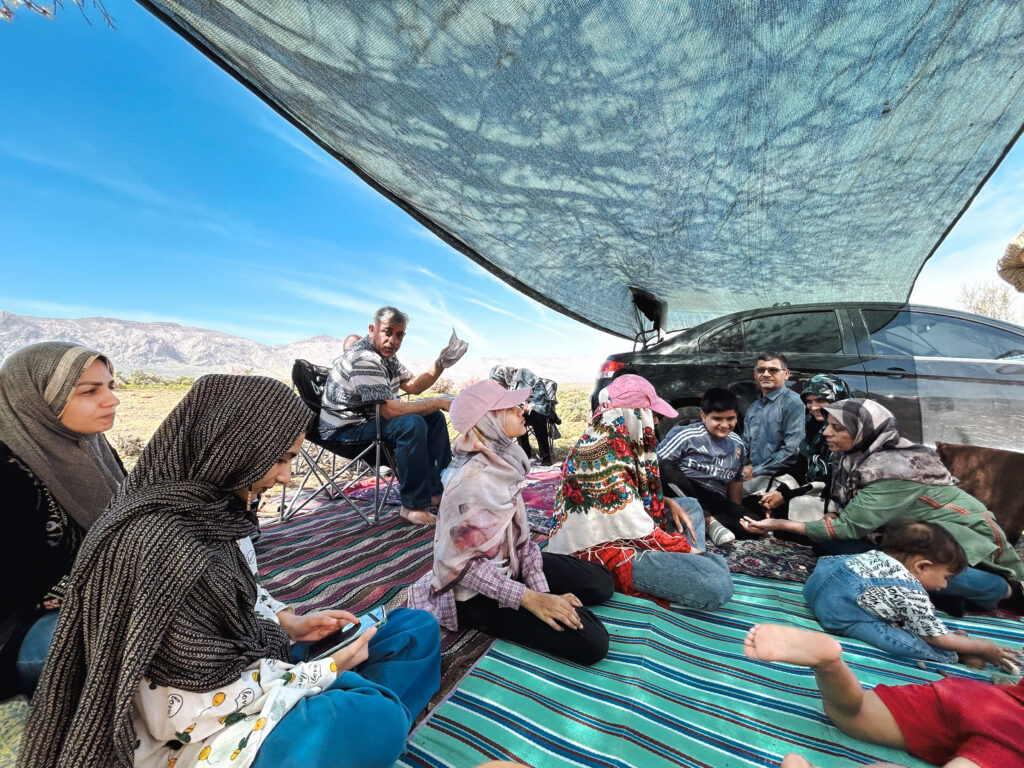
On the thirteenth and final day of Nowruz, I found myself in Fasa, a village outside Shiraz, invited without hesitation by a local family to a Sizdah Bedar picnic—a day dedicated to nature. Carpets unfurled over grass as enormous pots of zereshk polo, jewelled with barberries, and baghali polo fragrant with dill steamed over open flames. Doogh—fermented milk— flowed freely. We napped in the afternoon heat, flew kites, and danced to Farsi pop songs before cooling ourselves with a quick plunge into a nearby water tank.
What a distant memory it all feels like now.
On the morning of March 21 this year, I woke up to a notification: a photo from exactly one year ago. Me, mid-air, jumping over a fire. At that moment, the distance between those two versions of time—last year’s warmth and this year’s weight—collapsed all at once. I found myself crying unexpectedly and uncontrollably. If it could affect me like this—a visitor who had only brushed against Iran for a few fleeting weeks—I couldn’t begin to imagine what it meant for those whose lives had been irrevocably altered. For those, this wasn’t a mere memory, but a lived reality.
“My family and I try to make a trip out of Nowruz every year,” says Mansoureh Farahani, a Tehran-born and raised journalist turned travel YouTuber who now lives in London with her husband. “Last year we visited Antalya. But this year… Nowruz arrived quite differently.” Celebrating fully, she explains, felt impossible at a time when loved ones could not even be reached. “I just bought flowers,” she says. “As a reminder of hope, that after darkness there is light.”
Across Iran and within its diaspora, the new year has unfolded in more fractured ways, marked by uncertainty. “It took me a while to reorient myself,” says my friend Sajideh, who had fled to Armenia during the January protests. “I’m in a new country, and even the calendar is different. Usually, my family and I start preparing two weeks in advance, but this time I worked with what I could find just a few days before.” Try as she might, she said, nothing felt the same. “I was crying most of the day. I hadn’t heard from my family in a long time, and I missed them terribly. It felt like something that had been a part of me for 30 years had been stolen.”
And yet, the people endure. “I’m sure people in Iran are still celebrating however they can. They are stubborn and resilient. Nothing can stop them from welcoming spring,” says Saji.
Nowruz has always been about renewal and continuity—the idea that no matter what shifts around it, spring will come, that nature’s cycle will persist and light return. “I wish everything were better,” she says. “I wish I could be there. But there’s nothing else we can do except hope that next year will be better. That’s the whole point of Nowruz. The hope.”
Here’s what 10 days of Itikaf this Ramadan felt like as a 25-year-old Gen Z.