
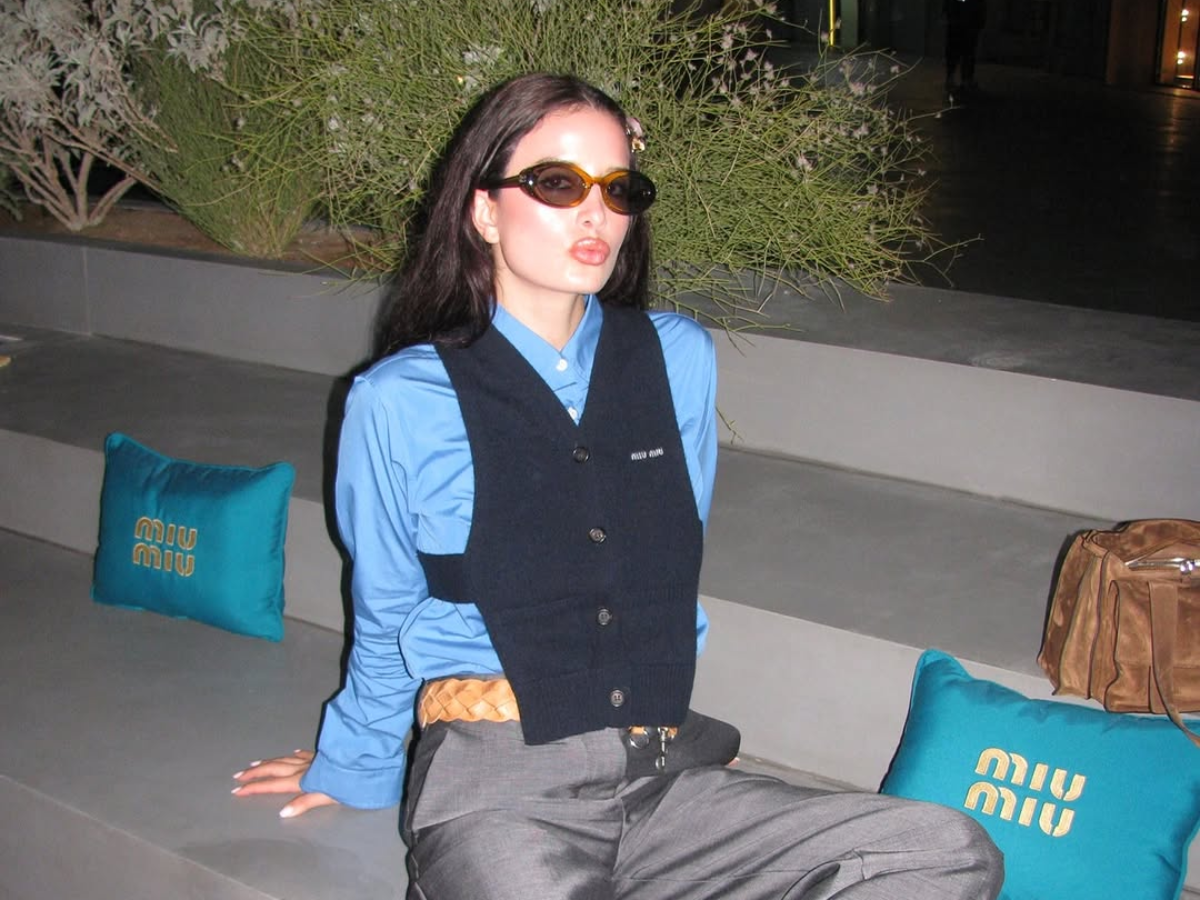
Every season, Paris turns into the stage for haute couture. Editors hurry from show to show, cameras flash along the runway, and the world watches as fashion houses reveal their most elaborate creations. Inside the historic ateliers? Designers present pieces that have taken hundreds of hours of embroidery, tailoring, and craftsmanship.
Yet once the shows end and the lights fade, another question becomes just as important. Who *actually* buys these remarkable pieces? A large part of the answer lies in the SWANA region.
For decades, Arab women from the Gulf have been among the most important clients of the world’s leading couture houses. Their role in the global fashion story, however, is rarely highlighted. While the spotlight often falls on celebrities and runway moments, many couture creations eventually find their way into the private wardrobes of women in Saudi Arabia, the United Arab Emirates, Qatar, and Kuwait.
Sometimes the journey happens quickly. In certain cases, garments leave Paris almost immediately after the runway presentation. Within days, the latest pieces from the world’s leading Maisons would be on their way to their new owners, occasionally travelling by private jet to the Gulf.
Haute couture is one of the most exclusive worlds in fashion. Industry insiders estimate that there are roughly 4,000 active couture clients worldwide. Around 3,000 purchase pieces occasionally, but only a small circle of roughly 200 women are considered highly influential patrons. These clients order several garments each season and maintain close relationships with the houses themselves.
Who are the key clientele, you ask? The Arab women.
Some are known within fashion circles, while many prefer to remain, well, relatively private. Among the most prominent is Lebanese entrepreneur and collector Mouna Ayoub, widely regarded as one of the world’s most important private collectors of haute couture. Alongside her are members of Jordanian royal families, women from Saudi, Qatari, and Emirati royal households, as well as influential entrepreneurs from cities such as Dubai and Kuwait. They rarely seek public attention, yet their influence on couture is undeniable.
Their orders help sustain one of the most intricate forms of craftsmanship in the fashion industry. Couture continues to exist not only because of creative vision but also because a small group of dedicated clients continues to commission these extraordinary garments.
Despite their importance, Gulf women are still rarely acknowledged as central figures in the couture ecosystem. The gap between their influence and their public visibility raises an interesting question: Why do these powerful clients remain largely behind the scenes?
Part of the answer lies in the social culture of the region. For many Arab women, weddings, engagement celebrations, and private gatherings are an important part of social life. In Europe, a social calendar might include one or two major galas in a year. In the Gulf, celebrations often happen throughout the year.
These occasions naturally create a demand for elaborate eveningwear and couture designs. Ordering a new dress for an important celebration is often considered completely normal within these social circles. But the appeal of couture goes beyond luxury or status.
Individuality is often the real attraction. Haute couture allows women to wear something created specifically for them. Each garment reflects the client’s personal taste, body shape, and the occasion it’s designed for.
Many of these women travel to Paris several times a year for private fittings at the ateliers of houses such as Dior, Chanel, or Schiaparelli. During these appointments, fabrics are selected, embroideries are adjusted, and silhouettes are refined until the final piece feels entirely personal.
This is the essence of couture. A dress is not simply purchased. It’s developed through collaboration between the designer, the atelier, and the client.
At the same time, the role of the Gulf in global fashion is evolving.
For many years, the region was mainly viewed as a key consumer market for European luxury brands. Today, designers from the Arab world are increasingly shaping the international couture landscape themselves. Names such as Elie Saab, Zuhair Murad, and Mohammed Ashi (have you seen Zendaya’s fit for Euphoria’s season 3 premiere?) present their collections on global stages and dress celebrities around the world.
Their success reflects the growing creative influence of the region within fashion.
Fashion houses in Paris are also well aware of how important their Gulf clientele is. Many couture collections subtly reflect preferences that resonate strongly with women in the region. Long sleeves, higher necklines, and intricate embroidery frequently appear on Parisian runways. Rich fabrics, dramatic silhouettes, and meticulous detailing often align perfectly with the aesthetic many Gulf clients appreciate.
For these women, fashion is rarely just about clothing. It is also a form of personal expression that reflects identity, culture, and social presence.
This influence extends beyond design and shapes the way couture is presented and sold.
While Fashion Week unfolds publicly on the runway, much of the real business of couture happens in private salons inside the fashion houses of Paris. After the shows, selected clients are invited to intimate presentations where the collections are shown again in a quieter and more personal setting. Here, clients can closely examine the craftsmanship, feel the fabrics, and discuss possible adjustments directly with the ateliers.
These appointments are a central part of couture culture. Necklines may be altered, sleeves lengthened, and embellishments redesigned. In some cases, designers even create entirely new variations of runway looks for a single client.
In recent years, many fashion houses have also expanded their relationships with Gulf clients beyond Paris. Exclusive trunk shows and private presentations are increasingly organised in cities such as Dubai, Doha, and Riyadh. These events allow brands to connect directly with their most important customers and strengthen long-standing relationships.
They also highlight the growing economic importance of a region that has quietly supported couture for decades.
While many couture clients traditionally preferred privacy, a younger generation of Arab women is now becoming more visible.
Entrepreneurs, influencers, and members of prominent families increasingly share glimpses of their couture wardrobes on social media. Their posts reveal a world that once remained largely hidden from public view.
This visibility is gradually reshaping the image of the Arab couture client.
She is no longer simply a discreet patron behind the scenes. She is becoming part of the global fashion conversation. On platforms such as Instagram, her couture looks appear alongside those of models, influencers, and celebrities. Outfits worn to weddings, galas, and exclusive events are photographed, shared, and widely discussed.
With every post, their influence continues to grow.
Fashion houses closely observe which designs resonate most strongly within the region and which looks gain attention online. In an industry where visibility and desirability are closely connected, these women are becoming more than clients. They’re also powerful ambassadors of couture.
While cameras remain focused on the runway and the world debates the trends of the coming season, the real engine of haute couture often operates far from the spotlight.
Inside the private salons and ateliers of Paris, relationships between designers and their most important clients continue to shape the future of fashion. And for decades, many of those clients have been women from the Arab world who quietly ensure that haute couture continues to thrive.
ICYMI, Paris Modest Fashion Week is here,