
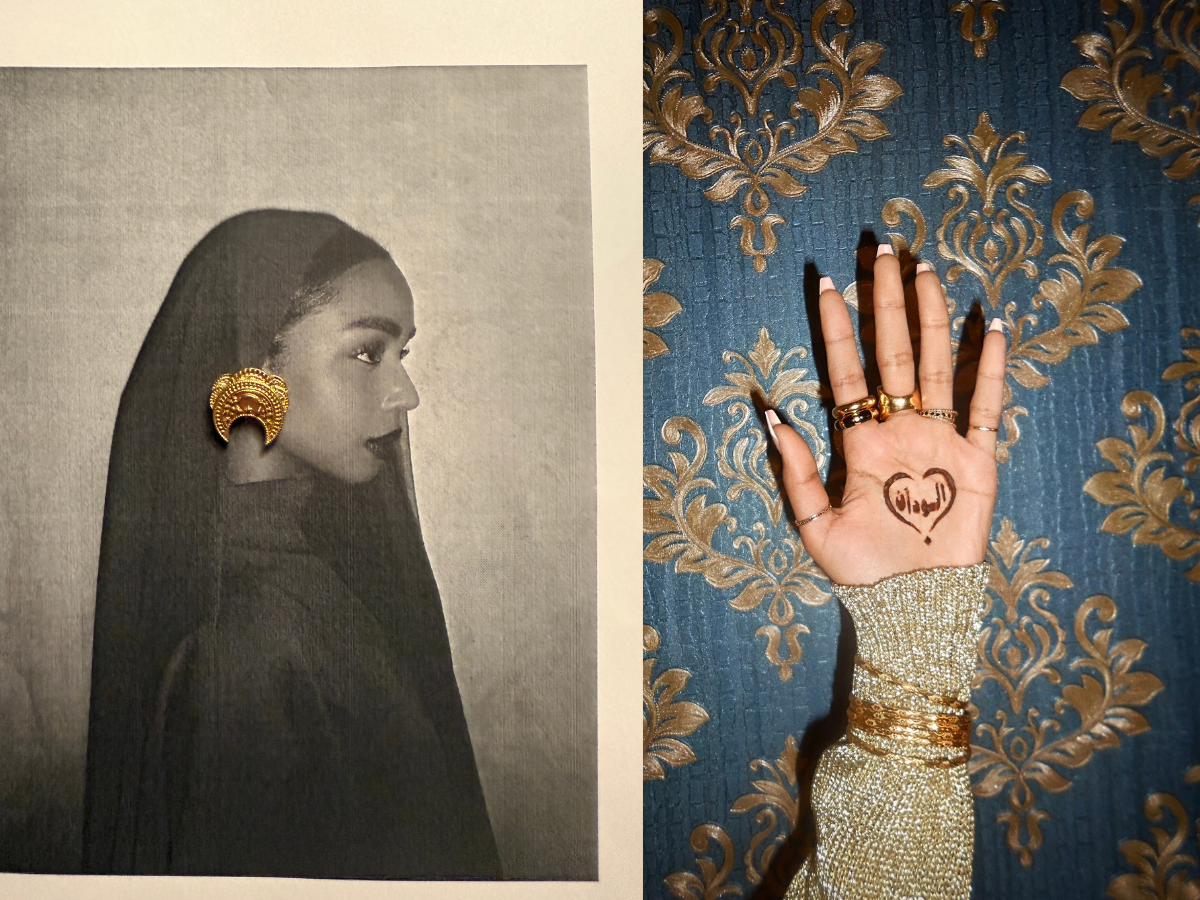
Sudanese content creator Shahd Batal is beautiful. Her beauty penetrates through my phone screen with a feed that feels more like a diary with posts from glowy selfies to Allah SWT’s 99 names. One of the most beautiful parts about her is her voice with a YouTube channel of over 300 thousand subscribers she started nearly a decade ago. Shahd has become a pioneer in the beauty and modest fashion industries. She wears many hats as a model, consultant, host, and writer.
For Shahd, beauty is about ritual and warmth just as much as it is about evolution. Shahd leaned into change as she moved from the U.S. to Sharjah, UAE. Growing up surrounded by Sudanese aunties mixing dilka scrubs and applying karkar oil, she learnt that beauty rituals are communal, sacred, and deeply rooted in heritage. For Cosmopolitan Middle East, she shares the Sudanese rituals that shaped her and why her relationship with beauty is inseparable from her culture.

Cosmo ME: How has your Sudanese heritage shaped your definition of beauty and self-expression today?
Shahd: My Sudanese heritage shaped how I see beauty — not as something loud or performative, but as something rooted in ritual, warmth and meaning. I grew up surrounded by women who treated beauty as self-care, not vanity. Women who taught me that self-care is self-respect. That feeling beautiful at home deeply impacts my confidence as a woman out in the world. What feels like hours of detangling and plaiting my hair, DIY masks, scrubs, etc, aren’t just about the results, but the love and familiarity in the process. That waiting for my henna to dry the night before Eid or a wedding, surrounded by other women might just be the safest and most seen I could ever feel.
Sudanese beauty rituals are just as communal as they are personal and I think that has always been one of my favourite things about my culture. I have vivid memories of being a little girl in Sudan in awe of our wedding culture and wanting to mimic everything my aunt did in the prep for her wedding — even more vivid memories of my mum being upset that she let me try dukhan (smoke bath) with her for a few moments because I was 7 and it was 3yb (shameful). I love experimenting with beauty and discovering new brands or technology yet I always return to what I watched the women in my family do — the rituals that made me excited to grow up and be a woman.

Cosmo ME: As a Muslimah, what boundaries do you set between what you share online and what you keep sacred for yourself?
Shahd: It’s been a decade since I posted my first YouTube video and growing up online I’ve had to learn a lot of lessons the hard way. The things most sacred to me, I protect now. I don’t feel the need to share every part of my world or my personality, which isn’t exactly rewarded in the creator economy, but it’s a boundary I hold onto tightly because I know how it feels to lose yourself in it or to feel tied down to a version of yourself that everyone is used to or prefers. The internet doesn’t typically like when people (especially women) change — even if that change is just growing up.
It’s always been important to me to share whatever reflects where I am in that moment and that is what has allowed me to pivot, evolve, mess up, or change my mind with grace. I haven’t felt tied down to one version of myself in a long time and I think that’s because of the boundaries I’ve set for myself. There’s no specific image or brand to uphold. I’m so far from perfect and have so much to learn but I think the closest I can get to being authentic online is knowing my why — whether it’s just because I thought the shot was pretty or because I wanted to share something I learnt. Knowing why we share or do what we do is very important, especially as Muslims, because we should be deeply interested in understanding our intentions, our impact, and the way we make people feel because it will all return to us one day.


Cosmo ME: Can you list 3 Sudanese beauty rituals?
Shahd:
Dilka: A traditional Sudanese body scrub made from ground peanuts, sandalwood, and natural oils. It’s used to exfoliate dead skin, even out tone, and leave the body smooth and scented (or unscented if preferred). Many women use it weekly or before special occasions for soft, glowing skin.
Sidr: Made from powdered jujube leaves, sidr is used as a natural shampoo and skin cleanser. When mixed with water into a paste, it gently cleans the scalp without stripping moisture, strengthens hair, and soothes irritation. I often use it as a face and hair mask when I need a reset.
Karkar Oil: A blend of oils and beeswax infused with herbs, it deeply moisturises, strengthens, and adds shine whilst helping with growth and reducing breakage. It’s a key step in Sudanese hair care routines, especially for maintaining protective styles.

Cosmo ME: How has your relationship with your beauty evolved as you’ve evolved as a person?
Shahd: As I grow and evolve, my relationship with beauty continues to get simpler. Life is already complicated enough and feeling beautiful is our birthright, not something to overthink or chase. With time, I’ve grown more comfortable in my skin and my body. I outgrow insecurities only to replace them with more sophisticated ones but I welcome that evolution. I like knowing what I’m certain about whilst leaving room to be pleasantly surprised. For instance, I’ve always been convinced eyeliner looks terrible on me but lately I’ve been drawn to kohl mixed with castor oil because it helps with my vision and makes my eyes pop in a way I never noticed before.
I embrace the days of long, intentional self-care rituals just as much as the days of dry shampoo and bed-rot, because they’re both a part of me. I think that acceptance, meeting yourself where you are, might just be the most beautiful and radical thing a woman can do.