

It was late evening in 2003, and a young rose-cheeked Mark Zuckerberg – light-headed from wine and too much screentime – was sat in his Harvard dorm laughing at the profile pictures of his Kirkland House dorm mates: “some of these people have pretty horrendous Facebook pics.
I almost want to put some of these faces next to pictures of farm animals and have people vote on which is more attractive,” he publishes on his blog. Twenty-one minutes later, he posts again: ‘Yea, it’s on. I’m not exactly sure how the farm animals are going to fit into this whole thing (you can’t really ever be sure with farm animals …), but I like the idea of comparing two people together.
At that moment, FaceMash was a website where people could compare their fellow students’ faces to one another to decide who was most attractive was born. Facemash eventually became the popular social media site Facebook and has now – in the face of more scandal – become Meta, host of the Metaverse, a series of virtual worlds where people can socialise and play in augmented reality. Understanding the context of Facebook helps to contextualise the current issues facing the new ‘immersive virtual experience’.
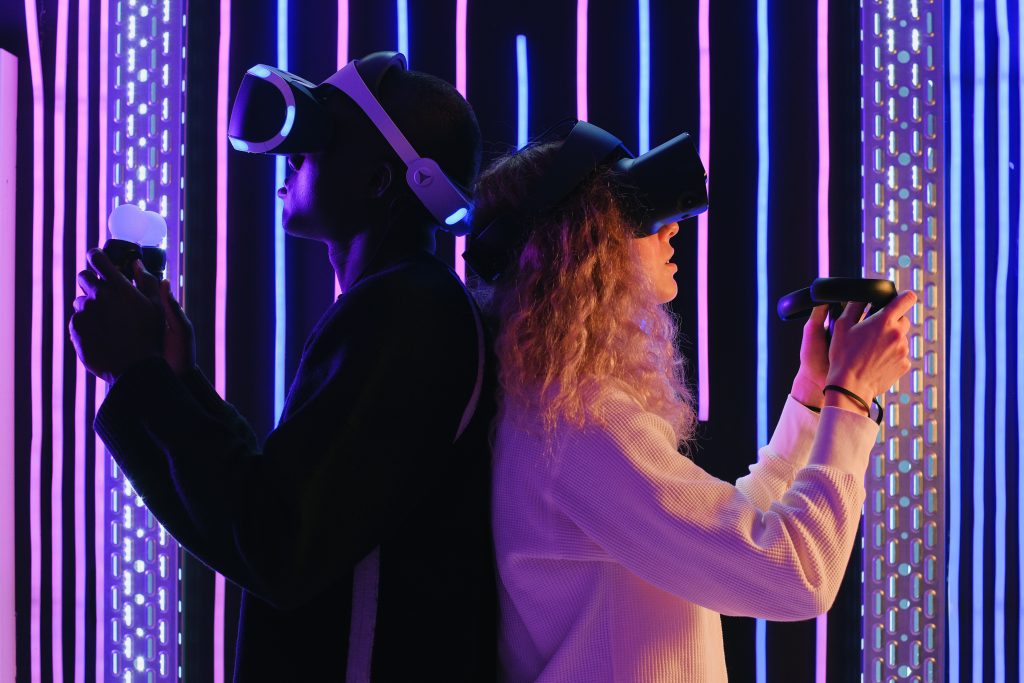
The Metaverse has become rife with sexism and sexual assault not only from the launch but at the research stage, and it is partly due to the culture of misogyny that exists online anyway.
Research by amnesty international found that half of women received sexist or misogynistic abuse or harassment online, which lead to low self-esteem, anxiety and panic attacks.
The new metaverse world has only allowed sexism to re-imagine itself and leave women constantly anxious about what awaits them online. Virtual Reality is designed to be as close to real life as possible and is curated using three key pillars: immersion, presence and interactivity. Together, they make it increasingly difficult to separate your real experiences from your virtual ones, and it works.
A recent Stanford study uncovered that children found it difficult to separate real experiences from virtual ones, confusing the two and creating false memories. The realness of this new digital experience makes the stories about sexual assault harrowing; it is never enough to “log off” when you’ve been violated in such a ‘real’ way.
Nina Jane Patel, the vice president of Metaverse Research at Kabuni, experienced sexual harassment within Meta’s Horizon Venues. ‘I was verbally and sexually harassed — 3–4 male avatars, with male voices, essentially, but virtually gang raped my avatar and took photos — as I tried to get away, they yelled — “don’t pretend you didn’t love it” and “go rub yourself off to the photo”’ she wrote in a post about her experience.
She described the situation as ‘surreal’ and a ‘nightmare’, explaining that it felt like it was happening in reality. When she spoke about her experiences, she was told not to be “stupid” and that “avatars don’t have lower bodies to assault.” She was made to feel that her experience of harassment online was trivial and that she was to blame for this happening.
A similar incident happened to a woman who goes by the pseudonym Jordan Belamire on a Medium post. In the post, she recounts being groped while playing QuiVr, a multi-player virtual reality game. ‘Suddenly, BigBro442’s disembodied helmet faced me dead-on. His floating hand approached my body, and he started to virtually rub my chest,’ she wrote. ‘Even when I turned away from him, he chased me around, making grabbing and pinching motions near my chest.’
When the stories of women’s experiences came out in the press, Meta responded by saying they should have used the “Safe Zone”, a tool that acts as a protective bubble when users feel threatened. However, this level of casual victim blaming misses the point that preventative tools can be implemented, but it doesn’t fix the broader issue of sexism or penalise those who commit it. Meta also developed a “personal boundary function” that prevents users from coming in within a certain distance of your avatar.
However, these features by Meta only seek to make women feel more restricted online and ruin the experience by constantly living in fear. A culture shift has to take place that teaches people to be respectful of others, and this will never change as long as tech is male-dominated. Only 14% of virtual reality-focused companies based in the UK had any female directors; in the wider industry, only 37% of Tech start-ups have at least one woman on the board of directors. As long as women are sidelined from these roles and positions, it becomes harder for virtual spaces to consider their needs.
Existing online as a woman is complex, and new platforms only embolden the current status quo. Although sexism didn’t start with the internet, it has amplified it beyond measure, and we all have a role to play in making digital spaces safe for women who want to be there. From the developers making these worlds to the users being educated on best practices, it takes everyone involved to change gender discrimination in the digital landscape.
Interestingly, Warpin Media, an XR software development company, have designed a VR experience that teaches empathy by getting users to walk in someone else shoes so they can understand how someone feels.
In The Metro, CEO Emma Ridderstad told a reporter that users can ‘play either the role of the bully or the victim and users get to make choices that impact the outcome.’ Perhaps this is the next wave of educational training that needs to happen to help people realise how their actions make people feel and ultimately create safer online environments.
As seen in Cosmo ME’s autumn gaming issue, click here to read more.