
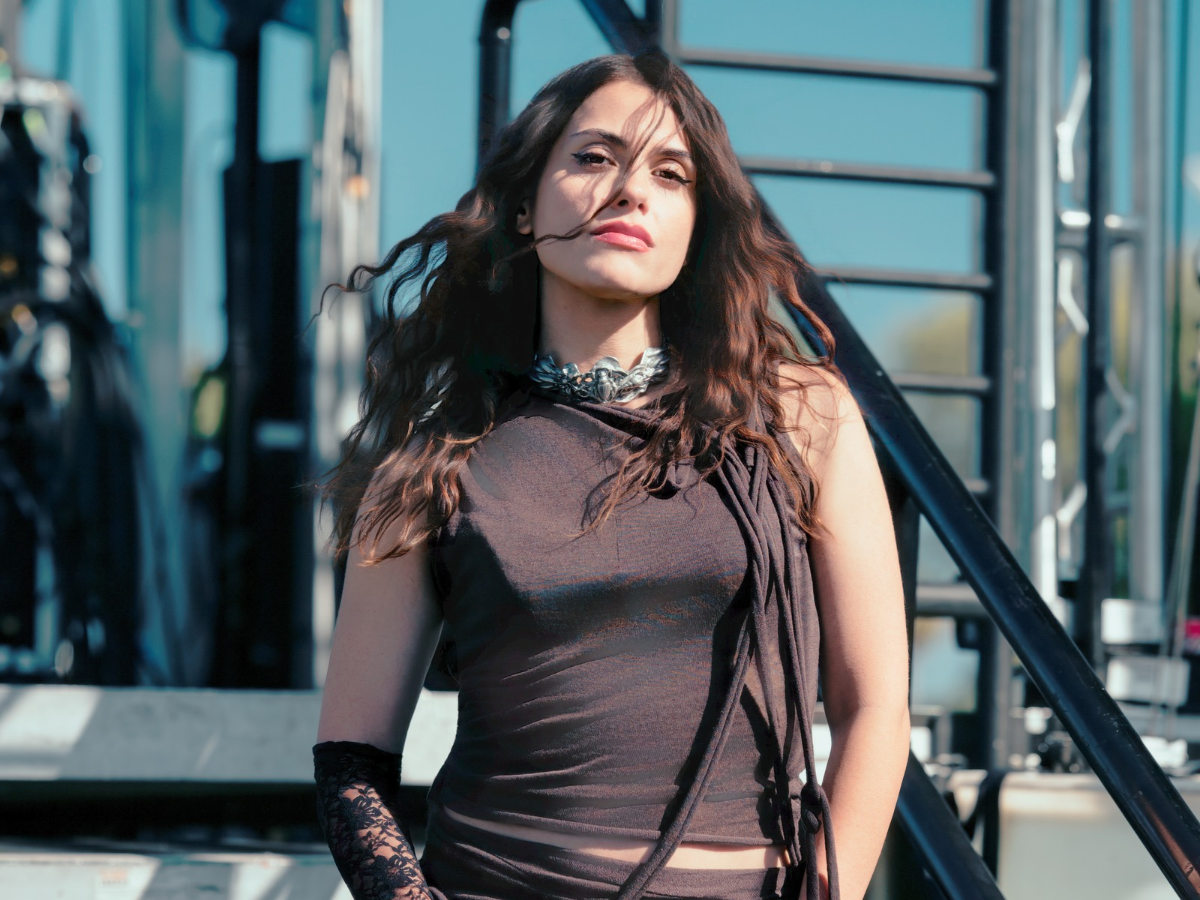

There are moments during concerts when it’s less about the people next to you and more about the energy shifting in the air. The bass gets louder, the synth takes over, and, like a switch, the performer enters a zone – completely present, completely spellbound. It was 9pm on a Tuesday night when I watched the video of Palestinian singer Lana Lubany enter that zone at OC MENA Festival, delivering a series of performances including her songs “I WISH I WAS NORMAL” and “WHERE’S MY IRIS?”, all choreographed by Iranian dancer Sofia Mahdavi.
There was an instant shift the moment Lana was carried bridal-style to the centre of the stage. In those first 30 seconds, you could tell Lana was about to perform from the soul. That was the main agenda anyway, according to Sofia.
“The choreography I prepared with Lana is the first of its kind for an Arab artist,” Sofia says. “It’s raw, intentional and human.” It was a statement that stayed with me during our interview, while Sofia was in LA and Lana was in a car with her mum, driving through Nazareth.
A dance performance can often start with a couple of head bangs and impromptu footwork just because the “vibe” was right. But for Sofia, a dancer who has choreographed for the likes of Bayou, Dana Salah, Felukah and others, the OC MENA Festival and Lana’s vision called for something more.
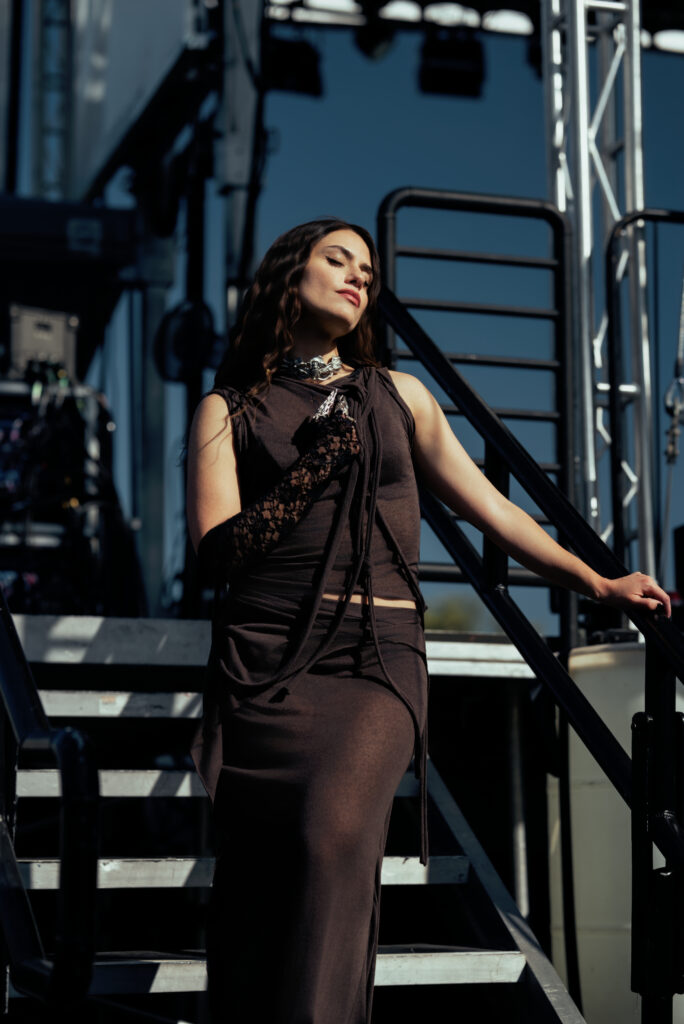
Dancing and singing have always been part of Lana’s world. From childhood to stardom, these two “just came naturally” to her. But performing them together in this way – with a full team of dancers on stage – was a first for Lana, and only further expanded her musical universe. “I’ve always struggled with communicating the meaning behind my music because my lyrics are really deep,” she tells me. “But by combining dance with my songs for the performance, I feel like the message I’m portraying becomes clearer.”
There’s a clear sense that her performance was building her world through movement. Sofia says that the “body is a vessel to communicate the story.” “I feel like dance really adds to that storytelling element,”
Sofia explains. “It’s the fact that you can also see, not just hear.”
Perhaps that’s why Lana’s performance felt so mesmerising; together, they brought the audience into a whole new world of performance. “Because we’re working between two worlds – a commercial live-performance setting but also leaning into contemporary dance styles – it gave us the space to do things that were weird, abstract and not necessarily conventional. That’s why I choreographed a routine that was more animalistic, acrobatic and alien-esque,” Sofia says.
Lana’s vision and direction were so distinct to Sofia that the whole process took just three weeks: one week to choreograph and two weeks to rehearse before the big day. “Stress was an understatement,” they both say in unison. Sofia adds: “But I think people underestimate professional dancers. You really have to trust your team.”
And truly, trust was an important factor. This was the first time Lana ever performed on a stage with dancers. “It was such a present experience,” Lana tells me, smiling. “I feel like it really forced me to get out of my head and focus on my body and what it remembers it should do – it really felt like a show.”
Throughout the whole conversation, it was obvious that Lana and Sofia’s partnership grew stronger. “The dancers provided a sense of protection if I mess up, which was really nice to have when performing,” Lana adds.
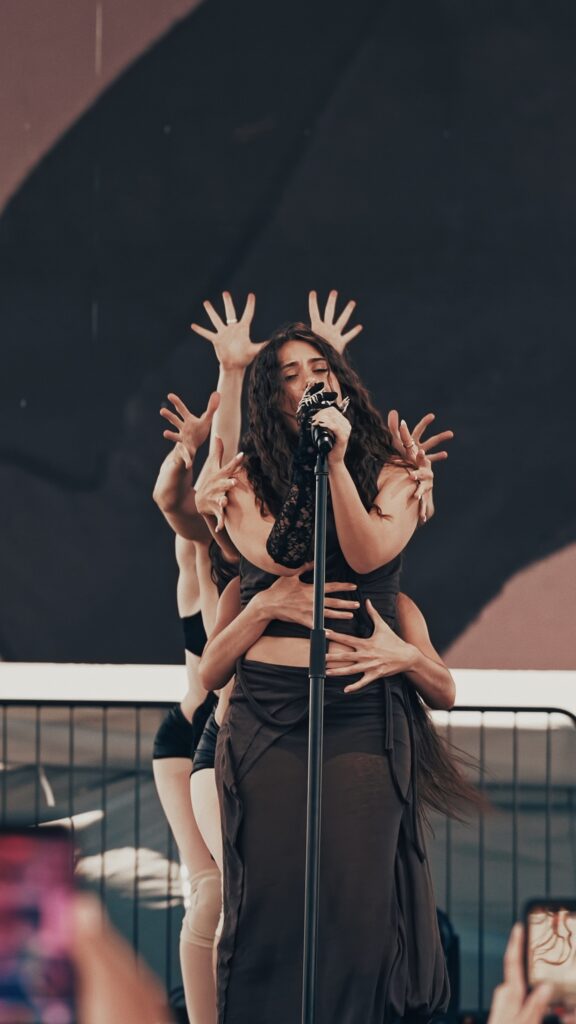
“Lana is a breath of fresh air,” Sofia acknowledges. “She knows how to move – fast, might I add.”
You can see the switch in Lana when she’s on stage, almost like she becomes a new being. I know this firsthand after watching the videos. She throws herself into a world where she trusts the moment, something Sofia believes is essential to performance. “At the end of the day, you have your body, and you have your brain. Sometimes you have to turn off your brain and let your body lead – trust it,” Sofia says.
In an era when dance still carries stigma in the region, Lana and Sofia feel that their performance at the OC MENA Festival was “pushing the boundaries within the Arab pop scene.”
“A lot of the dance we see is always about the five, six, seven, eight – very commercial,” Sofia comments. “This was not that.”
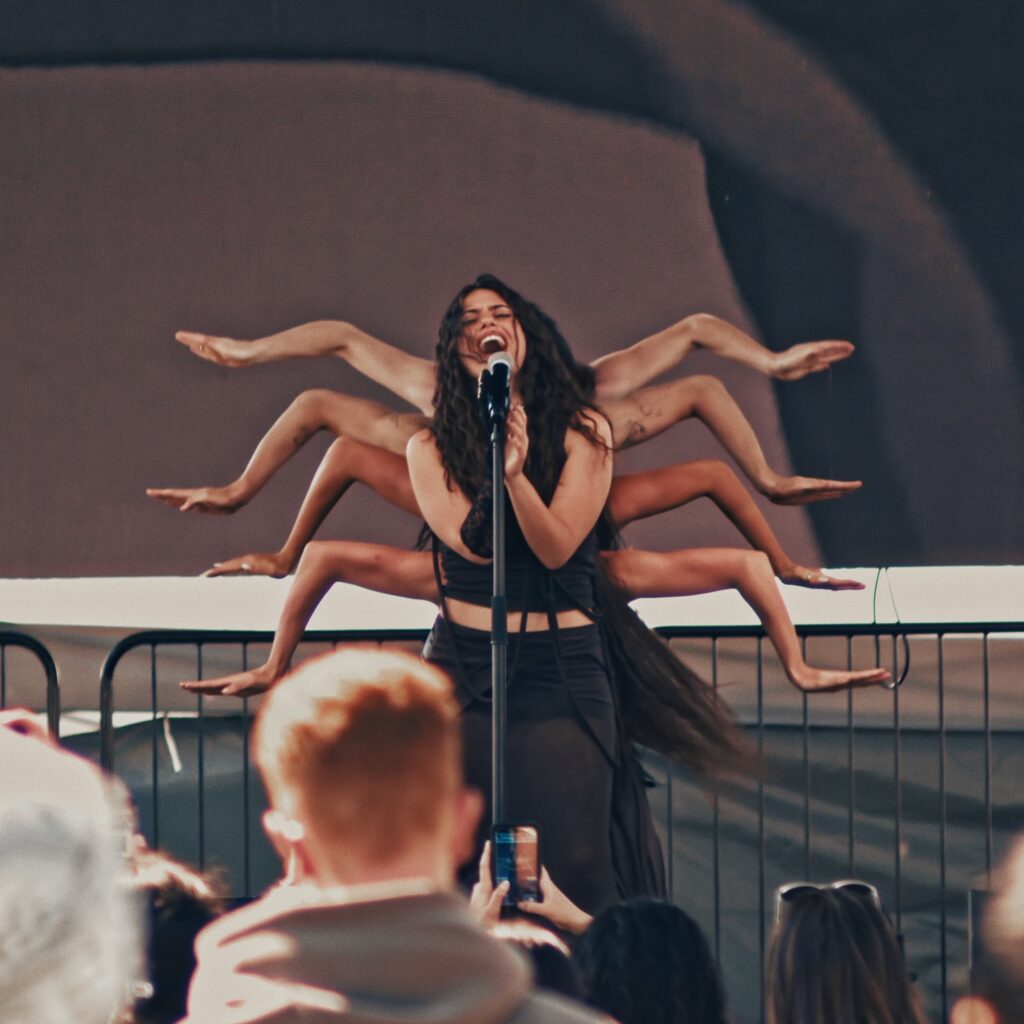
For Sofia, this meant approaching the performance as more than choreography. She sees herself as a storyteller first, using movement to help build the world an artist has created through their music. “That’s a big part for me,” Sofia says. “We move in a way that’s very intentional and rooted in the story.”
Coming from the MENA region, where dance isn’t always viewed as a profession in the same way it is in LA, Sofia also understands the importance of pushing those boundaries. “Being Iranian, there isn’t really a space for dance,” she explains. “So purely by being a dancer and being Iranian, that in itself is already pushing boundaries.”
She also points out the way traditional forms such as belly dance, Persian dance and dabke are sometimes treated differently from ballet, contemporary and hip-hop – something she’s actively working to change. “These styles have just as much history and technical background, and are just as legitimate,” she says.
And as the duo describes it, “it feels like we’re entering a renaissance of music,” with artists from the diaspora taking up space on the global stage. At the end of it all, both Lana and Sofia share the same hope: to open more doors for people from different backgrounds to create, perform and tell their own stories through dance and music.