
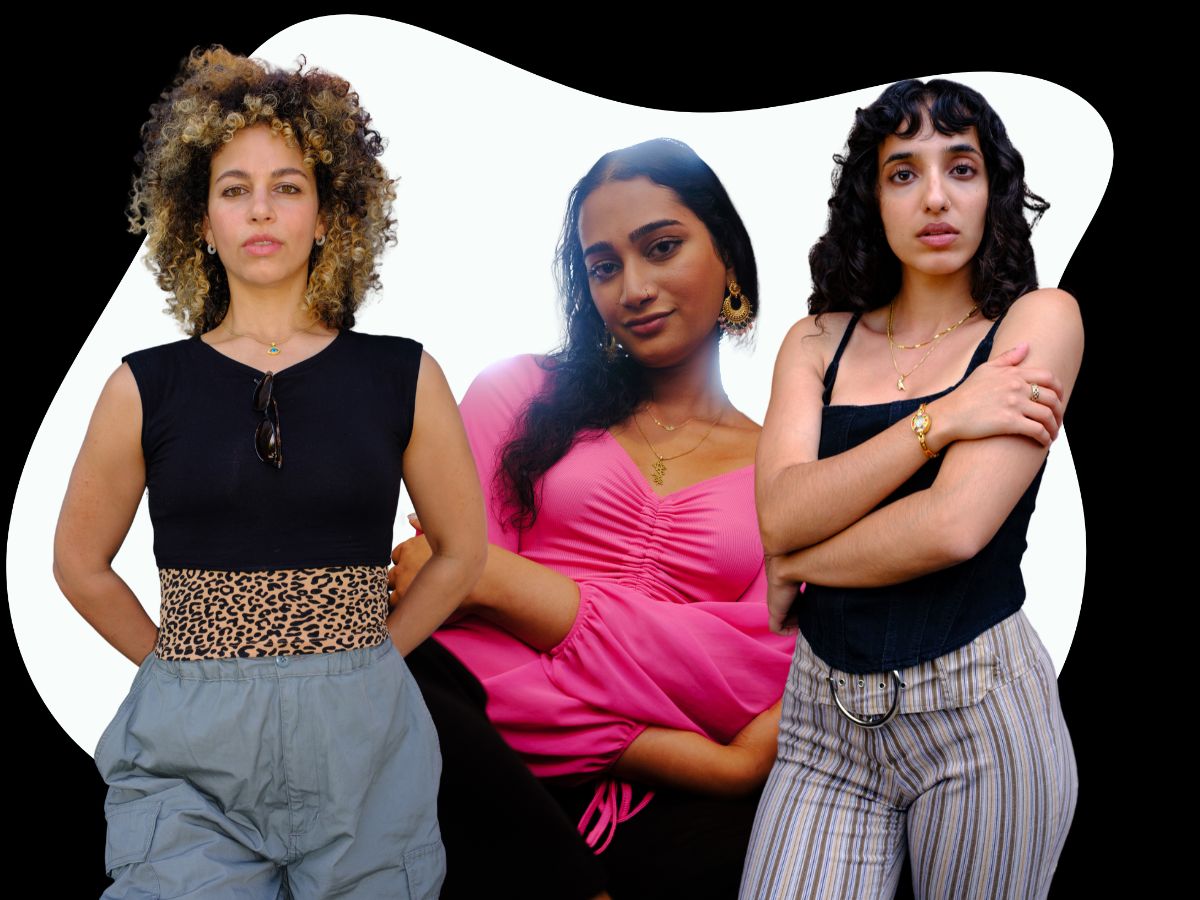

Music is so much more than what you hear through your headphones. It’s the song that takes you straight back to childhood, the beat that gets everyone on the dance floor, and the lyrics that make you feel a little less alone.
For musicians from the diaspora, Myyuh, Sri, and Sarah, music is also a way to honour their roots, bring communities together, and turn personal experiences into something bigger than themselves.
In Life In Stereo, NYC-based photographer Tamara Tesfai and Kendal Wang sit down with the three artists to talk about the sounds that shaped them, the stories behind their music, and what they’re creating next.
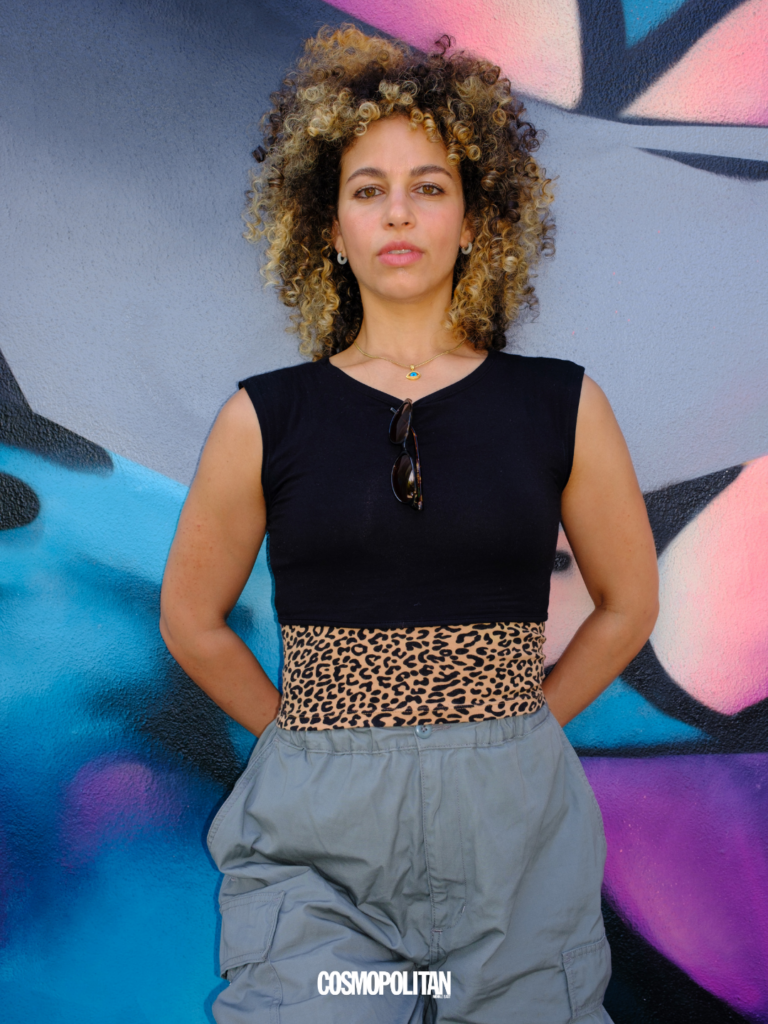
Myyuh
Cosmo ME: What is your relationship with music like?
Myyuh: Music is an extension of the energy I want to share with the world. I use DJing to shape energy in a room and help people connect with themselves and release their own energy. I think DJing is energy work, so I try to approach my performances in that way, moving through grief, joy, love, sadness, and whatever else may come up through sounds that are high-energy and often euphoric.
Cosmo ME: What is the role of music in your community?
Myyuh: I identify with Arabs, Egyptians, Muslims, women, Brown folk, and BIPOC. Music is a great connector for all of these communities, but I love that the way people connect can be so different. I love how we find joy through music as Brown people. I love how incredible women are at dancing and conveying emotion through music. I love how Egyptians know how to have a good time with music. I love how Arabs have different traditions through music across the region, like dabke, belly dance, and more. Even Muslims find connection to music through songs of worship.
Cosmo ME: What are you working on right now?

Myyuh: I’m working on launching a new party this fall called Flow State. The goal is for the DJ and dancers to find a shared flow through music that is connecting, joyful, and global. The first one will be at Cafe Balearica on September 25, 2026, with guest DJs Miss Alicia and DJ Chinua (LA).
Cosmo ME: Do you have a song or memory you would like to share?
Myyuh: I love “9 to 5” by Dolly Parton. It’s not a song I particularly identify with, as I’ve worked independently for the better part of my 15-year career. But I love the unifying energy of the song and how I can play it for almost any audience.
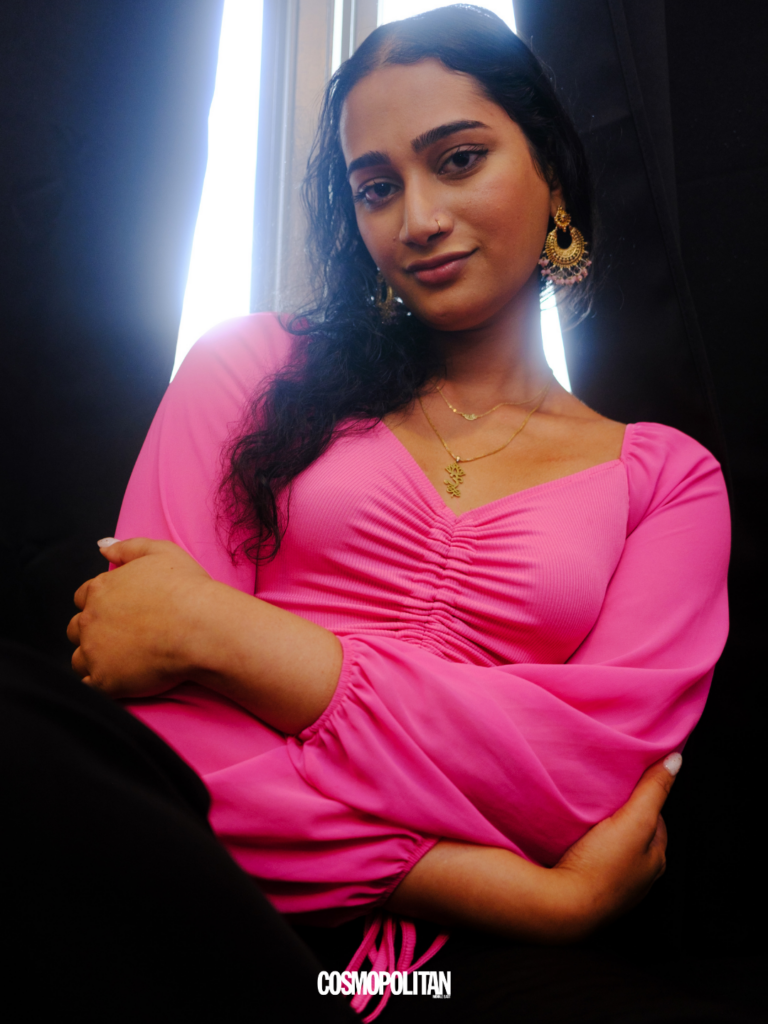
Sri

Cosmo ME: What is your relationship with music like?
Sri: I had cancer from the age of nine, with five relapses by 17. Throughout it all, music was there to get me through my lowest. When I picked up an acoustic guitar after treatment, I could feel the healing vibrations in my body. Along the way, I picked up a few other instruments, turned to producing while living in a dorm room, and never looked back. I started DJing two years ago as a way to bring my productions to life and find and build my own community here in NYC, and now, globally. I play global club music. Dabke into Miami bass. Tamil vocals over Jersey club. I like to find new ways to connect communities through music that you wouldn’t normally hear or see together. The blend I’m proudest of is “WALLAH” by DJ Habibeats into “ACT UP” by City Girls.
Cosmo ME: What is the role of music in your community?
Sri: I am Tamil, which is a language spoken in South India. 1 grew up in the U.S., so I was often identified more broadly as South Asian or brown growing up. One of the few places I’ve seen people from so many walks of life together is the global club music scene in Brooklyn. My goal is to help bridge brown and femme communities through music. Each community holds different genre lineages it helped create, and I feel honoured to have so many communities to pull from sonically.
Cosmo ME: Do you have a song or memory you would like to share?
Sri: My mom played “Devadhai Kandein” by Harish Raghavendra in the car when I was growing up. It’s a Tamil song about seeing a goddess. Now I mix that same song into “10/10” by COBRAH. I don’t think my mum pictured where it would end up. That’s exactly what my new song “hmph” is. I took a Tamil sample and flipped it into Jersey Club. It’s about being as femme as you want in a world that would rather you weren’t.
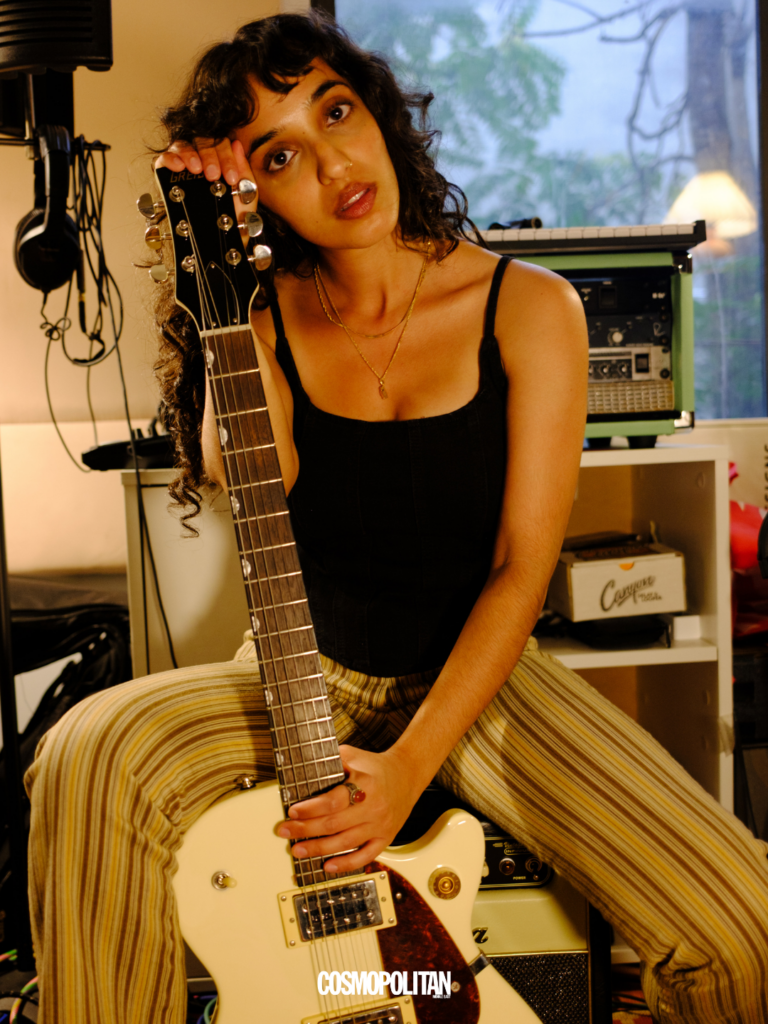
Sarah
Cosmo ME: What is your relationship with music like?
Sarah: My relationship with music has always been deeply loving and intentional. Growing up with Iranian immigrant parents and two older sisters who were born and raised in the U.S., I was exposed to everything from Shajarian, Sima Bina, Googoosh and Hayedeh to Lauryn Hill, Fiona Apple, Christina Aguilera and Tracy Chapman. My parents taught me that to truly move an audience, you have to understand and respect the music you’re performing. My mum would sit with me as I sang in Farsi, breaking down every lyric so I understood its meaning and nuance. That lesson has stayed with me. As a songwriter, I want my words to do my stories justice, and I’ll keep searching until I find the right ones. For me, making music is an arduous but deeply fulfilling labour of love.
Cosmo ME: What is the role of music in your community?
Sarah: Music plays a huge role in the Iranian community I’m part of. The ‘shabe sher’ (poetry night) is an ancient Iranian tradition where people gather late into the night to play music, recite poetry, drink tea and eat pomegranates. My family, like many Iranians around the world, still carries on this tradition today. Music has also been a driving force in resistance movements throughout history.
Through the NYC chapter of the Palestinian Youth Choir, where I’ve played keys for the past year, I’ve seen how music can amplify and preserve culture while inspiring people in the face of injustice. It’s reinforced my belief that music is inherently radical, political and revolutionary—especially during times when preserving culture feels more important than ever.
Cosmo ME: What are you working on right now?
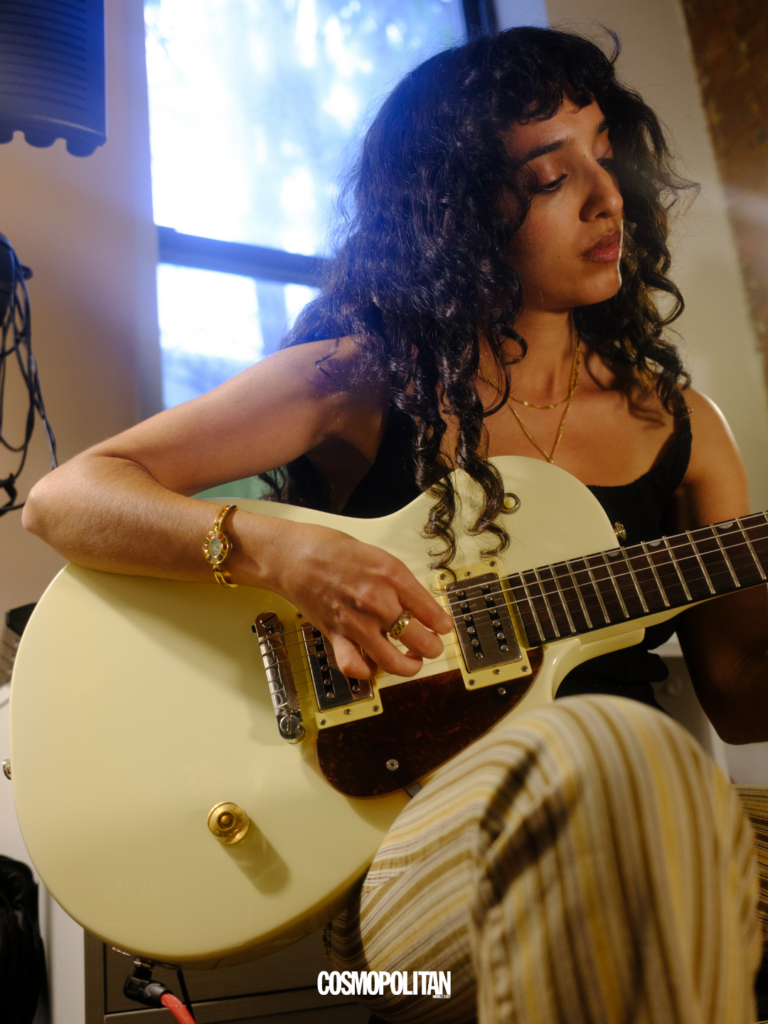
Sarah: Recently, I’ve been working on a project called “Shaydaayi”, a collection of five of my dad’s original Persian poems reimagined as songs. He and I have been working very closely on this project. To create musical arrangements that do his words justice, I need to fully understand them. My dad has been going through each piece with me, line by line, to explain the meaning, pronunciation, and the style in which each should be sung. We’ve also been reading a lot of Hafiz, Saadi, and Rumi, and listening to a lot of Shajarian together, so that I can fully immerse myself in this style and the Persian dastgah system.
Cosmo ME: Do you have a song or memory you would like to share?
Sarah: I’ve always loved the way certain songs have the power to transport you to a time you thought you’d completely forgotten. I think one of my earliest examples of this is the song “Where Is the Love?” by the Black Eyed Peas. I was only six when it came out, and while I didn’t fully understand the song’s content at the time, I could feel the soul and gravity in their voices. I was obsessed with that song as a kid. I sang it everywhere—in the house, in the car, at school. The list goes on. Every time I listen to that song, I’m transported back to my six-year-old self on the playground of my elementary school, not fully understanding what she was singing, but knowing it was deeply important.
Next, read how Bessan Ismail is in flow state!