
Success has long been defined in a man’s world, but women have not only shattered glass ceilings, they’ve built entirely new archetypes. We have everything from girl bosses to the CEO who moonlights as a DJ.
Yet in this global narrative of success, Muslim women are often marginalised.
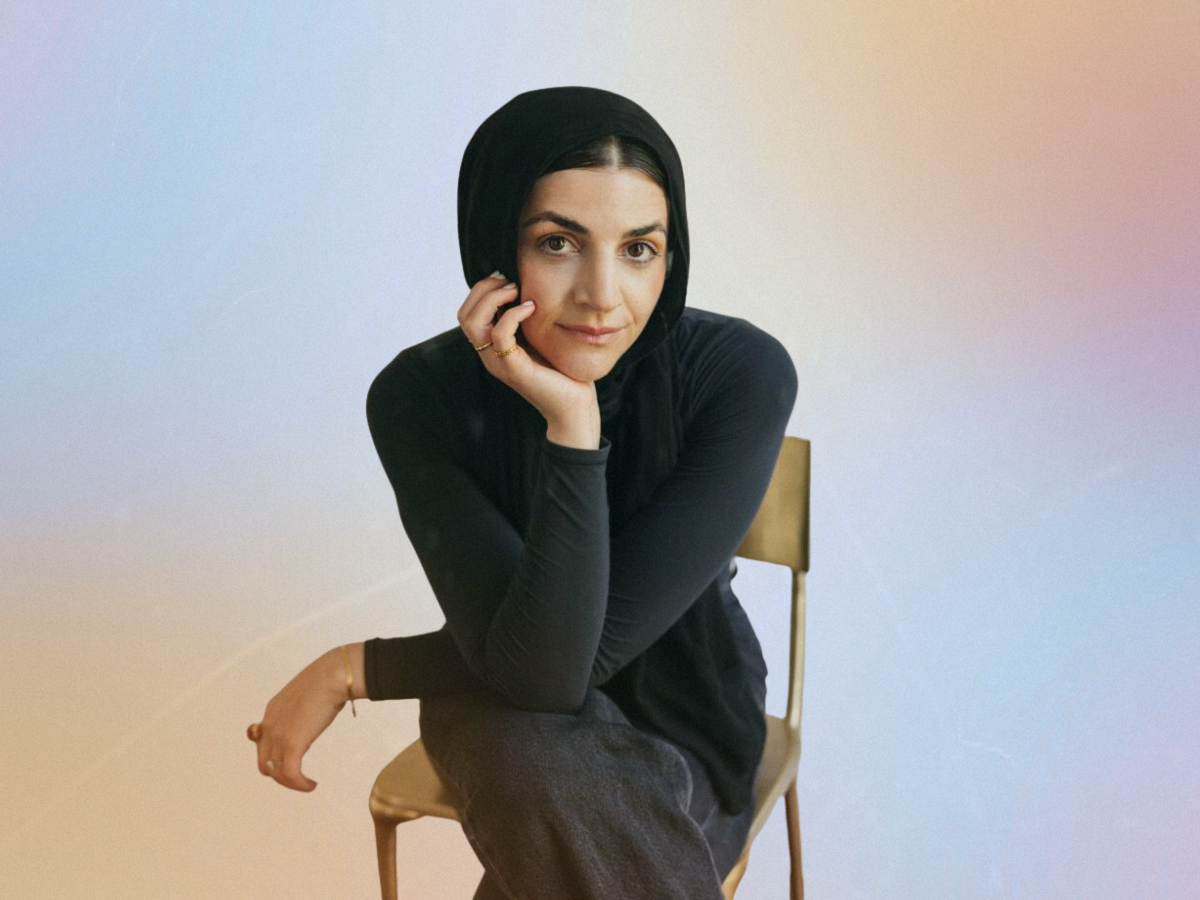
Layla Shaikley, an Iraqi-American Muslim startup founder and productivity thought leader, is changing that. As the co-founder of Wise Systems, she is building her business while delivering keynotes on power. “When you can’t access traditional power structures, you get to build better ones,” she says. Her work is about unlocking power when the odds say you shouldn’t have it and rewriting the script for who gets to hold it.
As part of the ‘Ask a Muslim Girl’ column, Cosmopolitan Middle East talks to Layla about reimagining power.
CosmoME: What is power? How is it connected to spirituality?
Layla: Power, at its most fundamental level, is the capacity to determine who gets to participate and who doesn’t. We see this everywhere—in boardrooms where only certain voices are heard, in educational institutions with gatekeeping requirements, in social spaces that subtly signal who belongs. Traditional power structures maintain themselves by creating barriers to entry through formal requirements, cultural expectations, or physical limitations.
But spiritual power operates on a completely different principle. Take mosque architecture in Islam. By refusing to mandate any specific architectural form, Islamic tradition removes the power of exclusion from religious authorities or wealthy communities. A mosque doesn’t need soaring minarets, intricate tilework, or expensive materials to be legitimate. It just needs to be a clean space facing Mecca where people can gather to pray.
This means a community meeting in a converted warehouse has the same spiritual authority as one worshipping in a magnificent Ottoman-era structure. The unhoused can pray in a park, new immigrants can establish a mosque in a strip mall, and disabled communities can prioritise accessibility features without compromising religious authenticity. The power to create sacred space is distributed to everyone, not concentrated among those with resources or architectural expertise.
When we understand power as the ability to include rather than exclude, it becomes inherently spiritual. True spiritual power multiplies when shared—it creates more connection, more community, more access to transcendence. The moment we use whatever influence we have to open doors rather than guard them, we’re participating in something larger than ourselves. That’s where power becomes spiritual: when it serves to expand possibility rather than protect privilege.
CosmoME: What advice do you have for Muslim women who are looking to unlock their power?
Layla: There are two paths to success: Riding someone’s coattails to the top or being so good that you are undeniable. Path two is the most viable path for a minority or a woman, most of the time. Stop waiting for permission and start manufacturing your own credibility. Because your only limit really is how you perceive yourself. Create businesses that solve real problems. Build an email list of people who actively choose to hear from you, and document everything you learn so others can follow your path. Understand that you’ll have to prove your value more than others because you don’t have conventional status indicators—but that’s actually your advantage because it forces you to be excellent. Build your own house when traditional gatekeepers won’t open doors.
CosmoME: What are some faith-based productivity hacks?
Layla: Identity is inextricably linked to your behaviour. As a Muslim, if you pray five times a day, you are already disciplined, flexible, focused, and connected. The structure of Islamic practice builds these qualities into your daily rhythm. Claim the values that your Islamic identity has already given you. Recognise that seeking beneficial knowledge is an act of faith. Your spiritual practices aren’t separate from your professional success—they’re the foundation of it.