
Last year, I moved to Mexico and fell in love with a tradition that wasn’t mine.
I found myself mesmerised by the ancestral altars that bloomed like tiny, dense universes during Día de los Muertos (Day of the Dead). Sepia photographs, sweet breads shaped like bones, skulls splattered with colours that somehow hush grief. Each object placed on the ofrenda is an invitation for ancestors to cross back, briefly, into the world of the living.
I could sit before these altars for hours, reading the language of remembrance. I was also envious. I wanted to build an altar to honour my own ancestors, but my lineage taught me not to do so.

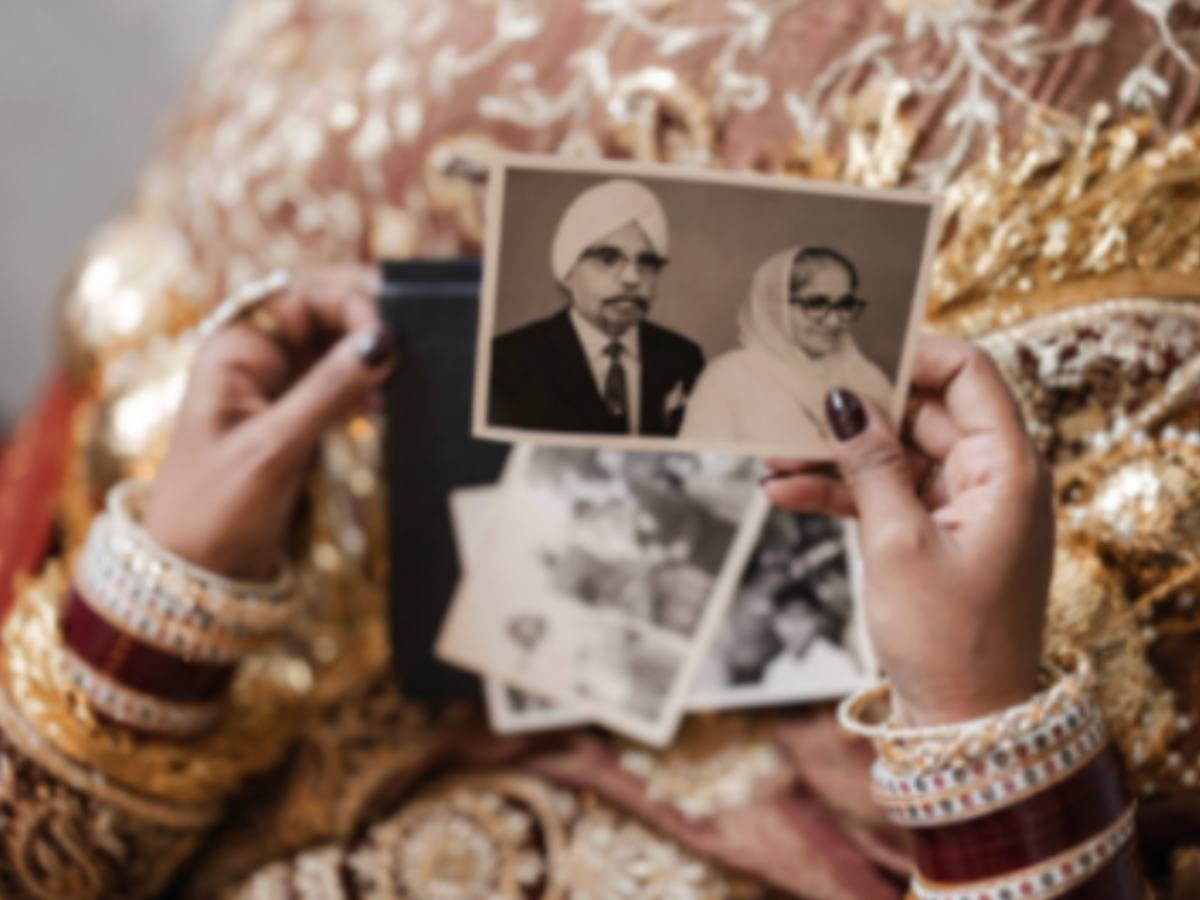
Sikh philosophy teaches us not to cling to the physical body after death, but to allow the soul to continue its journey. We cremate rather than bury, practising non-attachment to the material world. I understand this wisdom, and I live by it: there is profound freedom in releasing what was never ours to keep. At the same time, I’m captivated by photographs of my ancestors and objects that connect me to my roots. I draw strength from knowing who shaped me, from holding things that witnessed their ways of being.
So, where does this leave me and my ‘altar envy’?
As I sat with this tension, I realised that I couldn’t simply copy what I saw in Mexico. Not because it contradicts the philosophy of non-attachment I’m devoted to, but because building an ofrenda (a Día de los Muertos altar) is a specific cosmology that has survived centuries of colonisation. It belongs to a lineage that has protected this practice through generations. Without that lived understanding, building one becomes appropriation: extracting cultural aesthetics while bypassing the meaning attached to it.
My answer came from looking at the root of the word itself: ‘altar’ comes from the Latin altus, meaning “high” or “elevated”. Across civilisations, humans have gathered at altars not only to honour the dead, but also for prayer, meditation, gratitude, and healing. They are physical places where something is lifted up above the ordinary, so the mind can focus.
For me, an altar isn’t about calling my ancestors back, but about reinforcing what I’m choosing to elevate. It is a space to shape what rises in my attention, what I return to, again and again. For now, that means placing my lineage at the centre of my sight line and staying in dialogue with the wisdom that made me.
I started to build with just four guiding anchors, and perhaps you will too:
What am I willing to be shaped by?
What books, memories, teachings, or people do I want to have a say in who I’m becoming? Place one to three things you are consciously allowing to form you.
What do I refuse to forget?
Which truths, histories, or parts of myself and my lineage do I refuse to let slip into the background noise of life? Choose something that insists, quietly but firmly: “This matters for future generations.”
What am I saying yes to?
What commitments, risks, or desires am I elevating above fear and distraction? Add an object or a word that represents the “yes” I’m standing behind right now.
What will I return to when I’m lost?
Which practices, values, or relationships do I want to rise above the chaos when life unravels? Place something that can call me back to myself when I’ve drifted.
Find a threshold you cross daily. Drape it with cloth to mark the space as intentional. And remember: an altar untended becomes furniture. An altar cared for becomes a living reminder of what you’ve chosen to elevate. Visit it as often as you need.
@Rootkeepers is a platform for reclaiming ancestral wisdom and exploring how diaspora communities stay connected to their roots.
Next, read about how third spaces are keeping Persian culture alive.