


If Champagne‘s history started 2,000 years ago when the Roman Empire planted the first vines in the area, it is not until the 17th century that the Champagne region went through its big revolution. That was thanks to a monk who mastered the art of blending wines from different locations nearby, to balance and better control the quality and consistency. In doing so, he also mastered the process of double fermentation.
Fast forward some 300 years later, the process and the spirit behind Champagne making are still the same, and the region can pride itself on being the most popular vineyard in the world. Everyone knows Champagne, every wine drinker likes it. Champagne remains the King of all drinks, with Reims being the capital of the region, and where all French kings of the Middle Ages were crowned.
All Champagnes have to follow a very strict and controlled process to have the right to be classified as such. Part of it is the blending of seven authorised types of grapes. The three most commonly used and best-known are Chardonnay, Pinot Noir and Pinot Meunier.
An age-old process that takes time
As well as what the terroir adds to the fruit, human involvement makes the Champagne rise or fall. It is a careful expert blending of various wines coming from various areas, all of which are constantly in evolution. It is set apart from other sparkling wines because of its history, its process and its makers’ dedication.
Champagne has a manual harvest and in the quickest scenario ages for 15 months. That is without counting the initial vinification process, and in the case of Vintage Champagnes, Blanc de Blancs or Grande cuvées, they can age for 10 years or more.
As more brands try to diversify or modernise their offer by associating themselves with celebrities, adding ‘collectable’ touches to the bottles and so on, it’s important to remember that it’s what is inside the bottle that matters. Yes, these marketing tricks can increase a bottle’s price, but it won’t take away that Champagne remains the same respectable product.
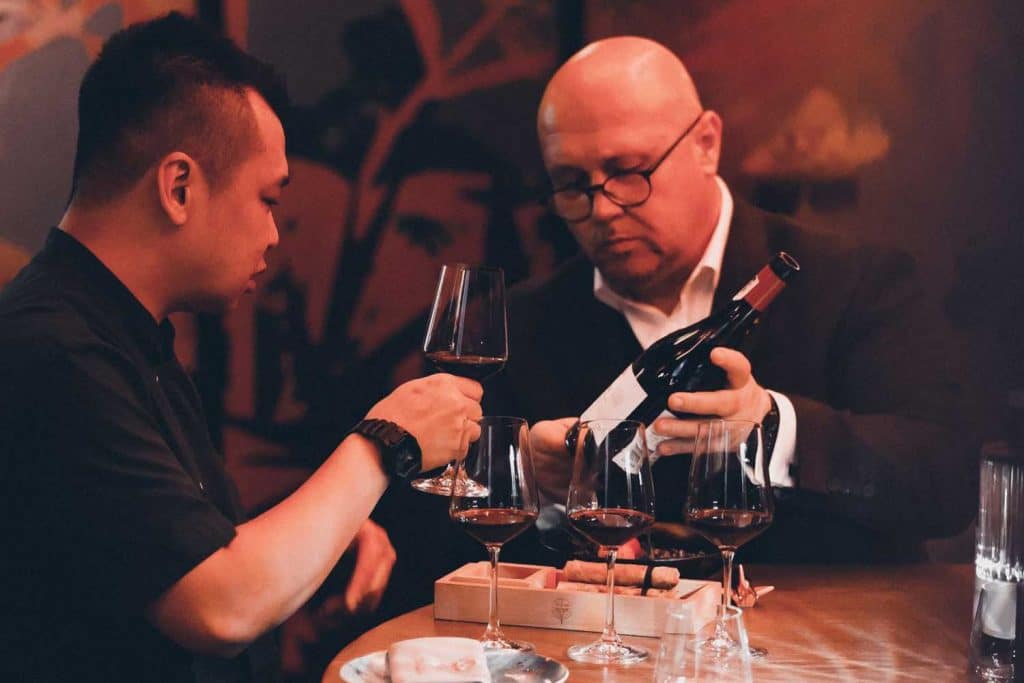
Jean-Michel Thomas in action
Made by 16,200 winemakers and sold via almost 400 Champagne houses, Champagne will always be subject to high popularity and demand. With between 15 months and 10 years of ageing, there are associated storage costs, as well as the staffing needed to pay due care and attention. These costs add up, which is why a bottle of Champagne can’t be sold at the same price as some other simpler sparkling wines, which benefit from a faster turnaround and quick cash flow.
In essence, the Champagne region is privileged by a unique terroir, a unique heritage and traditions.
Every generation learning from the precedent keeps alive a legacy dating back centuries. There are so many stories that are part of the mythology, from the Tsar who was so afraid of an explosive being concealed in the bottom of his Cristal bottles and requested for Louis Roederer to make it flat (which it still is) to Winston Churchill who drank it every day.
As he said during WW2 “I could not live without Champagne. In victory, I deserve it, In defeat I need it”.