
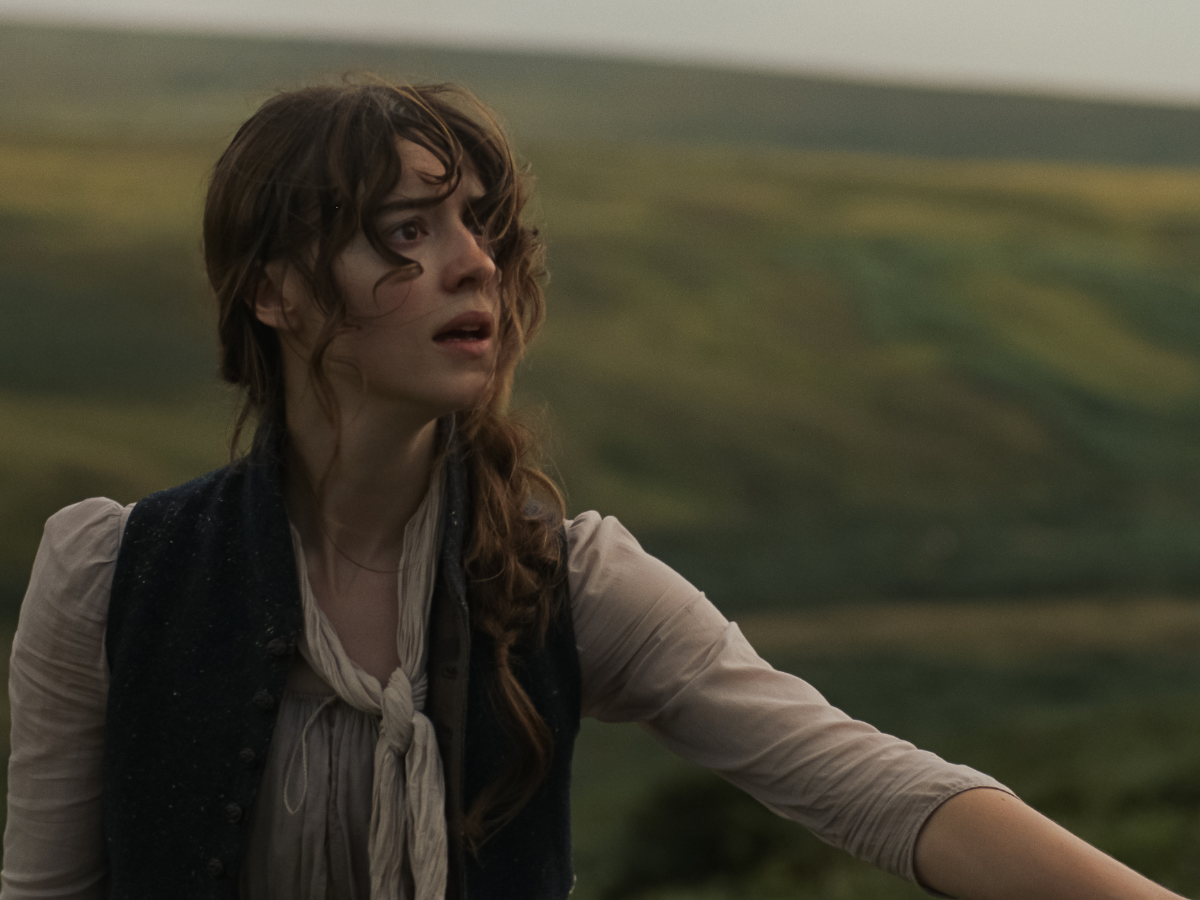

Hailstones, wild hair and a very vocal corner of Instagram: Nadia Stacey, the hair and makeup designer behind the new Jane Austen adaptation, explains why she let the Dashwood sisters off the hook.
There is a moment in the script of director Georgia Oakley’s Sense and Sensibility where someone eats toast at breakfast. For hair and makeup designer Nadia Stacey, it raised a very simple question: would anyone really sit down to toast with a head full of pristine, pinned curls?!
That one line of thinking shaped the look of the entire film, which officially arrives in the UAE on October 15, 2026. The Dashwood sisters wear their hair down, their skin looks like skin, and Mariannem, played by Esmé Creed-Miles, in particular, looks like she has just run across a moor in the rain (because she has).
We sat down with Nadia to talk about why the film ditches the polished Regency look, how a hailstorm in Devon changed her plans, and the (very few) products behind those natural flushes.
“It’s actually about women, and particularly sisters.”
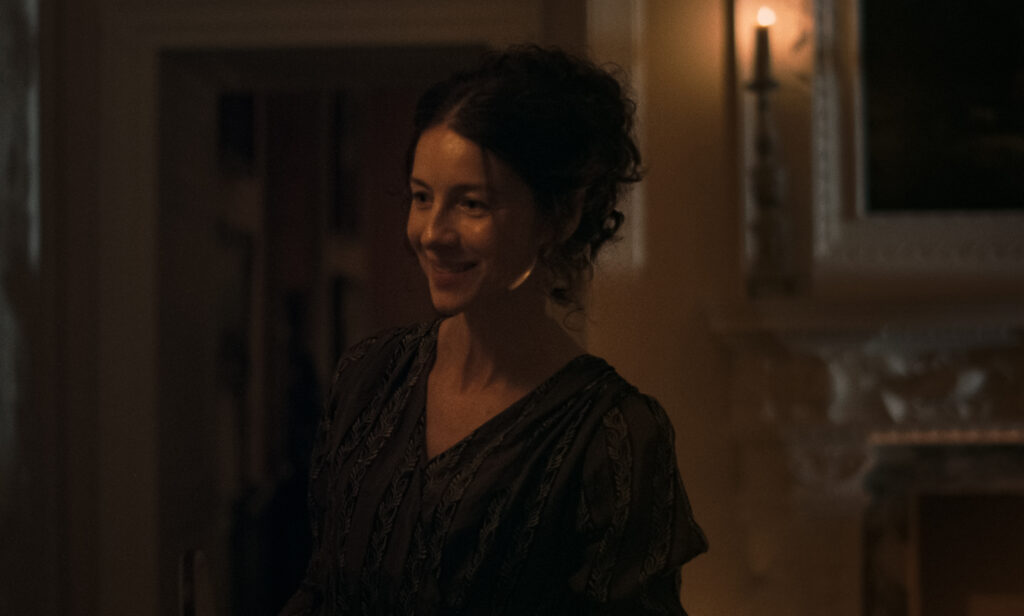
Nadia is upfront that her pitch to Georgia was a gamble. “For me, it was maybe a risk when I first went to meet her, because I was like, ‘If this is not what she wants, I’m pitching a very different thing.'” It turned out they were completely in sync.
The starting point was respect for what came before, with a clear line drawn under it. Ang Lee’s 1995 version, she says, is a beautiful film with beautiful hair and makeup. “But we weren’t making a remake; we were making our own version of that story.”
What struck her about the plot, now more than 200 years old, was how human it is. “You see these pictures of people in period costumes and hairstyles, and you imagine that they thought completely differently from us right now, but they didn’t. They still had the same insecurities; they still fell in love, they still fancied the boy.”
The word the team kept coming back to was ‘relatable’: “It was about watching it and going, I know how that girl feels, because I’ve felt it before.”
Why ‘no makeup’ is the bravest choice
Stripping a look back can sound like doing nothing at all. According to Nadia, it is the opposite. “If you’re taking away most of the makeup and you’re putting the hair down, you’re not doing anything. But actually, it’s quite a brave choice.”
The challenge is that this is a film headed for the big screen, and the actresses still want to look their best. So the work starts with the first layer: skin prep and clever cheats that make skin look good without looking made up. Her rule is simple. “Hair and makeup in film is stuff that you don’t notice unless you should. I don’t want to be watching a Jane Austen adaptation and see foundation. It’ll pull me out of the story.”
Marianne, the moors, and a Devon hailstorm
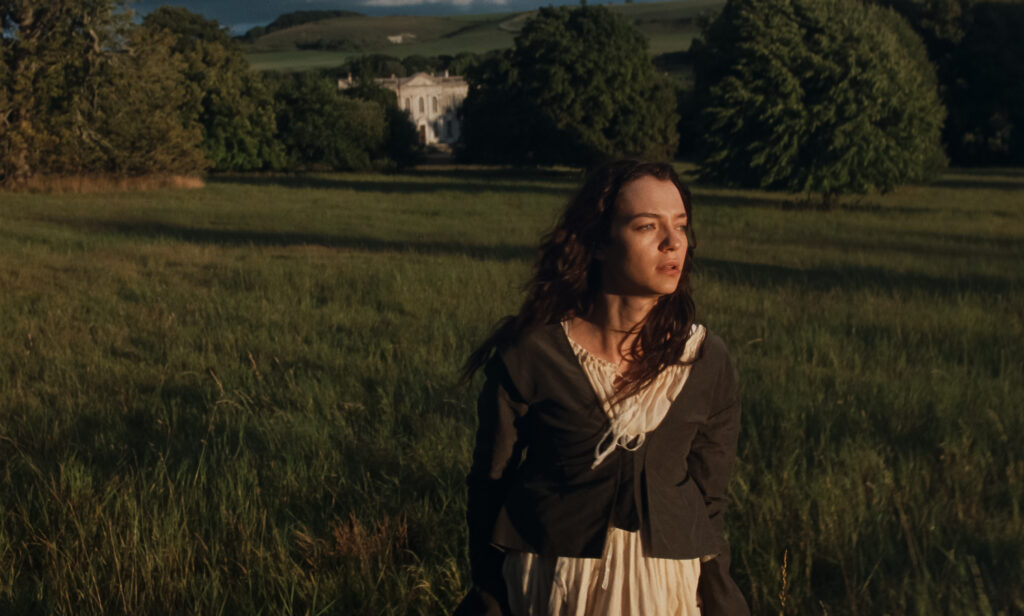
When asked which look best captures the film’s spirit, Nadia doesn’t hesitate: Marianne. “She really encompasses what we were trying to do. The wildness of the shots of her out in the open, running across the moorland. When it looks unkempt and mad and wild, and potentially distracting at times, that’s real. That’s what you would look like if you were running across a field.”
The reference images spanned many different periods, but they all shared one thing. “There was always a kind of freeness to it, particularly with Marianne. Hair down and wild. She’s off doing her own thing, this girl.”
Filming was less romantic. Nadia had pitched the job to her team as a summer shoot in Devon, with a dip in the sea after work. Then came the first day at the cottage where the Dashwoods live.
“There are videos of us in wet weather gear with hailstones hitting us. And my team were like, ‘We’re going to kill you. This is not what you signed up for.'” The weather made it a real challenge to keep hair and makeup looking good, but it also fit the film’s overall approach. Georgia wanted nothing to look too contrived or policed. “If the hair was blowing all over the place, it was like, ‘Let’s do this. Let’s leave it.'” That meant letting go of continuity, at least a little. “You have to relinquish some of it, and trust that your director will choose the take that they want; Marianne doesn’t want it to be a certain way. You kind of run with it.”
Historical accuracy, with a twist
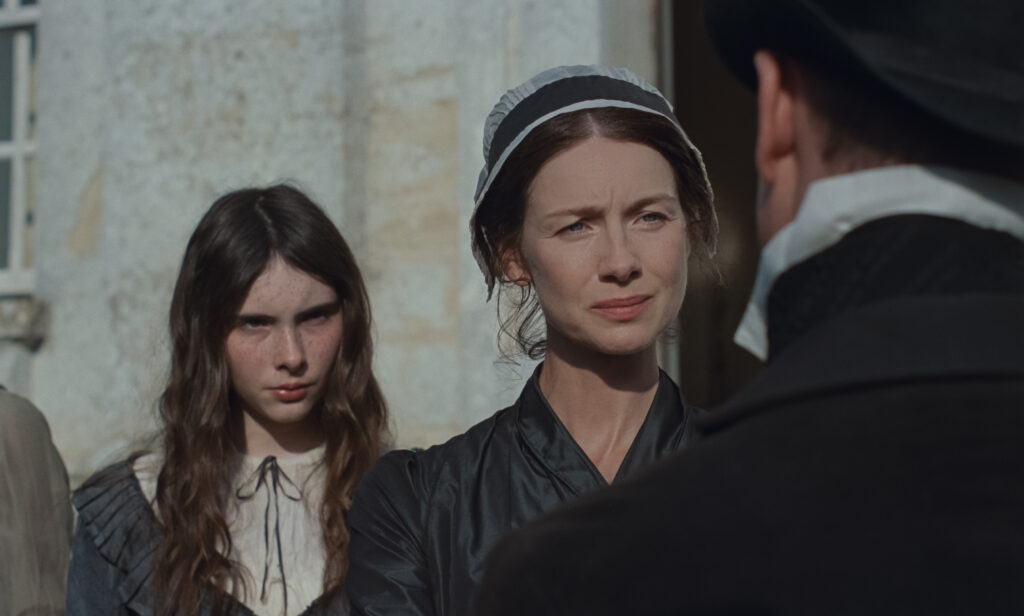
The loose hair doesn’t mean Nadia skipped the history homework. Whatever the project, she starts by researching the period properly and says it all comes down to silhouette. “If you know that period, you know what it is. If you understand that, then you have the scope to slightly tweak it and change it for your version of the story.”
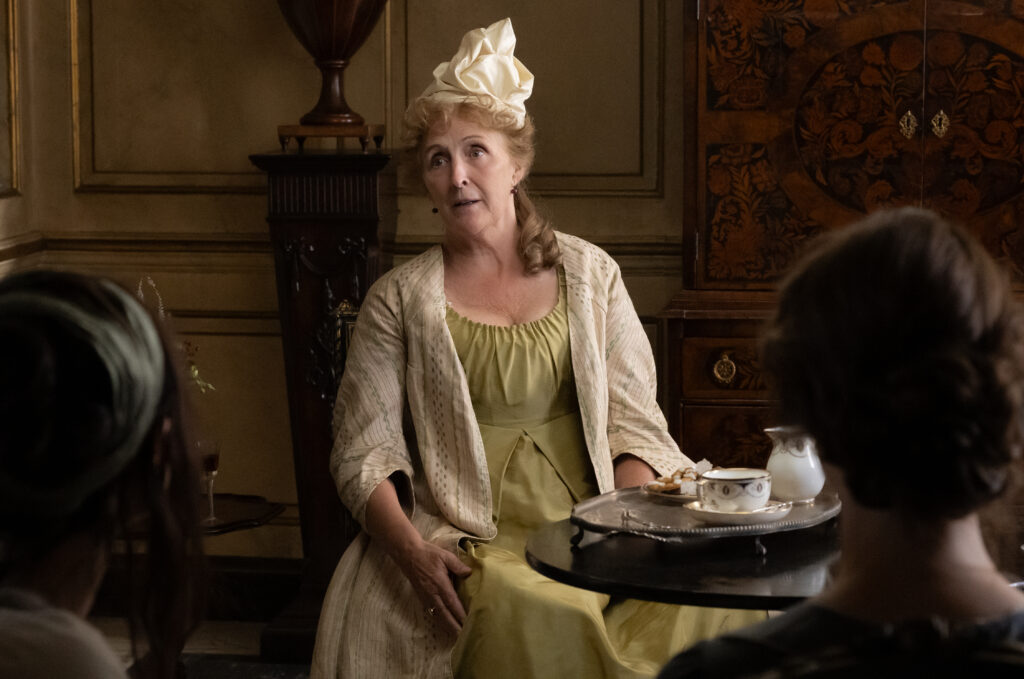
The clever part is where the accuracy lives. Once the film reaches the ballrooms, the society women and background artists are, in her words, “completely period accurate.” That anchors the audience in a specific time and place, which gives the team room to play elsewhere.
“The Dashwoods are different. They’re living a different life, out in the country in this cottage. So we have more artistic freedom with them.”
Fanny, played by Stacy Martin, is the benchmark, she says. “She’s so period-accurate, it’s almost too much. We made a bow out of her own hair at the front for the ballroom scene. She’s so prim and proper and perfect, and trying to play to what society wants her to be.”
Hair also tells a story about money. Those Regency styles are hard to do yourself, even for a good hairdresser, so someone like Fanny would have had staff to do it for her. “Which immediately tells you, class-wise, that she is of a different class. We don’t meet the Dashwoods with that. They don’t have servants running around after them.” It adds another layer to the sisters’ situation: left with so little, compared to Fanny, they also have no one to do their hair.
Mapping the sisters’ hair journeys
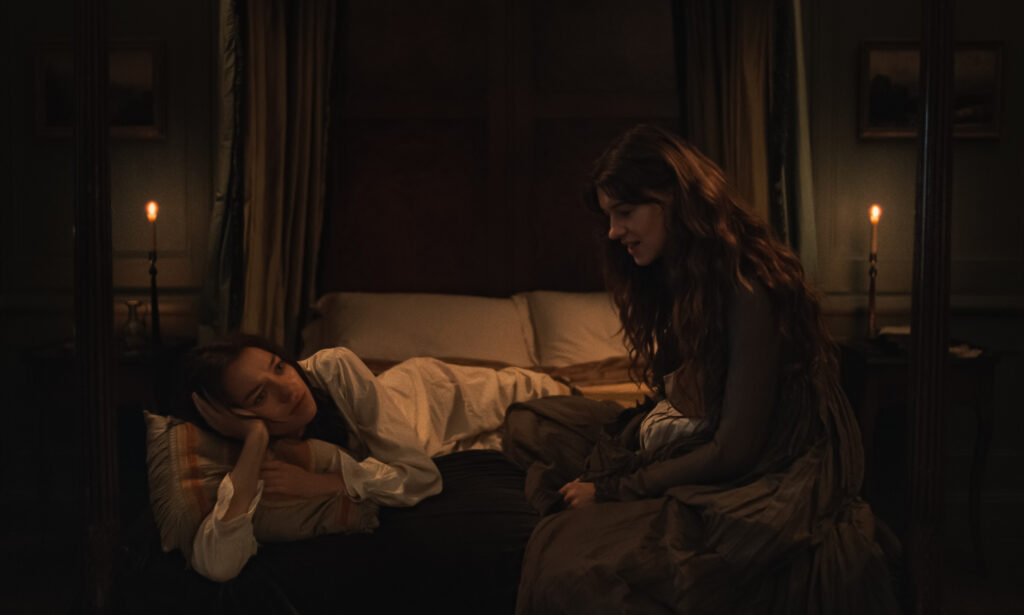
Marianne was the “slightly easier” one, though the tricky part was the balls. “I always wanted Marianne to keep this air of: she doesn’t care, she is wild. For me, she is like the moors she’s running around on.” But at a ball, she is representing her family, so she has to conform to a degree.
The solution came from costume designer Grace, who found a photo of a woman with her hair tied up in fabric. “That’s something Marianne would do: ‘Okay, I’ll put my hair up for this ball, but I’m not going to do what Fanny does. I’m not going that far, but I’ll do something.'”
Eleanor is more put together at first. Nadia sees her role as the head of the family — the eldest daughter, as many know, “the sensible one.” As the story goes on, she watches Fanny and takes notes. Her hair starts to go up, and they start to mimic the shape, but still with a looseness to it.
“They know what you’re meant to do in society, but they’ve never had that.” Her favourite moment is the reunion with her love, when Eleanor is found chopping wood. “I thought, ‘What would you do with her hair?!’ I didn’t believe it would be up in pristine, beautiful, put-together curls. So we put it in a loose plait, because she’s got it out of the way. It’s practical.” The effect is deliberate: “I’m not distracted by the hair, because I’m watching her fall in love with this guy. The undone-ness of her was more to do with her falling in love.”
Most looks landed as planned. But Marianne turned out even wilder than imagined. “But that’s Esme. She’s perfect for that role, because she is that.”
The one real evolution was colour. Once the Dashwoods were cast and all appeared to be brunettes, Nadia began thinking about Stacy Martin, who is naturally dark-haired, going blonde. Her reference point was Nancy from Little House on the Prairie: “really prim and proper, with these blonde ringlets
On the backlash
Nadia knows this approach won’t please everyone, and she has already had a taste of it. “I am a designer who is very okay with splitting audiences. I’ve never really seen myself as just a hairdresser and a makeup artist. I’ve seen myself as part of the storytelling process.”
That includes some very direct messages. “I got messages on Instagram from Austen fans, like, ‘I can’t believe you’ve done this; you put their hair down.’ ‘And I’m like, wow, okay.'”
She isn’t rattled. “You have to tell stories the way that you want to tell them. It’s art; it’s subjective. Some people are going to love something, and some people aren’t.” Her test is whether she believes it. She tries to put herself in the mindset of each character, then looks at the production design, the costume design and how they are living, day to day. “As long as I believe that that’s how it would look, I’m okay with it.”
What she wants you to take away
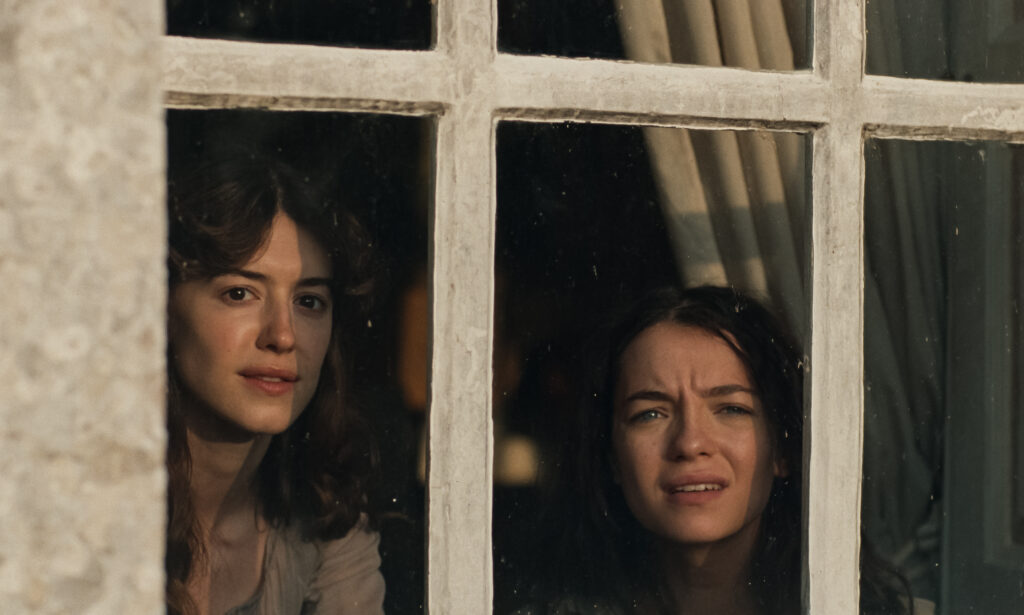
When asked for the one detail she hopes audiences remember, Nadia pointed to the collaboration behind the look: the conversations between a director’s vision, what the hair and makeup team delivers, and how the actresses want to play each character.
Her advice for the cinema is gentle. Watch the Ang Lee version, which she calls beautiful, then watch this one, and notice how different they are. Above all, “Let yourself go into it” and focus on the sisters: “Just watch the women in this film and don’t worry about the rest of it.”
Sense and Sensibility is in cinemas on October 15, 2026.
Next, read all the Arab films submitted for the Oscars you can watch right now.