
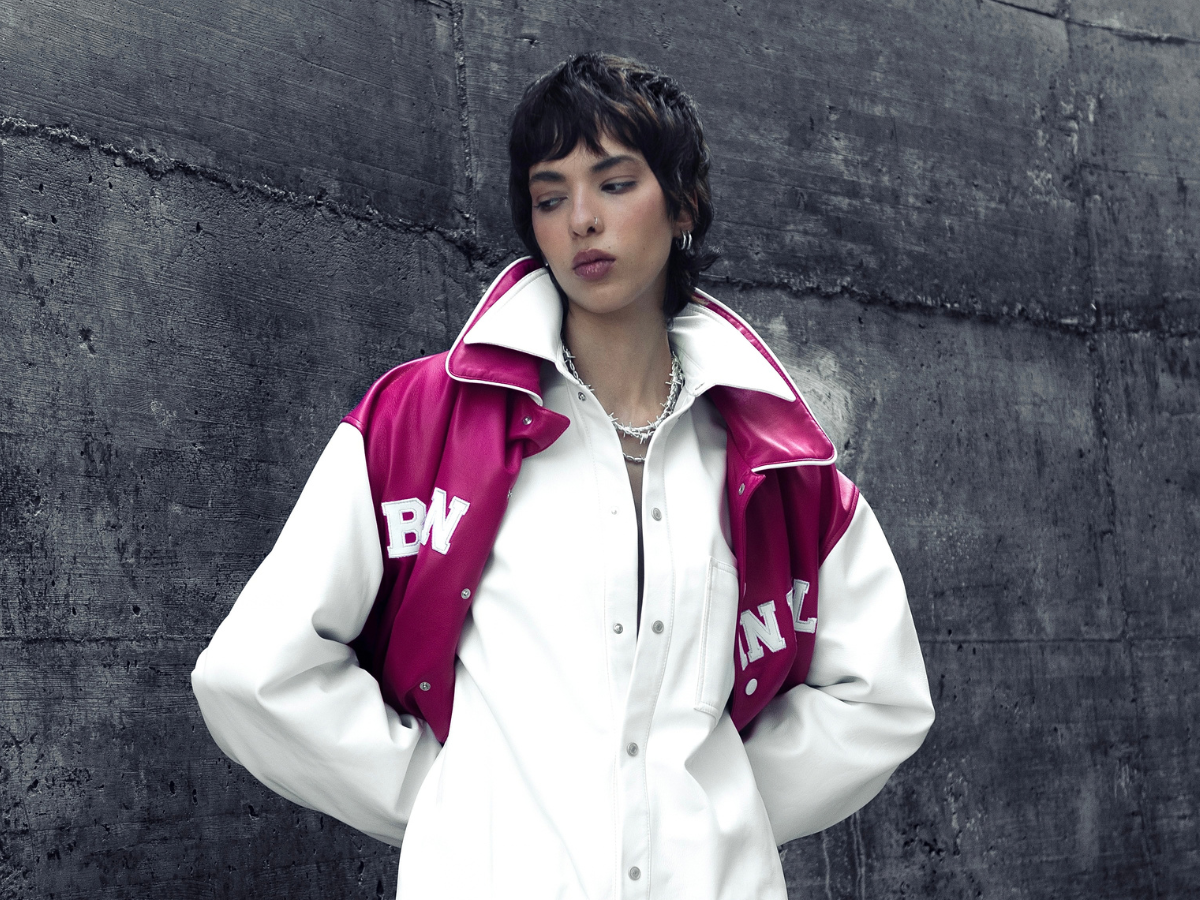

For Ibrahim Shebani, life simply led him to fashion. He dabbled in architecture, worked in communications and dipped his toes into the creative world wherever life took him, but fashion was something he naturally found himself owning.
His love for fashion, though, started much closer to home — with his mum. It lived in the moments he watched her transform the old into something new: painting on silk, embroidering leather jackets and finding beauty in the unexpected. From those early memories to a life that took him from Egypt and Libya, each experience eventually led him to where he is today: the founder of his own brand, Born In Exile.
In this edition of Fashion Maxxing With…, we sit down with the multi-faceted designer to unpack how he found his way into fashion, the experiences that shaped his creative identity and how Born In Exile came to life.
Cosmo ME: What was your childhood like? Are there certain memories, experiences, cultural moments, etc., that impacted your art?
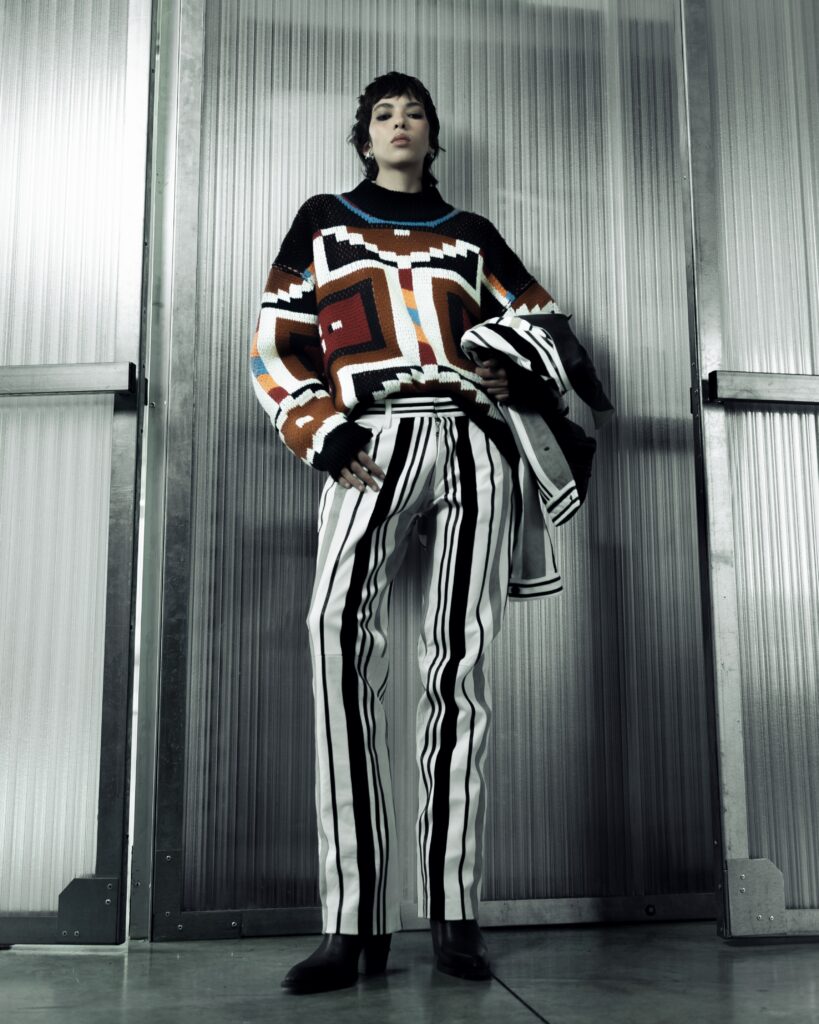
IS: My childhood. I must say it was a happy one; I grew up in a house full of love with very caring siblings and parents. I was born in Germany and grew up in Cairo, Egypt, where I spent most of my childhood before I even set foot in Libya. My family had to leave Libya and live in exile, so growing up, I always felt like I belonged in different places while also being connected to one place I hadn’t really experienced yet.
One of the biggest influences on me was my mother. She was incredibly creative without even trying to be. She painted on silk, made embroidered leather jackets, and had this amazing ability to create beautiful things with whatever she had. She was so resourceful and just a genius in her own creative world. Looking back now, I realise that she shaped my eye and my appreciation for craftsmanship long before I even understood that I wanted to create myself.
When we lived in Cairo, and as the youngest of six siblings, I was always glued to my mother. I went with her to the tailor when she had her clothes made, and to Khan El Khalili when she wanted to get embroidery done or jewellery. I have a vivid memory of holding onto a bag hanging from her elbow and going through fabric and materials shops in Cairo and wherever we travelled on vacation.
My family loved to travel, and going to museums and sightseeing was a must, so I always felt that my eyes and mind were exposed to so much art as a child, which unintentionally drew me toward creativity.
Cosmo ME: Was there a defining moment when you knew you had to make the childhood dream of creating a fashion label into what it is now?
IS: I wouldn’t say there was one specific moment. It wasn’t like I woke up one day and thought, “Okay, now I’m starting a brand.” Also, it wasn’t the natural path for a fashion school graduate; I wasn’t allowed to study fashion, since it wasn’t really expected of a young man in Libya in the early 2000s. It wasn’t really understood or accepted!
I think life just led me there. I went through different experiences, studied architecture, worked in communication, explored other creative fields, and somehow all of these chapters brought me back to what I think I always wanted to do. Looking back, I almost feel like I had to go through all of that first in order to understand that creating a label was what I was meant to do.
Cosmo ME: When did you take that leap into creating? How did you hone in your personal style?
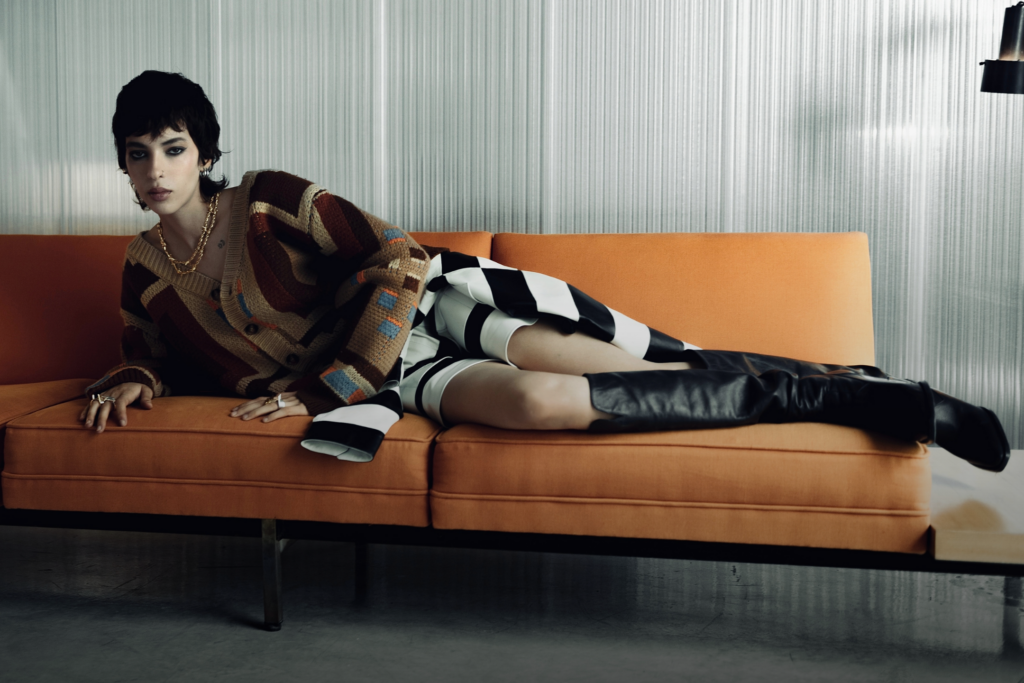
IS: I don’t think there was ever a dramatic leap. It happened quite naturally. I’ve always been creating in one way or another, whether through architecture, communication, or simply observing the world around me. Eventually, fashion became the medium that allowed me to bring everything together.
As for my personal style, I don’t think I consciously sat down and defined it. It evolved with me. The more experiences I had, the more confident I became in trusting my instincts. I’ve never been interested in following trends. I’m much more interested in creating something that feels timeless, emotional and true to who I am.
Cosmo ME: Architecture, marketing, and fashion. You’ve moved through very different creative languages. Do you think the brand would look different if you didn’t explore other industries and instead went straight into fashion?
IS: I am sure those different creative languages shaped the way I create today, and I think architecture and communication gave me different tools and ways of seeing the world. But at the same time, the desire to create comes from somewhere deeper. It also comes from my identity, my personal journey, life experience, nostalgia, craftsmanship, and stories.
So maybe if I hadn’t had those experiences and went to fashion school, I would still have ended up creating a label around my identity and storytelling. It might have looked different aesthetically, but I think the soul would have remained the same.
Cosmo ME: Talk us through your creative process: how do you spin a modern edge on a traditional idea? How did you learn to see the start of an idea through a new lens?
IS: Honestly, there is no user manual.
Most of the time, I already have ideas for future collections before I’ve even finished the current one. Everything starts with a story, references, silhouettes, culture, traditions. Sometimes it’s something deeply personal that I’ve experienced in my life or a political statement.
Then we start as a team collecting references. We observe people, look into our archives, and consider our personal favourite items. What do we wanna wear? How can we make clothes that will attract clients, make them feel good, and trigger the “buy me” sensor? Architecture, films, music—things we see while travelling. I love styling, and I love mixing worlds that don’t necessarily belong together. Ideas just appear, and I follow them. It’s quite instinctive. A bit of a creative mess! lol
I don’t really overthink it. I trust the process.
Cosmo ME: Is there a favourite piece that you have created? If so, why? What about the piece or the process behind it makes it stand out to you among the rest?
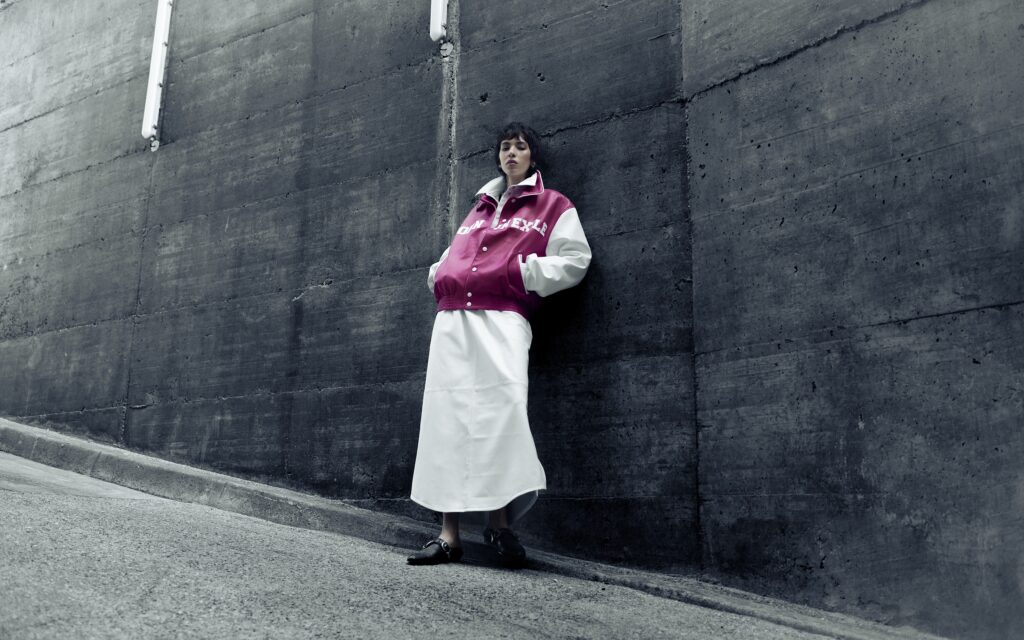
IS: This question is like asking a parent which child is their favourite. I honestly can’t choose.
But if I had to mention one collection that is particularly dear to my heart, it would be Never Love Me Again. There was something very emotional about that collection. The colour palette, the messages behind the pieces, the prints, the fabrics… everything felt incredibly personal.
Some collections come from your mind, and others come from somewhere much deeper. Never Love Me Again definitely came from the heart.
Cosmo ME: You design for a culture that many of your audience may not have encountered. How do you make sure each piece feels authentically inspired by Libya?
IS: Not every piece is inspired by Libya, and I think that’s important to say. Born In Exile isn’t about reducing an entire culture to symbols. But Libya naturally finds its way into the work because it’s part of who I am.
What I love most is meeting our community through the pop-ups we organise around the world. That’s where the conversations happen. So many of our clients had never heard much about Libya or had never really looked into it before.
For me, it’s such an honour to be able to talk about my country through creation. If a piece starts a conversation or sparks someone’s curiosity about Libya, then I feel like we’ve done something meaningful.
But all in all, the collections are inspired by what made me the person I am today: Libya, North Africa, Africa, the Arab world, the Mediterranean, Amazigh culture, pop culture, Art, War, Politics, exile, trips around the world; it is a personal journey of evolution.
Cosmo ME: Libya has a very specific and special visual culture between architecture, textiles, colours, etc. Is there anything you haven’t been able to translate into the brand yet, things you’re still trying to figure out how to use?
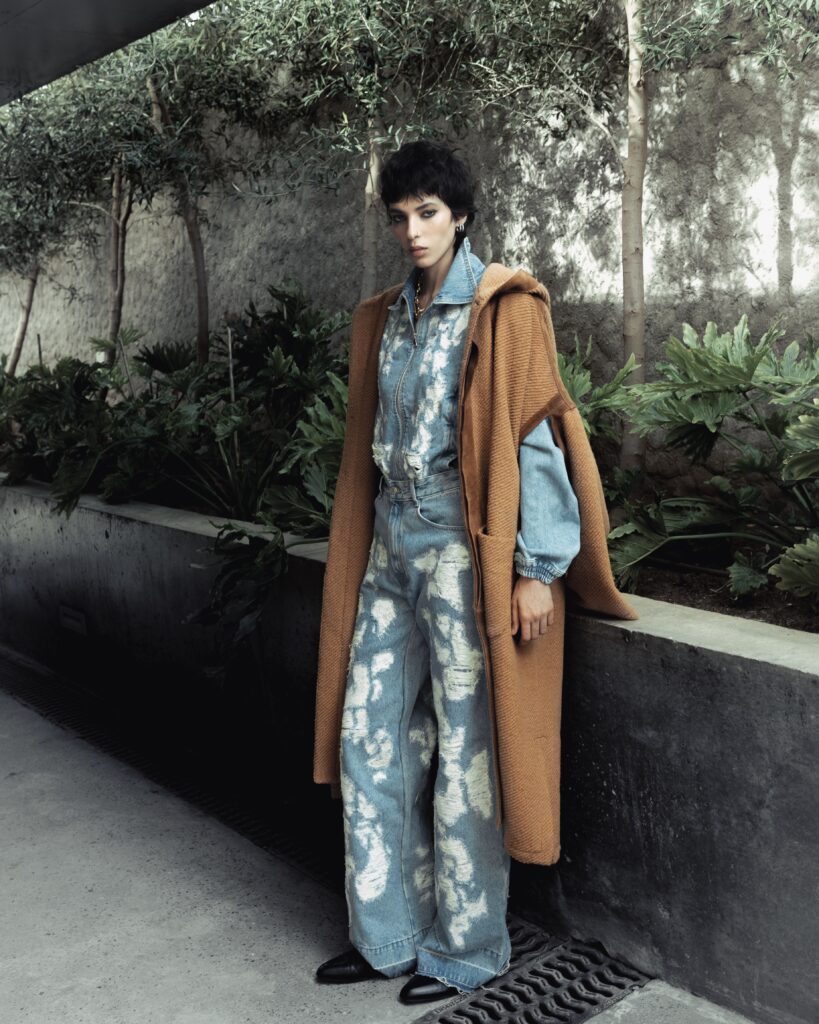
IS: Oh my God, so, so, so many things.
Honestly, I feel like I’ve barely scratched the surface. Libya is incredibly rich visually and culturally, and there are endless stories to tell.
One thing I’m particularly fascinated by is the oasis town of Ghadames. It’s a UNESCO World Heritage Site and one of the most beautiful places architecturally. The geometry, the spaces, the light, and especially the hand-painted walls are just incredible.
It’s something I’ve been obsessed with for years, and I know I haven’t explored it enough yet. There are many chapters still waiting to be written.
Also, there aren’t many designers from Libya who are presenting work on a regional or international scale. We are a very small community, and that’s why you don’t see enough representation and references, but we are growing, and I hope that we will be able to deliver stories that can change the narrative forced on Libya due to its political unrest.
Cosmo ME: What makes you want to create now?
IS: I think it is extremely personal! I think I finally found a language of my own through fashion, and I am finally doing what I love and loving what I do!
I have a strong desire to create pieces that last, and I’ve never felt happier than when I bump into people wearing Born in Exile in the street! People I don’t know! It is an insane feeling!
We’re living in a time where everything moves so quickly, and I find myself wanting the opposite. I want to make clothes that people keep forever. Great fabrics, beautiful construction, silhouettes that flatter both men and women, pieces that become part of someone’s life rather than something they wear for one season.
I think that’s what motivates me the most today. Creating things with meaning, things with longevity.
Because to me, true luxury isn’t about excess. It’s about making something so well and with so much intention that people never want to let it go.