

Moroccan skincare was doing “clean girl” before the internet ever existed. No online reviews, no serums with names you can’t pronounce. Just ghassoul clay drying in the sun and a mom who never stayed without a mask.
That’s the world Mouna Abbassy, founder of Izil Beauty, grew up in, and instead of leaving it behind, she built a whole brand around keeping it intact.
We sat down with Mouna to talk about the rituals she inherited, the ones she can’t live without, and why she thinks the rest of the world is about to catch on to what Moroccan women have known for generations.
Cosmo ME: Take us back to where your relationship with Moroccan beauty began. Was it watching your mother or grandmother, a specific memory, a moment that shaped how you see beauty today?
Mouna: It was actually from when I was a very, very, very little kid. I would come back home — we had a big garden — and since I was little, my mom would be in an area with no grass, with a big towel, like a bed sheet, on the floor. On top of it, you would see her bending down and putting ghassoul clay as a paste. But before that, I would see a lot of steps; she would mix all the other ingredients: rayhan, roses, and so on. Later on, she would mix it all in a big pot with ghassoul clay, and then put it in the sun to dry, and it would form small pieces, like when the earth dries. That’s how she prepared her ghassoul mix, which she could then use in small quantities, mixed with water, to put on her head. I have those visuals — I would come back home and see those things laid out in the garden. And the smell — you would pass by and smell the rose, the ghassoul, the oils — I think it started back then.
And every week, we would prepare for the hammam. It was like a ceremony — she would start preparing two or three days before, making the mixes ahead of when we would apply them. I think it started back then, and I grew up with it. Then slowly, as I got into my teenage years, I got a “do it yourself” book, in French. It didn’t only use natural ingredients — that was the first time I learned what glycerin was. Once I had this book, I started making my own mixes on the weekends, too.
When I came home, my mom would always have something on her face, and a mask on her hair, all day long, until we went to the hammam — and I did the same. It became a ritual. She got it from her mother — it’s something passed down from mother to daughter. When she made the mixes, she would either go to the herbalist for advice on what to add, or — since there was no internet at the time — she would cut recipes out of newspapers. I remember she had a file full of paper cutouts with recipes. That’s how it got to me. It’s very cultural, and it’s also about how much my mom loves it — she really prepares everything by hand, and she still does the same thing to this day.
Cosmo ME: Walk us through what a typical week of self-care looks like for you, the rituals woven into your everyday life that you’d never skip.
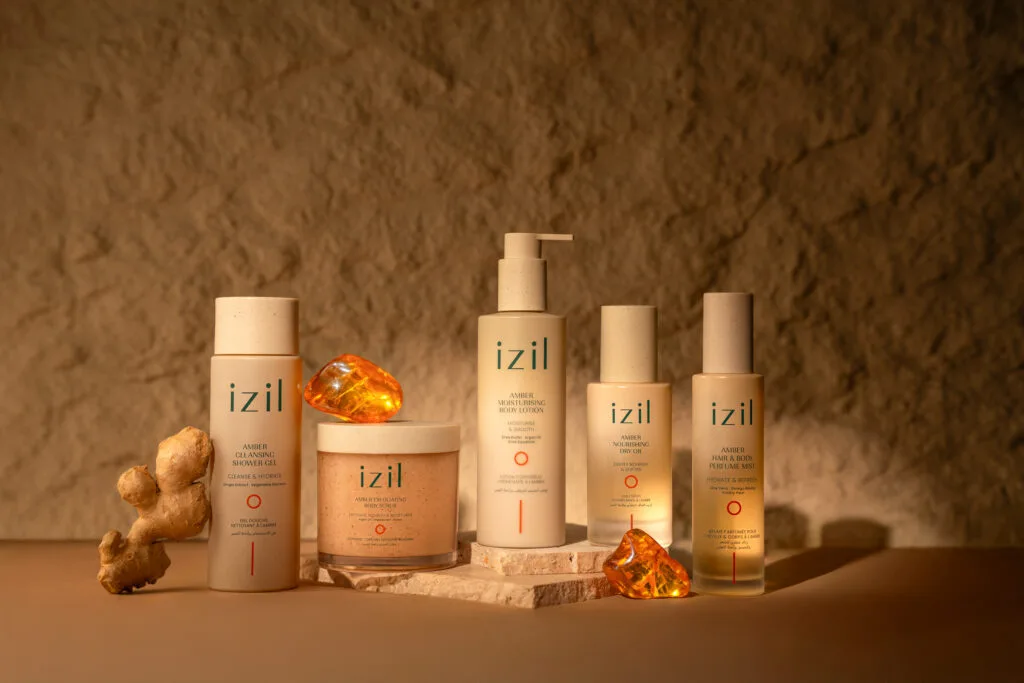
Mouna: The daily cleanser. Usually, I wash my face with a cleanser in the evening, and in the morning, I use a micellar water. After I wash my face, I put on the micellar, then a cream — definitely a daily cream for hydration — or a serum, one or the other. SPF, on a daily basis. Then in the evening, it’s micellar first — usually I don’t wear heavy makeup, but when I do, I use a balm remover first; otherwise, it’s just micellar — then cleanser, then a serum or an oil. Most likely, I’ll use the oil — either argan or prickly pear. This is a daily routine.
Weekly, I use different scrubs at least twice a week because I have large pores. Masks — I try to use them once a week. I advise people to use one once a week, though I don’t always have the time or the chance to relax enough to do it. Once every ten days, I do a proper hammam scrub — and if I don’t go to the hammam, I do it at home. I have my glove, my Moroccan soap, and I always follow it with a mask. It has to be with a mask — the ghassoul mask or a hydrating mask- because the skin absorbs whatever nutrients you put on afterwards so well. During those ten days, I use scrubs in the shower once or twice. For hair, I oil it every week, using different oils on the roots and shaft.
Cosmo ME: Is there a Moroccan beauty ritual you were sceptical of until you tried it and it actually changed everything for you?
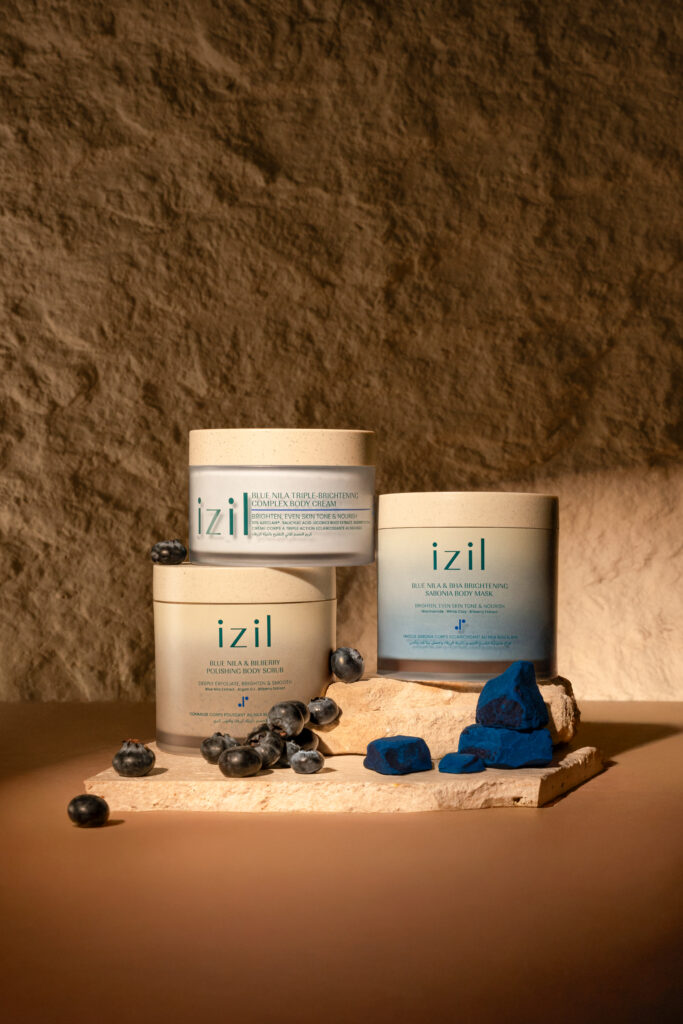
Mouna: Whether I was sceptical, I’m not sure — but was it life-changing? Yes. I didn’t try it much when I was younger; I tried it after I left my mom’s house. It’s the blue nila mask for the body and face. You wouldn’t use it alone, or you’d turn blue like Avatar — I used it mixed with yoghurt, and it was amazing. It’s not very practical — you’re worried you’ll turn blue. When you use it on your body, you have to wait a little; you can’t lie down; and you have to leave it on, usually in the shower, for five to ten minutes. But it was amazing for the skin. In dark areas, you can feel your skin gradually lighten over time.
Cosmo ME: If you had to introduce one ritual to a complete beginner, what would you choose, and how would you walk them through it?
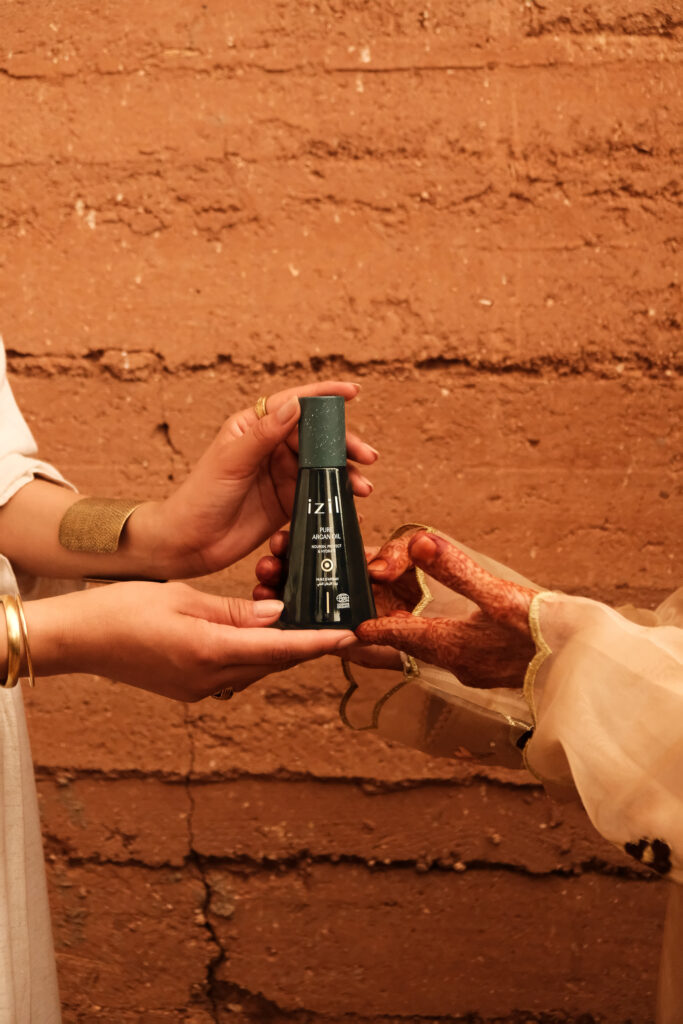
Mouna: I would choose one oil — prickly pear at night. Either prickly pear or argan oil. I prefer prickly pear because I’m 40-plus, but even people in their 20s can use argan oil. It’s a lifesaver. It changes your skin. You don’t necessarily see it right away, but you see the improvement over time — it’s amazing. It’s simple, it’s just oil, there’s nothing to lose. You put it on at night, not during the day — it’s like giving your skin a proper meal every night. Especially the face, but even the body, for the argan oil. I’d keep prickly pear for the face, but argan oil is amazing for the body too — even dark areas, dryness, eczema, even for babies. So either argan oil or prickly pear is all you need to have in the house, regardless. Diaper rash, irritation from shaving for men or women, hair — argan oil is a multipurpose oil that is just amazing. They really do miracles for the hair and skin — one for all — and they’re rich in vitamins, really rich.
Prickly pear is more for anti-ageing, dark circles, and pigmentation. Argan oil is more for nourishment — also pigmentation, but more for the body. For hair, argan oil is like giving it food and nourishment.
Cosmo ME: What’s a Moroccan beauty secret you think is next to have its global moment?
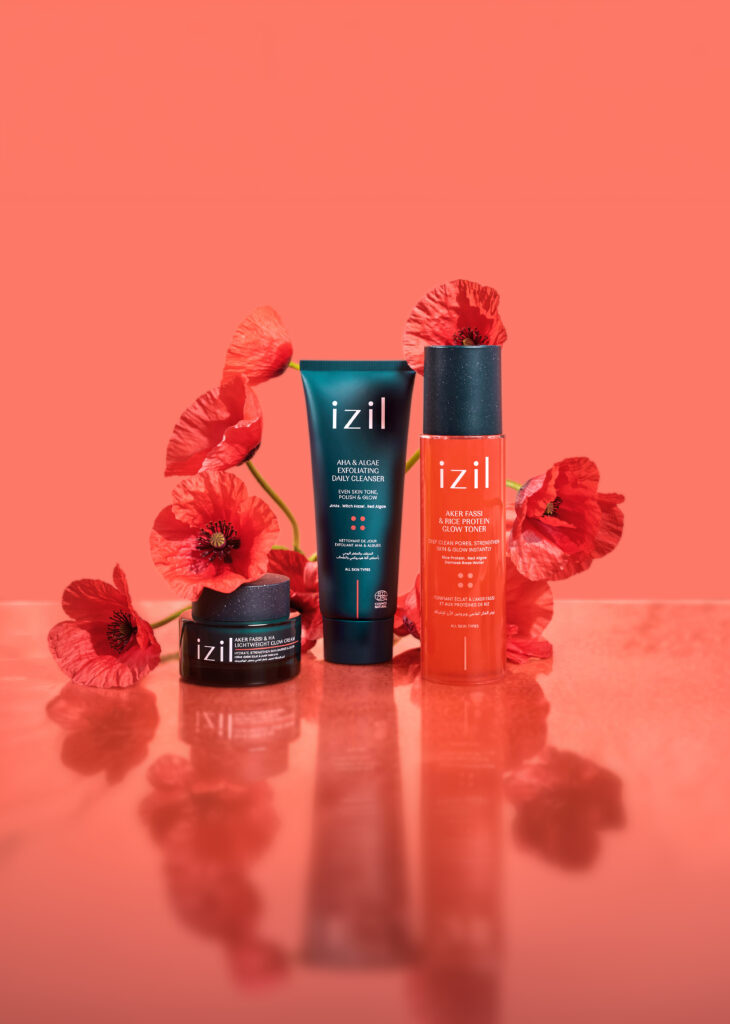
Mouna: Ingredient-wise, it could be blue nila and aker fassi. When people see aker fassi, they think it’s just dye, just a tint, but it’s beyond a tint. It has a lot of antioxidants because it’s made from flowers and pomegranate. It does different things and gives you that rosy, flushed kind of tint — a natural, rosy glow. Blue Nila also offers many benefits for brightening and nourishment. So yeah, I think we’ll see more of that.
Check out Hindash’s guide to summer makeup!