
Trends come and go quicker than you can say “lip filler”, and our overconsumption of media via social platforms has only expedited this process. We see a trend, we see it everywhere, and then – poof! – it’s gone. We move. We scroll on. We dissolve the lip filler.
With trends being fast-tracked through our feeds and into our lives and then straight back out again, (beauty blender baking, anyone?) It’s harder than ever to keep up – especially when so many of these trends aim to create completely unattainable ideals of beauty.
@_like_moon “Celebrities who did buccal fat removal” #hollywood #bellahadid #zoëkravitz #eizagonzalez #foryou #beautystandard #viral #buccalfatremoval #fyp ♬ Shootout – Izzamuzzic & Julien Marchal
Back in the day, fashion and beauty trends were dictated by designers at fashion weeks, lining the catwalks of Milan, Paris, New York, and London, and being snapped backstage on high-profile supermodels by must-know photographers. These trends were then communicated to the public through magazines and trend forecasters.
Now, trends move at a much speedier pace; as Heuritech – a fashion industry analytics platform – so eloquently explains: “The omnipresence of technology, from social media to live-streamed collections, has democratized the fashion industry, effectively changing the way fashion moves throughout society. Trendsetters are no longer only designers, but also young influencers on Instagram, fashion bloggers with a loyal audience, and celebrities on the street.”

Exhibit A: Alix Earle *blowing* up on socials from 40k followers to 1 million in less than a week (!!)
Via @alix_earle on Instagram
The same goes for beauty – “Consumption rates and information distribution have accelerated beyond the pace of Fashion Weeks. New products, new styles, and new trends crop up every week on social media, and designers draw inspiration from all sorts of outlets. Platforms like Instagram and TikTok are merciless in their turnover time, especially with the advent of fast fashion, with some trends lasting 2 weeks before going out of style”.
@alixearle If you saw me last night – no you didn’t
For me, nothing affects my confidence like a pivot amongst body shape trends. It’s incredibly wild (read: awful) that this is even a thing – that there are “trends” that influence how you feel about the shape of your natural, healthy, hardworking body. But alas, they exist. What was once seen as undesirable (“Does my butt look big in this?”) Became the very definition of sex appeal, thanks to the Kardashian-Jenner clan and their famous hourglass figures.
At the time of this body type’s rise in popularity, I was a lean, flat-chested 19-year-old, and I felt unbelievably self-conscious, thanks to the tons (and tons) of Brazilian Butt-Lifted derrières permeating my timelines. Now, just as I’m getting used to my bigger, curvier, aging body, I’m seeing headlines like “Bye-bye booty: heroin chic is back,” accompanied by copy that claims “thin is in”.
So, here we are, back to square one: 90s beauty ideals are back, we’re suddenly wondering if our butts look too big in our fave pair of trousers, and (just as we got used to the idea that we were never going to look like Kim Kardashian when she broke the internet), we now have another unattainable beauty ideal to live up to – one that undoes all the hard work of any body-positive movements of the last decade.
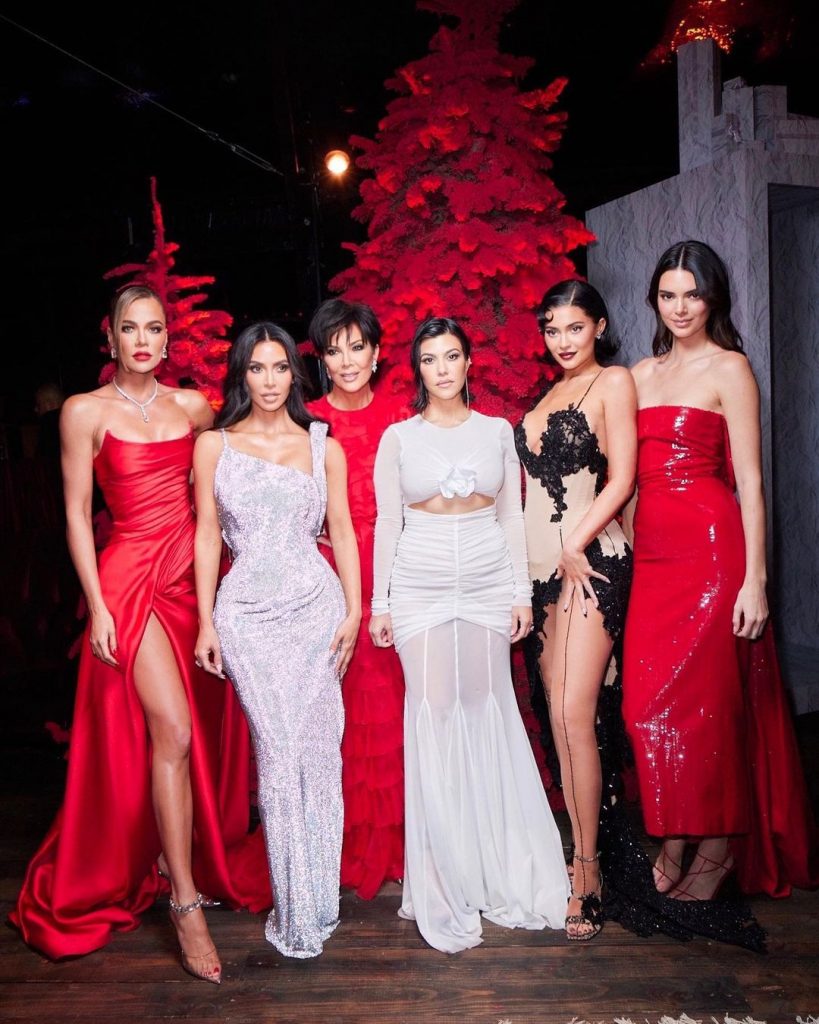
Via @kimkardashian on Instagram
Think about these Brazilian butt lifts, plus the overfilled lips, rhinoplasties, eyelid surgeries, and face-lifts of the 2020s – trends might be coming and going, but they’re leaving permanent marks on our appearances. This is thanks to the normalisation of unattainable beauty standards, which has birthed a blasé attitude towards plastic surgery, injectables, and other cosmetic procedures.
According to Allure, “with the accessibility of social media, people are hyper-aware of their bodies and faces in a way they weren’t before,” and “patients used to simply compare themselves to social media stars who showed before and after photos on Instagram of their latest procedure or treatment” but now, patients enter clinics feeling informed and empowered by the sheer volume of content and information on social media. Most recently, I’ve seen it become trendy to get your cheek fat removed. Lemme say that again: CHEEK. FAT.
@samkarounos The swell was worth it 🤩 Full results seen at week 8 (im at week 2) #buccalremoval #fatdissolving ♬ BILLIE EILISH. – Armani White
So, what exactly is buccal fat removal?
Cheek fat is completely normal. Cheek fat is natural. But, as we move back in time towards the “heroin chic” aesthetic, (I… I… I feel sick), people are getting their buccal fat removed. The procedure involves removing the little pads of fat from the area between your cheekbones and jawline, giving you a ‘snatched’ look without a hint of contour. The goal is to make your face look slimmer and more defined, and the procedure takes around an hour to complete under local anesthesia, while the patient is completely wide awake.
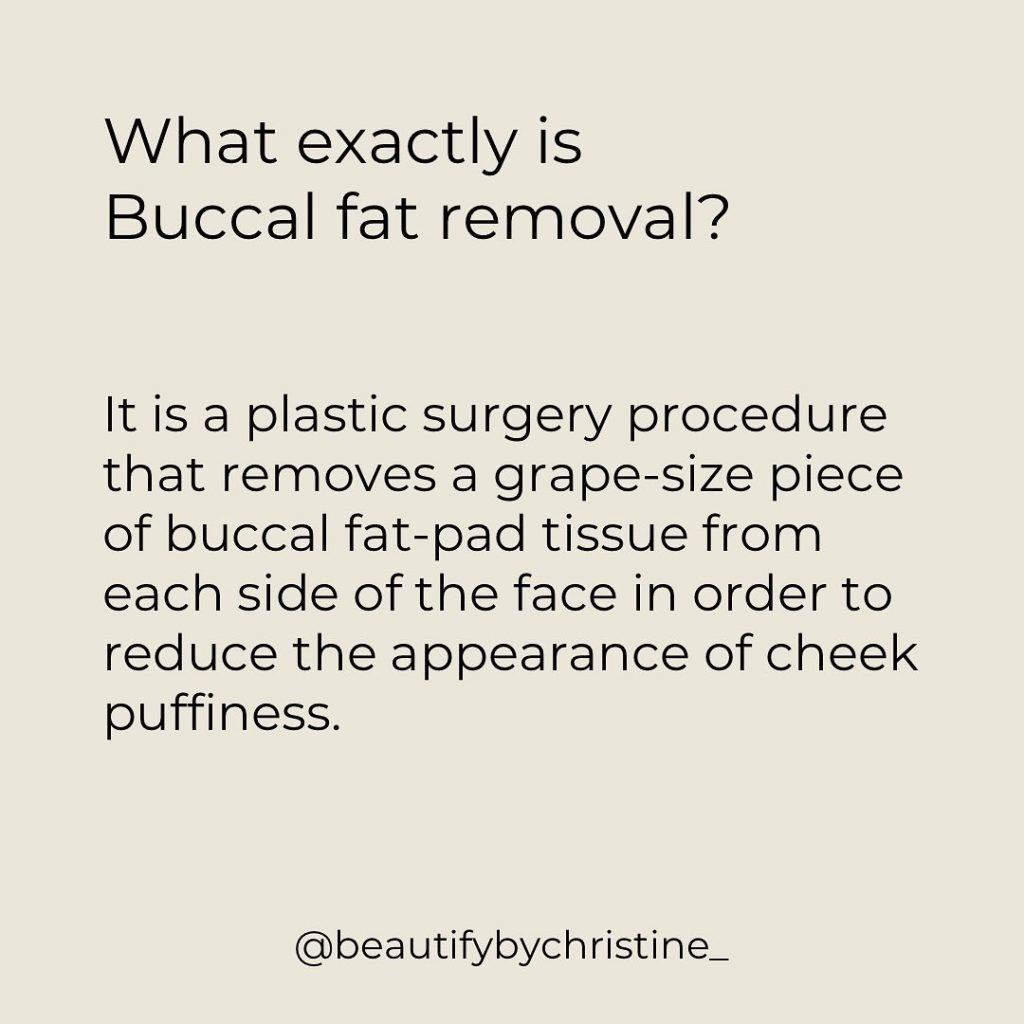
Via @beautifybychristine_ on Instagram
A debate on social media has exploded since the trend gained popularity, with users wondering whether it’s normal for average people to know terms like “buccal fat” at all. The debate begs the question: have we gone too far for the sake of fleeting trends?
One Twitter user said it “isn’t normal” to “hyper-fixate on plastic surgery procedures you were previously unaware of”, while one said, “I only knew of it [buccal fat] because I was working at a clinic for a long time, but it started popping up on the timeline, and I was like wait what?! How? Why? LOL”.
Buccal fat removal isn’t in normal people’s vocabulary. Non-plastic surgeons looking at a person they’ve never met before and saying “they’ve had buccal fat removal” isn’t normal. Hyper fixating on plastic surgery procedures you were previously completely unaware of isn’t normal.
— Rossi 🦭 (@RossiSongo) December 14, 2022
While I fully support those who undergo aesthetic changes because they genuinely want to, I worry that people are feeling pressured to. Chrissy Teigen recently took to socials to show off her buccal fat removal procedure and, while I think it’s great when celebrities and influencers are honest about their aesthetic tweakments, I do wonder if their sheer influence on social media is perpetuating a throwaway trend culture that will irreversibly affect people’s self-esteem levels and physical appearances for years to come.
Chrissy Teigen takes to Instagram to reveal she’s had Buccal Fat Removal done by Dr Jason Diamond. pic.twitter.com/aJNoPrYdzf
— The Cosmetic Lane (@TheCosmeticLane) September 13, 2021